African Guernica Joins Picasso's Masterpiece in Madrid Exhibition
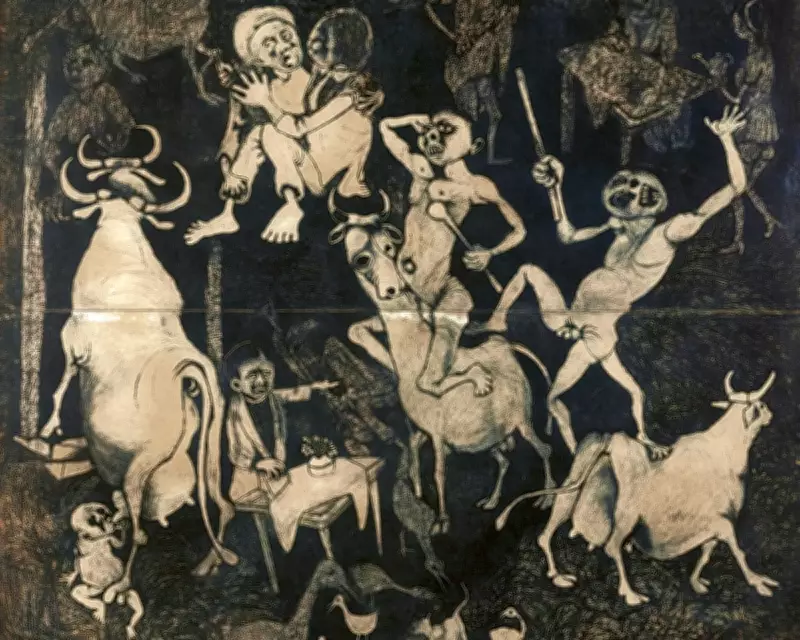
In a powerful new display at the Reina Sofía museum in Madrid, Dumile Feni's African Guernica from 1967 has been installed directly opposite Pablo Picasso's iconic Guernica. This marks the first time Feni's work has been exhibited outside South Africa, loaned from the University of Fort Hare, and it serves as the centrepiece for the museum's inaugural exhibition in a series titled History Doesn't Repeat Itself, But It Does Rhyme.
Artistic Dialogue Across Eras and Continents
The exhibition, curated by Tamar Garb, a professor of art at University College London, aims to foster conversations between works from diverse cultural and geographical backgrounds. By placing Feni's drawing in the exact spot where Picasso's Guernica was first shown at the museum 34 years ago, the Reina Sofía seeks to challenge historical biases in art. Director Manuel Segade noted that western art has often marginalised African creations, relegating them to categories like handicrafts, and this initiative strives to correct such oversights.
Feni's African Guernica, created with charcoal and pencil, depicts a chaotic scene featuring a three-legged man with a grotesque mask, a cow nursing a baby, and shadowy figures, all reflecting the artist's rage against apartheid in South Africa. In contrast, Picasso's masterpiece was inspired by the Nazi bombing of the Basque town of Guernica during the Spanish Civil War. Garb emphasises that while both works address violence, Feni's piece represents the slow, systemic brutality of racist tyranny, rather than the sudden devastation of war.

The Legacy of Dumile Feni
Dumile Feni, who died in New York in 1991 after decades in exile, had no formal artistic training but was a prolific drawer from childhood, deeply influenced by indigenous African art forms such as rock painting and mask-making. Upon moving to Johannesburg, he immersed himself in a vibrant urban culture, encountering European artists like Goya and Bosch, as well as Picasso, whose work was itself shaped by African sculpture. Garb points out that Picasso's cubist innovations were heavily indebted to African sculptural practices, creating a circular artistic influence.
The exhibition also features five other works by Feni, including the massive 53-metre scroll You Wouldn't Know God if He Spat in Your Eye and the haunting charcoal drawing Hector Pieterson from 1987, which reimagines a famous photograph of a boy killed by apartheid police. Despite being dubbed "the Goya of the townships" in 1960s Johannesburg, Feni is celebrated for his unique use of drawing materials on an epic scale, rare in global art of the 1960s.
This display not only recontextualises Picasso's Guernica but also highlights Feni's significant contribution to 20th-century art, bridging continents and histories through profound visual narratives.