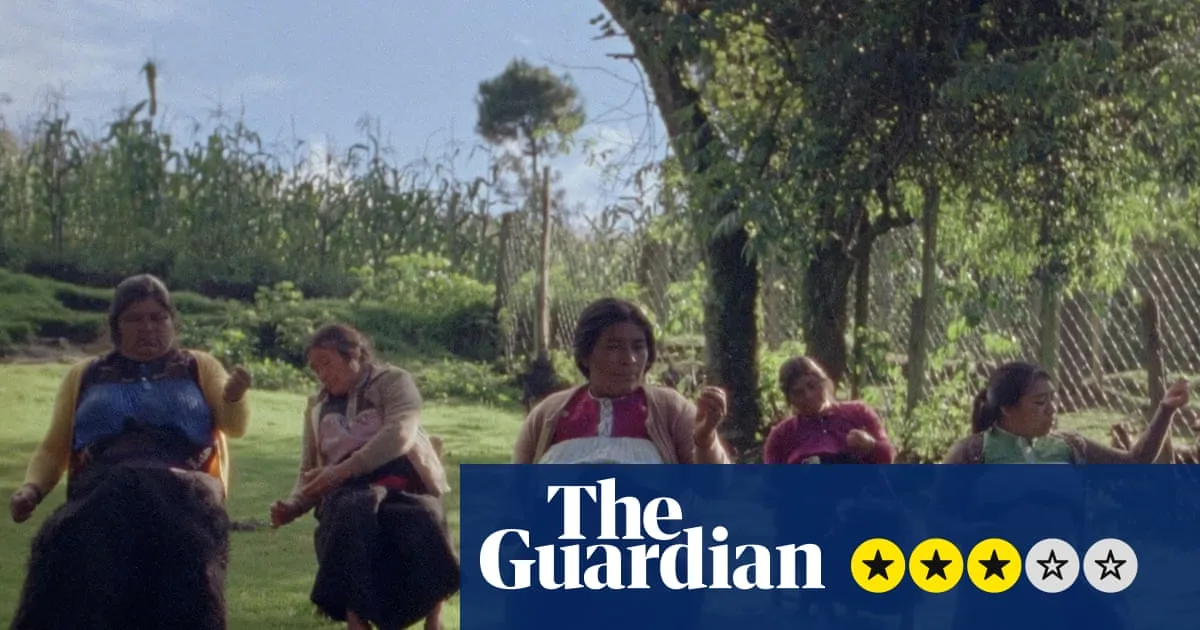
Gabriela Domínguez Ruvalcaba’s meditative documentary, Ways to Traverse a Territory, offers a languid and poetic glimpse into the traditional daily rituals of the Tzotzil women in the mossy hills of Chiapas, Mexico. The film captures their deep connection with nature, as they tend sheep, shear wool by hand, and use traditional tools for spinning and natural dyes for fabrics.
The Tzotzil community has maintained a pastoral way of life against the march of time, and the film focuses almost entirely on the women. Wide shots of the majestic landscape emphasise their relationship with the environment, where natural resources are treated with care and respect. However, Chiapas is not an idyll; one woman speaks of discrimination from nonindigenous people, while another mentions gender inequality and being denied education by her father.
Ruvalcaba’s film also explores different kinds of crossings, from historic trails in the region to the camera lens as a threshold. The director grew up in the area but was not taught about the Indigenous communities, and film-making becomes a conduit to bridge this gap. Though the stylised framing can sometimes err on aestheticisation, a fascinating moment occurs when the Tzotzil women comment on the camera setup, acknowledging the technical specificity of the shoot, flipping the ethnographic gaze.