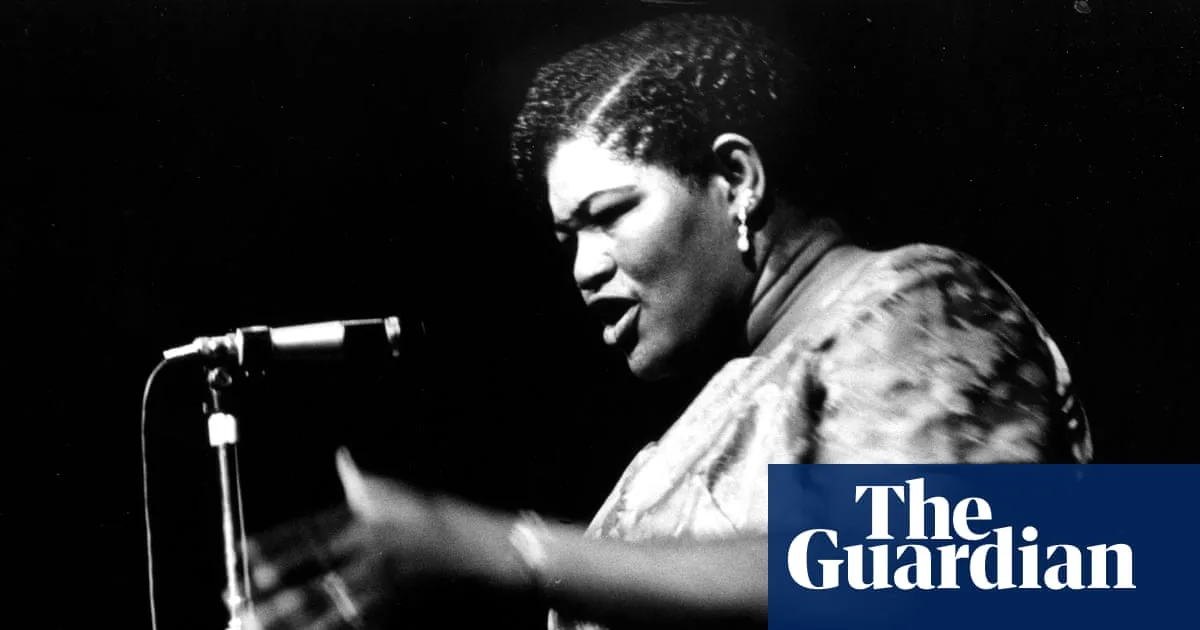
Willie Mae 'Big Mama' Thornton exuded uncompromising intensity. Her voice conveyed struggle and defiance, fury and hurt, like few others. Standing at 6ft 2in, with an imposing physique and a razor-scarred face, she was a Black, gay multi-instrumentalist who refused to let a racist society or a rapacious industry confine her.
Thornton should be ranked alongside the likes of Billie Holiday and Nina Simone, but instead she is little more than a footnote in the histories of Elvis Presley and Janis Joplin as the original voice behind songs they would make famous. A new documentary, 'Big Mama Thornton: I Can’t Be Anyone But Me', aims to right this wrong.
'She was unique,' says Robert Clem, the documentary’s director. 'A female artist who lived by her own rules in a very reactionary era. And fearless – she stood up to men who tried to rip her off, sang in maximum security prisons, learned to play drums because she got tired of drunk drummers. There’s so much to admire about Big Mama.'

Thornton’s death in 1984, at 57, was barely noted, perhaps because, in the eyes of the music industry, she was a one-hit wonder. 'Hound Dog' would later be defined by Elvis, but it was written for Thornton and she topped the R&B charts with it in 1953 – then never had any further commercial success. This year is the centenary of her birth and Clem thinks it’s time for Big Mama’s resurrection.
Thornton was born in 1926 in Alabama. Her mother died when she was three; her preacher father transported his children by horse and cart as he sought out congregations. Thornton had a piecemeal education that ended when she was 12 and forced to seek work, initially cleaning bars, then collecting refuse on garbage trucks. Aged 14, she was overheard singing while she worked by blues singer 'Diamond Teeth' Mary McClain.
Settling in Houston, Texas, in 1948, Thornton attracted the attention of Don Robey, a pioneering African American entrepreneur (and gangster) who owned Duke and Peacock Records. He signed her in 1950 and, when the Johnny Otis Orchestra came to town, Robey suggested Otis recruit Thornton. Otis gave her the 'Big Mama' stage name, and asked aspiring songwriters Mike Stoller and Jerry Leiber to write a song for her. They wrote 'Hound Dog', and Thornton’s recording duly topped the Billboard R&B chart for nearly two months. Robey kept Thornton singing animal-themed comedy songs, which failed to chart: she would claim $500 (£370) was the only payment Robey gave her for 'Hound Dog'.