I've been testing caps, brushes and helmets that all promise thicker hair. According to a paper in the National Library of Medicine, up to 50 per cent of males and females experience androgenetic alopecia after puberty. While men typically recede or go bald at the top of the forehead, women see thinning at the top and crown of the head. Considering it affects such a huge proportion of the population, it's no surprise that more affordable and attainable at-home tech has come on leaps and bounds. I've been writing about and testing beauty products for a decade, and laser therapy is a category I've seen significant growth in, be it LED face masks for anti-ageing or IPL for hair removal. The best laser hair growth gadgets will have different settings, modes, intensities and prices, with all claiming to yield fuller, thicker locks – so which one should you invest in?
Best hair growth devices at a glance
- Best overall – HigherDOSE red light hat: £449, Healf.com
- Best budget buy – Foreo flip play advanced hairbrush: £49, Lookfantastic.com
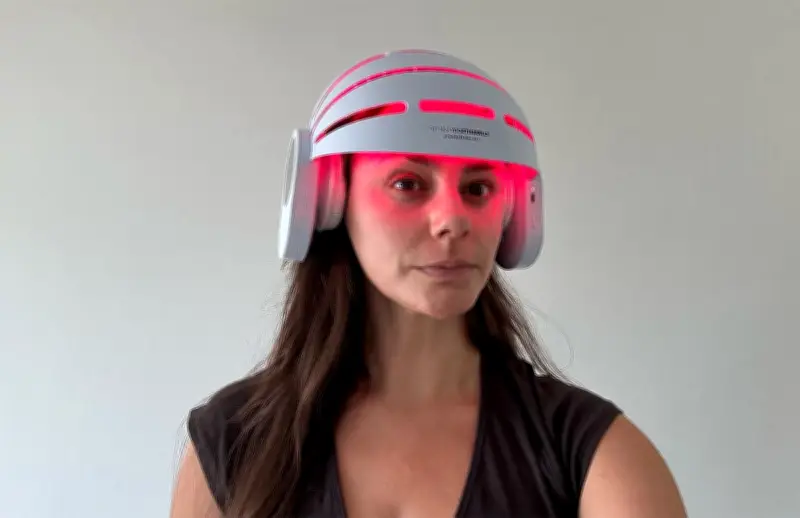
- Best for scalp coverage – CurrentBody skin LED hair growth helmet: £649.99, Currentbody.com
- Best for area-specific hair loss – Rio hairgrow laser head band: £499.99, Boots.com
Despite the name, not every hair growth device uses lasers. Many of the latest at-home options rely on LED light instead, but both technologies fall under the same umbrella of low-level light therapy (LLLT). “Laser therapy is a form of low-level light therapy, also known as photobiomodulation,” explains Dr Sharon Wong, consultant dermatologist and co-founder of DOSE. “It uses low-intensity red or near-infrared light to stimulate beneficial biological responses within cells.” For hair loss, LLLT is designed to support the follicles you already have, encourage cellular activity and improve circulation around the scalp. This all contributes to healthier hair growth and reduced shedding. These lasers are placed in helmet-like contraptions, in brushes or even in caps, dotted in careful configurations to encourage even coverage, blood circulation and the production of collagen for thicker, more densely populated hair. One thing to note is that you shouldn't expect overnight results. Throughout my testing, I've learned that consistency is key, whether you use the device for less than five minutes or up to 25 minutes a day. With that in mind, I've reviewed the best laser hair growth devices to find out which ones deliver on their promises.
How I tested
I tested each LED hair loss device over several weeks, using it as directed and incorporating it into my normal haircare routine. Alongside comfort, fit, and ease of use, I assessed battery life, treatment time and how practical each device was to use consistently. As hair growth takes time, I paid attention to the quality of the light technology, any clinical evidence supporting the device, overall design and value for money, alongside any noticeable improvements to scalp health, hair shedding and the appearance of fuller, healthier-looking hair.


HigherDOSE red light hat
★★★★★ Best: Overall laser therapy device. What we love: Discreet baseball cap design, comfortable to wear, I noticed baby hairs sprouting and scalp acne was calmed. Take note: Quite heavy to wear. Hair growth devices only stand a chance of working if you actually use them, and the HigherDOSE red light hat was easily the one I used most consistently. It looks exactly like a baseball cap, so I happily wore it while working, pottering around the house and watching TV without feeling like I was wearing a piece of beauty tech. Beneath the baseball cap, there are 120 LEDs delivering 650nm red light, with sessions taking just 10 minutes. Beauty Pie's all systems grow cap does pack in 125 LEDs and delivers 655nm, but I found the HigherDOSE hat more comfortable and more my style. Yes, £449 is a lot of money, but the hat design made it easy to stick with. For this device, HigherDose boasts some great stats. Based on a survey of 28 participants wearing the hat for 16 weeks, 83 per cent saw hair growth in sparse or balding areas within the 16 weeks, and 93 per cent noticed an improvement to their scalp and hair health. My own experience was just as positive. I definitely clocked more baby hairs sprouting around my parting and hairline, while my scalp acne became noticeably calmer with fewer breakouts and irritation. Device type: Hat. Light modes: Red (650nm). Wireless: Yes. Treatment time: 10 minutes. Uses per charge: 8-10. Buy now £449, Healf.com.
Foreo flip play advanced hairbrush
★★★☆☆ Best: Budget buy. What we love: Small and detangles hair, noticeable reduction in hair loss, and baby hairs grew faster and thicker. Take note: Foreo app is required for use. Foreo's FLIP play is by far one of the cheapest hair growth devices I tested. It features red, blue and green light with T-Sonic massage. The red light is designed to revitalise hair follicles and support healthier growth. I loved that I could simply brush my hair and scalp as normal, while the flexible bristles made light work of tangles without pulling. Using the Flip Play every day for several weeks, I noticed a significant reduction in how much hair I was losing in the shower – it went from a handful to just a few strands. The baby hairs on my hairline also seemed to be growing faster and looked thicker over time, making my hair look fuller and far less flyaway. Compared with CurrentBody's £649.99 helmet, it's much easier on the bank balance and feels less like a “treatment”. The trade-off is coverage, as you need to manually work it across the whole scalp, but for £49, it's a great entry-level option. Just be aware you have to download the app in order to use the device. Device type: Hairbrush. Light modes: Red, blue and green. Wireless: Yes. Treatment time: Unlimited. Uses per charge: Up to 6 hours. Buy now £49, Lookfantastic.com.
CurrentBody skin LED hair growth helmet
★★★★☆ Best: For full scalp coverage. What we love: Headphones can be connected via Bluetooth, noticed less shedding and my hair felt thicker over time. Take note: Bulky and unsuitable for travel, and the rubber suckers can trap and rip hair. CurrentBody makes the rather bold claim that this helmet can increase hair growth rate by 123 per cent in 12 weeks. While I can't say I sat counting individual hairs, I did notice less shedding and my hair generally felt thicker after using it consistently. Where this really stood out, though, was coverage. The full-head design and 120 red LEDs meant I didn't have to move it around or concentrate on one thinning area at a time, as I did with some of the smaller devices I tested. Sessions take just 10 minutes, too. My only gripe? The rubber suckers trapped and ripped out strands of my hair every time I used it. Not ideal. Device type: Helmet. Light modes: Red (between 620 and 660nm). Wireless: Yes. Treatment time: 10 minutes. Uses per charge: 6-7. Buy now £649.99, Currentbody.com.
Rio hairgrow laser head band
★★★★☆ Best: For area-specific hair loss. What we love: Comfortable and lightweight, with targeted hair growth around the hairline. Take note: Long treatment time and too localised for all-over thinning. If your hair loss is concentrated around the hairline, temples or crown, this clever little headband makes a lot of sense. It uses 60 laser diodes and, unlike CurrentBody's full-head helmet, you can move it around to focus on the spots you actually want to target. I have much thinner strands and sparse growth around the edges of my face and parting, but after using the headband consistently for several weeks, I started to notice new growth forming. For the first time in a long time, I actually began to feel far less conscious about tying my hair up in a ponytail and revealing my hairline. I found it surprisingly lightweight and comfortable to wear, although the 25-minute sessions do require a bit more patience. You'll also need to reposition the band if you want to cover several areas, so I wouldn't choose it for all-over thinning. For more localised hair loss, though, I really liked the added control. Device type: Head band. Light modes: Red (650nm). Wireless: Yes. Treatment time: 25 minutes. Uses per charge: 5. Buy now £499, Hollandandbarrett.com.
StylPro root renew LED hairbrush
★★★☆☆ Best: For travel. What we love: Massage function helps to stimulate scalp, less shedding in the shower, and new baby hairs around my temples. Take note: Rubber bristles pull on existing hair. For those looking for a travel-friendly hair growth device, StylPro's root renew LED hairbrush is one of the easiest to pack away. The compact brush design takes up barely any space in a suitcase, and I liked that I could use the relaxing scalp massage function while the LED was on. I tested it over the course of several weeks and saw some improvement in the density of my hairline with a few new baby hairs appearing around my temples. I also noticed less shedding in the shower – where I'd normally lose a good handful every day, this reduced to just 5-6 strands. It doesn't offer the same all-over coverage as larger devices like the HigherDOSE red light hat, but it's good for targeting specific areas of hair loss. At £39.99, it's a simple option for keeping your hair growth routine on track while you're away, but the rubber bristles do tend to tug at existing hair strands. Device type: Hair brush. Light modes: Red (655nm). Wireless: Yes. Treatment time: 3 minutes per area. Uses per charge: 9. Buy now £39.99, Lookfantastic.com.
Beauty Pie all systems grow H-wave LED hair and scalp treatment
★★★★☆ Best: For discreet use. What we love: Lightweight, discreet and improves scalp health. Take note: Shorter battery life and not as comfortable as other laser hair therapy caps. Some hair growth devices are hard to ignore once they're on your head, but the all systems grow cap from Beauty Pie is much more subtle. Its hat design means it doesn't look like a high-tech gadget, so I could wear it while answering the front door or pottering around the house without feeling like I needed to hide away. It comes with 125 LEDs and combines red and near-infrared light. Compared with the HigherDOSE Red Light Hat, the branding is a little less obvious. Although Beauty Pie hasn't conducted its own clinical testing, the brand cites research conducted on similar devices, claiming they can help to improve hair density, reduce shedding, and support healthy hair growth. During my own testing, I was pleased to see less hair collecting in my hair brush and a smattering of new baby hairs at my parting. My scalp health also saw an improvement, with my scalp acne reduced and existing spots healing faster. Personally, I preferred the feel of HigherDOSE, but Beauty Pie's version is still a strong option if you want something that blends into your routine. Device type: Hat. Light modes: Red (655nm). Wireless: Yes. Treatment time: 10 minutes. Uses per charge: 7. Buy now £332, Beautypie.com.
What are the best laser hair growth devices?
If I had to choose just one, it would be the HigherDOSE red light hat. It offered the best balance of comfort, practicality and performance, and because it looks exactly like a baseball cap, it was the device I found easiest to wear consistently. If you're after something slightly more affordable, Beauty Pie's all systems grow H-wave LED hair and scalp treatment is a great alternative, while CurrentBody's LED hair growth helmet is the better choice for full scalp coverage.
Do lasers work for hair growth?
“Laser devices are clinically proven hair loss treatments that stimulate cell activity within the hair follicle, decrease hair shedding and promote growth where possible”, explains Samantha Stewart, MIT, The Spencer Clinic of Trichology. “They help to stimulate the follicle and increase blood flow, which helps to keep the hair in the anagen phase (growing phase). The laser beams direct light into the skin and promote the production of the molecule ATP (Adenosine Triphosphate) which is the energy source for all living cells. Laser hair loss devices are normally combined with trichological treatment”. Mandy Graham, Paul Mitchell Trichologist, is in agreement, “Numerous studies and controlled clinical trials have indeed shown that LLLT (low-level laser (light) therapy) can stimulate hair growth in humans through a variety of pathways. Most of these are on AGA (Androgenetic Alopecia), AA (Alopecia Areata), CIA (Chemotherapy Induced Alopecia) and TE (Telogen Effluvium), and it seems to give better results in women than men. It seems to be a safe, effective and non-invasive way to combat hair loss as long as there are still some stem cells present to stimulate”.
How long does it take?
Hannah Gaboardi, trichologist and Viviscal brand ambassador breaks it down. “It can be very time-consuming and to see noticeable results, many people require several sessions a week for a number of months”. Stewart adds that when it comes to using the devices, “The time and frequency vary depending on brand and how many lasers the chosen device has. It can be from as little as 90 seconds 3 times a week to 30 mins 3 times a week, always follow your device's recommended treatment time”.
What are the pros?
“There are many different benefits to laser therapy for hair growth,” says Gaboardi. “To start with, it's much less invasive than hair transplant surgery, which comes with an array of risks, like any invasive treatment. The procedure is also widely accepted as safe and tolerable. It's painless, there are no disruptive side effects, and it also increases hair strength”. Graham highlights the following too: Both men and women can use LLLT devices. Clean and non-invasive/pain-free. Pacemaker-friendly. So far, no negative side effects have been observed. Not as expensive as hair transplants. Treatment times are short, although frequent - 2 to 4 times a week for about 5 - 30 minutes. Devices are convenient and portable for the most part. Some users report improvement after 12 to 26 weeks of use, as well as reduced hair loss and noticeable hair growth. Can be used independently or in conjunction with other hair loss therapies such as minoxidil or anti-androgen drugs.
What are the cons?
Stewart explains: People can be very bad at using devices at home. Continuity is key to the effectiveness of the laser. They can be expensive, and it's not always easy to decide which model to choose. The results vary, which means patients may be disappointed and stop using the device before it has had time to be effective.
Can at-home be as effective as in the clinic?
“It is important to use the right device, whether in a clinic or at home”, stresses Gaboardi. “Not all light treatment devices are the same. It's important to use a quality, high-light energy output LED light therapy device. Going to a clinic can be more costly in the long term, and you can get the same results in the convenience of your own home if you use a powerful LED light therapy device, whether that comes in the form of a red-light therapy treatment panel or cap”.