University leaders have warned that a proposed reduction in tuition fees for EU students could cost the UK higher education sector an estimated £500 million and put pressure on places for British students, following the new UK-EU agreement.
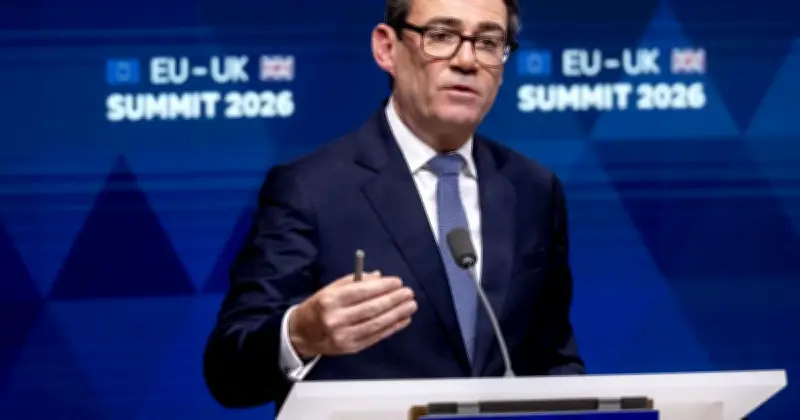
The warning comes after Prime Minister Andy Burnham and EU leaders agreed a UK-EU “reset” package at the Brussels summit on November 10, covering food and plant trade, emissions trading, security cooperation, and a youth mobility scheme. The scheme will allow UK and EU citizens aged 18 to 31 to live and work in each other’s jurisdictions for up to three years, with 100,000 visas available each year.
However, a proposal from the EU to reduce tuition fees for EU students in the UK has not yet been resolved, with both sides setting a six-month deadline to reach an agreement. Since Brexit, EU students have paid international rates to attend UK universities.
Concerns over financial impact
Fees currently vary depending on the university and range between £11,400 to £38,000 for undergraduate courses, according to the British Council, though this can be higher for some courses. When the UK was in the bloc, EU students got the same fee deal as Brits. Fees in the UK are among the highest in Europe.
Professor Dame Sally Mapstone, the vice-chancellor of St Andrews, warned that “unless we sort out the important financial practicalities of this, the unintended consequences for higher education in the UK could be considerable”. She told the Sunday Times: “I would urge the Government to use these six months to act practically and pragmatically and not just politically. It’s good to see a welcome being extended to EU students and we would endorse that. But what is not being explicitly addressed is the cost of educating those students, which we estimate is about £15,000 a year.”
The University of Manchester’s vice-chancellor, Professor Duncan Ivison, said it was a “good thing” to have close UK-EU relations but “the issue of tuition fees is something we do have to figure out because there is a cost”. He told the BBC: “If nothing was done to compensate or provide additional funding, it would take £500 million, we estimate, out of the higher education sector at a time where there’s a lot of pressure on the sector.”
Pressure on UK student places
In a sign that there could be competition between EU and British students, he said it was “not clear we’d be able to increase the number of places”. The Russell Group, which represents 24 leading universities across the UK, also said: “Any reduction in EU student fees would put pressure on UK student places and take more money out of UK higher education.”
A statement from Dr Hollie Chandler, director of strategic policy at the group, reads: “Our education and research links with the EU are incredibly important and EU students make a valuable contribution to our universities. However, any reduction in EU student fees would put pressure on UK student places and take more money out of UK higher education, without necessarily achieving the ambition of growing opportunities for EU students to study in the UK.”
She added: “It is crucial that any final package fully protects opportunities for UK students and the financial sustainability of our institutions so that universities can continue to drive growth in their communities and play their full part in helping build a closer relationship with the EU.”
Prime Minister hails deal
Prime Minister Andy Burnham said about the deal: “10 years on from Brexit, today we open a new chapter. Repairing a broken status quo with a Britain that is closer to Europe. This deal is a win-win – and it cuts costs for business, helps with the cost of the weekly shop, and creates opportunities for young people. The world has changed dramatically since 2016. We’re dealing with war on our continent and a more hostile global economy. But because of this deal, the UK is stronger, and so is Europe. This is Britain believing itself again.”