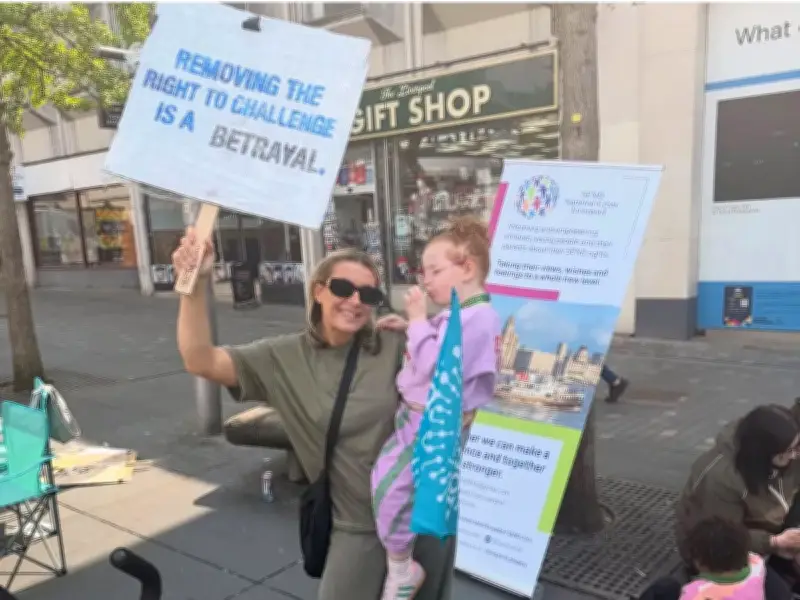
Parents across Merseyside have voiced fears that proposed government reforms to special educational needs and disabilities (SEND) support could weaken the legal protections that safeguard their children's development. A consultation, launched by then-Prime Minister Keir Starmer, proposed changes to school places and Education, Health and Care Plans (EHCP).
White paper proposes major changes
The white paper sets out plans that could move more SEND children into mainstream schools, reserving EHC plans for those young people with the most complex needs. The reformed system is not expected to come into effect until September 2029.
Mums across the region have explained their concerns as a petition for a debate on the white paper passed 100,000 signatures. Later this month, MPs will discuss calls to protect the legal rights of children with SEND and a pause on the proposed changes.
Parents speak out over fears
Mandy Smith, SEND National Crisis Liverpool co-ordinator, from Knotty Ash, said: "As a parent, I know how hard it is to fight for the support your child needs in school. Going through that struggle with my own child showed me just how tough the system is for families.
"That's why I started SEND National Crisis Liverpool. I want to stand up for our kids, help other parents, and make sure no family has to go through this fight alone.
"Right now, an EHCP gives families the legal right to go to the SEND Tribunal if the support set out in the plan isn't put in place. The SEN reforms are also proposing other legal rights be removed.
"The proposed SEN reforms threaten to take away these vital legal rights, leaving parents without a way to make sure their children get the help they need. We are trying to let people know how the proposed SEN changes will affect our children, young people, and schools.
"To do this, we have joined Merseyside SEN Support Network (MSSN) and also Save Our Children's Rights (SOCR), which is a group of several organisations working together."
Parents demand protections remain
MSSN founder Kelly Hughes, who set up the organisation to help her daughter Gracie, nine, said: "When Gracie was born, the first words I heard were, 'sorry, we think she's got Down syndrome.'
"At that moment, I was terrified. I didn't know what those words meant or what our future would look like. But I made a promise to myself that nobody would ever decide what my daughter could or couldn't achieve because she had a disability, Gracie would decide that for herself.
"She is incredible, and she continues to prove that the only limits a child should face are the ones we fail to remove. Our journey has taken us from mainstream education to specialist SEND provision and back to mainstream, where Gracie is now thriving.
"Specialist school wasn't right for her, but that doesn't mean her needs have disappeared. She relies on the support set out in her EHCP, which gives us legal protection over the provision she needs."
Kelly said her "biggest fear" was how the reforms could leave families feeling "that they have nowhere to turn when the system fails them." She added: "I know the SEND system needs to improve, I have lived its failures.
"I have had to educate myself, learn the legislation and fight to get my own daughter's needs recognised. Parents aren't asking for anything extraordinary, we are asking for our children to be heard, supported and given the same opportunity to thrive as everyone else.
"We want reform that genuinely improves lives, not changes that look good on paper but leave vulnerable children without the protections they need."
Reforms and government response
EHCPs would continue to exist in the reformed system for children and young people who need support from one of the new Specialist Provision Packages. EHCPs will include the support from the packages that each child needs. Education and health provision included in an EHCP continues to be legally guaranteed.
Kelsey Reid, who cares for her daughter in Stockbridge Village, said: "I felt forced to home educate because I was left with no other choice. I have another daughter who is four, she should be in reception, she is autistic with complex needs, and I have absolutely no trust left in the education system to keep her safe and meet her needs if I send her to school.
"The thought of the proposed SEN reforms terrifies me, because if this is how families like ours are already treated, I dread what will happen to our most vulnerable children next."
A Department for Education spokesperson said: "We inherited a SEND system under immense strain, with families waiting months for support, and poor outcomes for children. Our once-in-a-generation reforms will change that.
"Legal duties on schools to identify and support children's needs are getting stronger, not weaker. And we will never leave parents without a route to challenge decisions about their child's support.
"We have consulted on our proposals to make sure we get these reforms right with plans to be set out soon, and will continue to work alongside parents to make sure they have confidence in the system we are building."