Students at the University of Edinburgh, Dundee and Nottingham face a term without any teaching as staff strike over budget cuts and compulsory redundancies, with the sector struggling with rising financial uncertainty.
Welcome classes for students at the University of Edinburgh this year did not focus on lectures, seminars and essays. Instead, students were told about how their education would fit in around the strikes planned for this year, which for many will in effect wipe out a term of teaching.
“This term I’ve got two courses and my dissertation. Currently, I’ve got no teaching for five weeks,” said Theo Warshaw, 22, in his final year studying geography at Edinburgh, where staff are striking over budget cuts and compulsory redundancies needed to bridge what the university’s leaders have said is a £400m shortfall.
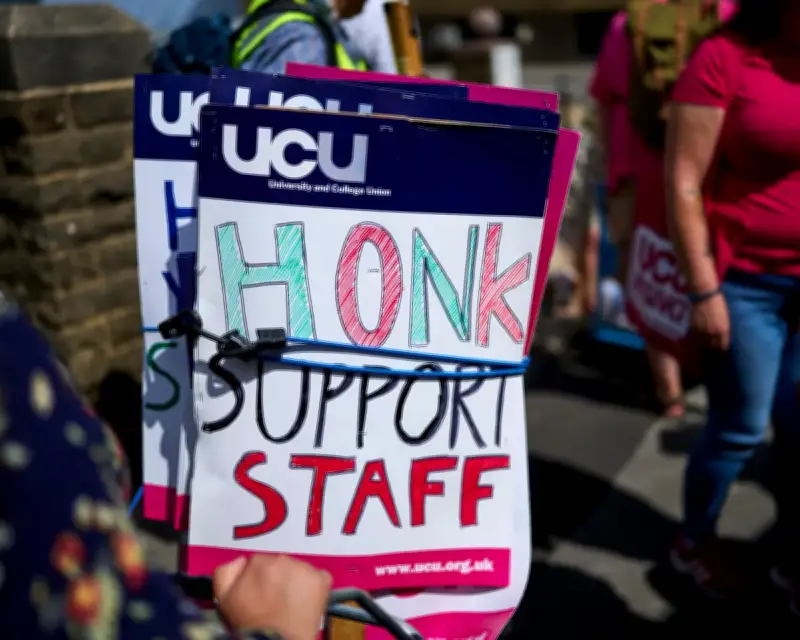
Students show solidarity with striking staff
“I think it’s a shame that students are the only bargaining chip they really have. But I understand it. I would obviously rather it didn’t happen but I do get it,” Warshaw said. “No one goes into academia to drive a Ferrari or live in a mansion. They do it because they love it. They don’t want to be striking. They just want a little bit of job security.”
Similar conversations are taking place at universities across the UK as administrators grapple with the erosion of tuition fees by inflation, a drop in international recruitment and changing patterns of demand as students shift away from arts and humanities subjects towards more vocational subjects in science, law and business.
When University and College Union (UCU) members in Edinburgh launched their industrial action, their colleagues at the University of Dundee were embarking on a five-week strike. And this week UCU members at the University of Nottingham announced a further round of strikes starting on Monday 5 October and lasting until the end of the semester in December, a stretch of 10 consecutive weeks.
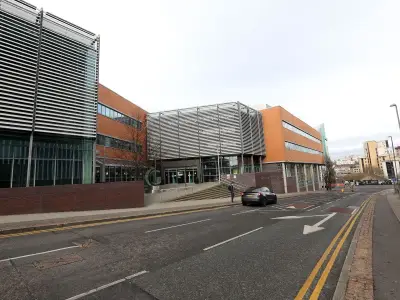
Nottingham’s industrial action
Strike ballots, marking boycotts and votes of no confidence in leadership punctuated campus life in the spring and summer as universities announced course and department closures and redundancies, leading one UCU officer to note that it was easier to list the universities that had avoided being in dispute with their staff so far.
Lopa Leach, a professor of vascular biology and immediate past president of Nottingham’s UCU branch, said: “The word is carnage, it is carnage what they are doing now – at the local level and also at the national, senior management level in the UK. Why are they thinking about the destruction of higher education?”
Nottingham’s industrial action has been brewing since its management declared that an £85m deficit required dramatic restructuring, including a plan announced in May to cut nearly 10% of its 7,000 effective full-time positions and suspending entry to all modern language and music courses for new students.
Uncertainty for staff and students
Nick Clare, the current branch president, said that while the strikes were frustrating for students, the uncertainty was being caused by the university’s demands for restructuring, which had left hundreds of staff unsure of their future, while watching colleagues take voluntary redundancy and leave.
“I met my new master’s students yesterday and I said: ‘I don’t know if I can teach the rest of this course because my job is at risk and I don’t know if I’ll still be here,’” Clare said. “They are appalled and they understand that many of the things they like about this university are under threat – the small group teaching, getting to know staff, all the things they appreciate are the things that are going to go.
“So students are angry, but they are angry at what’s happening, not at staff. Honestly I’ve never seen more support or solidarity from our students, having been at Nottingham for more than 10 years. Returning students get it, new students get it, it’s amazing in that regard.”
A spokesperson for Nottingham said: “We understand this news is concerning for our students, particularly at the start of the academic year, but experience from previous strike action suggests that many students will experience little or no disruption to their teaching. We want to reassure them we have clear procedures and support in place to minimise any disruption and ensure they get the most from their university experience.
“All Future Nottingham counterproposals have been reviewed and considered to help inform the university’s final business case, which will go to the university council for a decision.”
Warnings of a ‘death spiral’
Clare said the university’s offer of voluntary redundancy had probably been popular enough to wipe out the deficit, leading him to question why the administration was insisting on going ahead with steeper cuts. Clare warned of a potential “death spiral” hitting the university if its cuts went too far and harmed its standings in international league tables and research income, causing it to shed students and talented staff.
Leach and Clare both warned that the cuts planned at Nottingham were likely to be repeated across the UK because of the nationwide similarities in funding.
“Sadly, higher education doesn’t seem to be a top priority,” Clare said. “It’s going to take something bad to happen, it’s going to take a university to go under, a so-called elite institution where the children of MPs or journalists go, for people to take notice. If a Russell Group university goes bust, people might stand up – we really don’t want that to happen but that’s my fear.”
But for students at Nottingham, Dundee and Edinburgh, the bad news is already very real. One English literature student at Edinburgh, who asked to remain anonymous, said her GCSEs were cancelled because of Covid. Now her classes had been cancelled due to the strikes.
“I think it’s completely understandable. I’m very sympathetic to their situation. They’ve all been very clear with us about why they need to do it and it’s impacting them as well, because obviously they’re not being paid,” she said. “But it’s frustrating for me. It’s nerve-racking. I’m in my fourth year, my final year, which is 100% of the degree, marks-wise. I’m stressed, because I know missing out on teaching is a shame. It’s a key part of the education process, and I was looking forward to it.”
Prof Peter Mathieson, the vice-chancellor of Edinburgh, said: “We are extremely disappointed that, despite ongoing discussions, the UCU has announced five weeks’ strike action, which will unfairly and deliberately target our students’ first semester of the academic year.
“While we recognise the right of staff to take this action, I want to assure our students that we will continue to do everything we can to mitigate the impacts of that action on them. In addition, we remain firmly committed to constructive and transparent engagement with our joint unions.”