Primary schoolchildren are using AI apps such as ChatGPT on a daily basis despite Government tightening up on tech legislation for under 16s, according to teachers behind a pioneering pilot scheme.
Callum Bone, 26, and Frankie Langman, 25, are rolling out a project which aims to keep children safe in a world of rapidly developing technology while helping them to thrive in the workplaces of the future.
The teachers say most pupils aged 10 and 11 own smart phones and access AI regularly whether they are aware they are doing so or not - through Snapchat's chatbot, Siri, Alexa and more.
AI Ambassadors programme launches in Gateshead
This is despite Government guidance and legislation set to come into place next year, aiming to reduce screen time and improve the safety of children online.
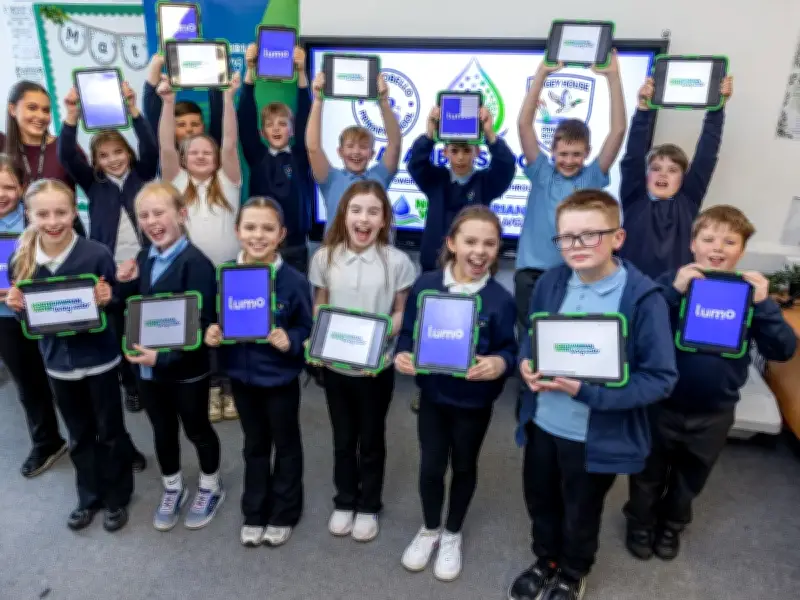
The AI Ambassadors programme, which will see 32 pupils from two primary schools in Gateshead team up with Northumbrian Water to solve real world problems with digital skills, is the first of its kind in the UK.
It is hoped that if successful the project will be rolled out across the North East and beyond, helping nurture the tech leaders of the future.
Teachers highlight daily AI use and risks
Frankie, a year six teacher at Lingey House Primary School, said: "Children are accessing AI all the time, whether they're going on AI specific apps like ChatGPT, or using Google and getting an AI response."
"They are dealing with it and using it every day, despite the fact the recommended age requirement is 13 plus for most of the apps. It's everywhere."
Popular uses are for emotional and social support, or nail art inspiration. It sounds innocent but if you put a prompt in incorrectly, you don't know what you're going to get back.
Instead of going to their parents or friends seeking help, children are talking to ChatGPT.
"It's healthier for them to try and work out problems for themselves, or speak to people in real life. This isn't about encouraging primary-aged children to use AI apps."
"It's about educating them to understand AI, recognise the risks and make safe, informed choices as they grow up."
In year six, many children start to walk home for the first time, so that means they get a mobile phone, but they're not particularly aware of how to protect themselves. It's an area that is so missed.
Pupils to pitch ideas at Dragon's Den style event
The children, from Lingey House and Portobello primary schools, will work in teams of four as they are supported by 20 Northumbrian Water mentors to develop sustainable AI strategies.
They will use the tech to help with an array of issues including protecting species, reducing flood risk and saving water.
The programme, funded by a grant from Northumbrian Water, will culminate with the pupils pitching their ideas in a Dragon's Den style event at Newcastle's Catalyst building on 22 June 2027.
Frankie and Callum are keen to attract political backing for the project and will be taking four pupils to Downing Street on November 30 to deliver a petition calling for better AI literacy in schools.
They already have support from local MPs Sharon Hodgson and Kate Osborne, while North East train operator Lumo is endorsing the scheme and will be providing the group with free transport to London.
Ms Hodgson, Labour MP for Washington and Gateshead South, said: "Artificial intelligence is already transforming the world around us and it is vital that children are equipped with the knowledge, skills and confidence to face it."
"The AI Ambassadors project is helping to ensure that young people in the North East are not simply consumers of emerging technology, but have the opportunity to understand and shape the future."
Frankie added: "We want to ensure that children from disadvantaged areas are not left behind as AI continues to develop. The aim is to give them knowledge, confidence and opportunities so that they can become the digital leaders of tomorrow.
"There has been a lot of excitement among the pupils, who have already gone away and done their own research. We hope they will become real ambassadors for AI and spread their new knowledge to their parents and friends."
Government rules and school policies
Andy Burnham's Government introduced statutory guidance in June. It makes schools responsible for ensuring pupils do not use phones throughout the day, both during lessons and breaks. The rules will go a step further next September.
Educational institutions will be expected to prevent pupils from having any access to their devices at all, by providing lockable pouches or other secure storage.
Alongside this, a social media ban for the under 16s will come into force from March 2027. Youngsters were kicked off platforms such as TikTok, Instagram, Snapchat, Facebook and YouTube.
Callum, a teacher at Portobello Primary School, added: "Part of the project is about raising awareness of the risks of AI. It's important that children take breaks from technology, but we know they are going to use it regardless of the new legislation."
Both Lingey House and Portobello primary schools have strict no phone policies. Frankie and I are not concerned pupils are accessing their devices during the school day.
"However, once they leave the last lesson of the afternoon, many pupils will start using them again. We don't want to remove the technology from children completely."
"We aim to educate them to they can access it safely and use it to their advantage. There are all kinds of considerations. For example, AI has also increased the risk of cyberbullying."
Children can create fake screenshots and images of each other and easily spread false information if they want to. In addition, there's the issue of discrimination and stereotyping.
"For example, if you ask AI to create a picture of a footballer, nine times out of ten, that footballer will be male."
Richard Salkeld, director of communications and partnerships at Lumo, said: "We're proud to be supporting the AI Ambassadors programme and help Frankie, Callum and their four pupils travel to Downing Street to present their ideas."
"The project is a brilliant opportunity for young people to build confidence with technology, explore how it can be used responsibly to tackle real world challenges."
"Helping children from every background to develop these skills is vital as the world of work continues to change."
Head of IT Operations at Northumbrian Water, Louise Patterson added: "Through this partnership, Northumbrian Water is helping open the door to the world of technology for young people, giving them the confidence to develop new skills, challenge themselves and explore how their ideas could shape the future.
"Most importantly, it is helping to build their AI literacy, giving them the knowledge and confidence to explore this technology in a safe, responsible and sustainable way.
"These 32 young ambassadors could be the innovators of the next generation and who knows?
One of the next big ideas to help protect our water, environment or planet could come from one of them."