Teachers have predicted that a fifth of children will not meet the expected standard in maths (18%) or reading (19%) at the end of primary school, according to new Department for Education (DfE) research.
Disadvantage gaps emerge early
The study found that expectations are lower for more deprived children and those with special educational needs and disabilities (SEND). Just 61% of younger pupils on free school meals are predicted by teachers to hit the standard in maths, compared with 82% who do not receive free lunches. A similar gap exists in reading, with 59% versus 81%.
For children with SEND, only 38% are predicted to meet the expected standard in maths, compared with 82% for children without SEND. In Year 1, 27% of children eligible for free school meals are in the lowest group for maths and 30% for English, compared with 12% and 14% respectively for non-eligible children.
Longitudinal study tracks 8,632 pupils
The five to 12 report, shared with the Mirror, is a longitudinal study following 8,632 children through primary school, tracking factors that shape outcomes. Findings from the first year show gaps for poorer children and those with SEND are emerging early, without the right support.
Children eligible for free school meals were twice as likely to have a special educational need, at 20% compared with 10% for those not eligible. They also scored lower on cognitive assessments and were more likely to display behavioural difficulties.
Education Secretary responds
Education Secretary Lucy Powell said children are fighting an “uphill battle” against a system not made for them. She told the Mirror: “Our landmark study lays bare a stark truth. As early as age five or six, poorer children are already more than twice as likely to be in the bottom set for maths and English compared to their better-off classmates.”
She added: “Right now, children across the country are starting school already fighting an uphill battle, because the system isn’t built for them. Our new study proves it – children from poorer backgrounds and those with additional needs are being predicted to be worse off in maths and English by the end of primary school. As many will receive their GCSE and A Level results over the next few weeks, it shows just how far back these gaps go, and why we have to step in early.”
Powell said the Government’s SEND reforms will put children like these first, “making sure every child gets the right help early, without a fight.” She added: “This study will continue to hold me, and this government, to our word. We will build and deliver a system that lifts every child up and puts no limit on what they can go on to achieve.”
Government plans and parental perspective
In February, the DfE published major plans pledging better support for children with SEND in mainstream schools. The decade-long reform programme includes billions of pounds to make schools more inclusive, with all mainstream teachers expected to be trained in SEND and 60,000 new specialist places in mainstream settings. The Government has also announced measures to tackle the disadvantage gap, including scrapping the two-child benefit limit and extending free school meal access to all children from families receiving Universal Credit.
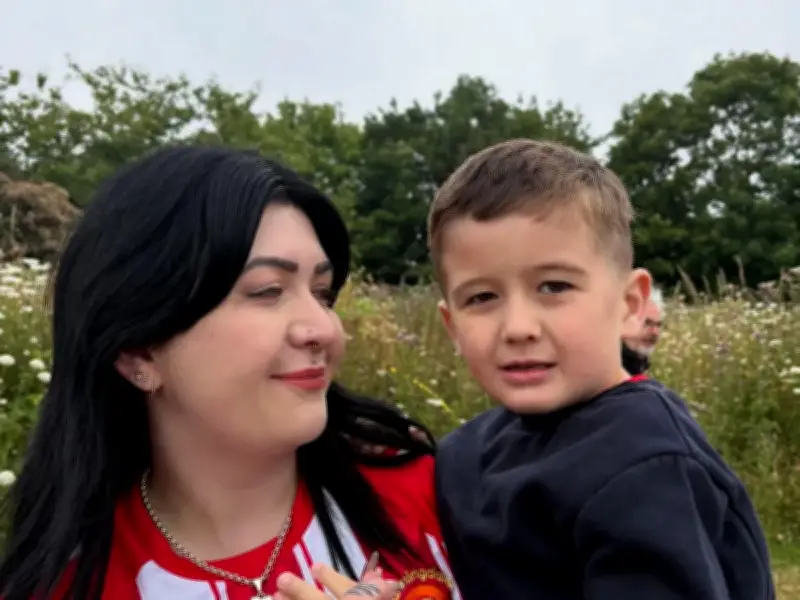
Hayley Harrison, who lives in Sunderland, said her son George, 7, has “thrived” since starting at a specialist provision after suffering from a lack of support in mainstream education. She said: “It used to be a battle getting him into school. I had to quit work for a while myself because it was just every day I'd get a call from the school to go and pick him up, that he just wasn't settling. So by the time I was getting to work, I was having to come back home, and it just it took a toll on our lives financially, emotionally. It was just awful.”
She added: “As a parent carer, it just confirms what families like mine have been saying for years – disadvantage doesn't start in secondary school, it starts from the very first day. George is autistic and non-speaking, and from the moment he started school he was already on the back foot. It wasn't because he lacked ability, it was because the system wasn't built around how he learns and communicates. He didn’t have access to the resources he needed, so instead of celebrating those first school milestones, we were just trying to help him get through the day.”
Harrison hopes the DfE’s research will lead to earlier support and better teacher training. She said: “Early identification and early intervention can change the entire trajectory of a child's education, and if this report leads to those changes, then it has the potential to make a real difference.” She added that George won’t be able to gain GCSEs or A-Levels but that specialist provision is helping to build his independence: “He's learning life skills and functional skills to ensure that when he does reach the age where he's not in school, he might be able to make himself some toast, or I might be able to accompany him to the shop and he can pay for his own things.”