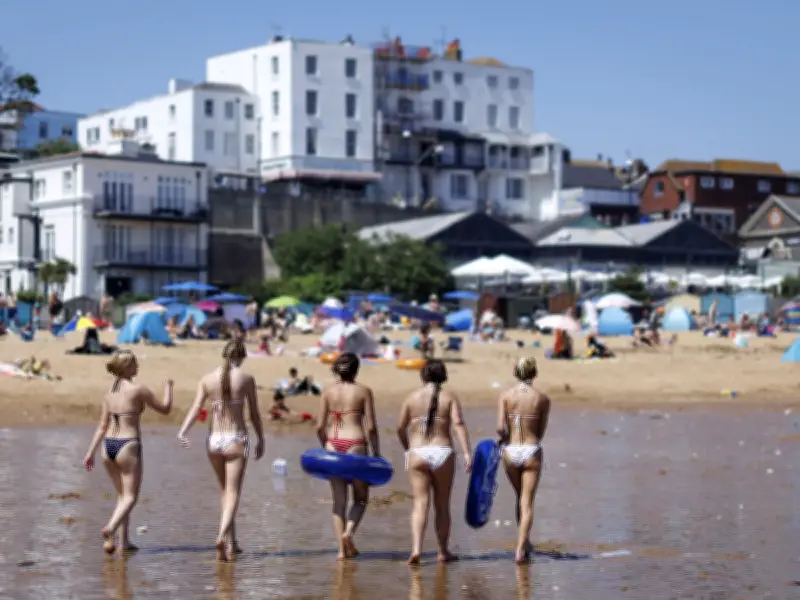
Education Secretary Bridget Phillipson has encouraged schools to teach students about water safety before the summer holidays, amid fears more children could lose their lives during the ongoing heatwave. She praised the Mirror's "brilliant" Save Lives for Sam campaign, which calls for urgent action to stop drownings after 19 children and adults died in water-related incidents in one week during the record-breaking heatwave from May 24 to 31.
Cobra Meeting and Water Safety Discussion
A Cobra meeting on the heatwave involving cross-government officials was held on Tuesday, the Mirror can disclose, with water safety among the issues discussed. Chief Secretary to the PM Darren Jones raised the topic during Tuesday’s Cabinet meeting, emphasizing the importance of publicizing safety advice given recent tragedies.
From September, it will be compulsory to teach water safety education in Relationships and Sex and Health Education (RSHE) lessons under the school curriculum. Guidance states children must be taught to "recognise risk and keep safe around" water, as well as knowing the water safety code. However, Ms Phillipson has told teachers "please don’t delay" in advising children on water safety before the summer holidays.
Government's Call to Action
Ms Phillipson told the Mirror: "No parent should ever have to experience the unimaginably awful loss of a child, and I pay huge tribute to those now turning heartbreak into action, including Sam Haycock’s parents as part of the Mirror’s brilliant Save Lives for Sam campaign. From September, it'll be compulsory for young people to learn about water safety, but given the hot weather we've got at the moment, and the tragic loss of life that we've seen in recent weeks, it's more important than ever that young people understand water safety."
She added: "I'd encourage schools and teachers to share this with young people, to share materials with families. The lesson plans and resources are out there already for teachers to use – whether it’s the Float to Live toolkit from the RNLI or the National Water Safety framework. My ask of schools is please don’t delay. Save Lives for Sam today."
Prime Minister's Backing
Keir Starmer last week backed the campaign when he spoke to reporters at the G7 summit in Evian-les-Bains in France. The PM promised the Government would do "whatever we can" to support the Mirror’s Save Lives for Sam campaign and take any further measures to keep people safe.
The campaign is named after 16-year-old Sam Haycock, who drowned in Ulley Reservoir in Rotherham, South Yorks, on his last day of school in 2021. The water safety code, which will be taught in all schools from September, advises people to stop, think and assess dangers before getting in water. It also tells people to make sure they are with family or friends if they go in water. In an emergency, it advises calling 999 and asking for the coastguard or if in the water, to stay calm, float on your back and call for help.
Government's Ongoing Efforts
Darren Jones told the Mirror today: "When the weather is this hot, it can be tempting to swim in any open water, but it can be dangerous. The Mirror's Save Lives for Sam campaign is a call for everyone to make sure they know what they – and their children – need to do to stay safe. The issue was discussed in yesterday’s officials' COBR emergency response meeting to the hot weather. The government is distributing advice to schools across the country, urging them to alert families to the risk of getting into trouble in open water. We are also working with partners like the National Fire Chiefs Council, local authorities and the coast guard to keep people safe."
Campaign Demands
The Mirror wants Britain to treat drowning as a national emergency. The campaign is asking the Government to launch an urgent public awareness campaign ahead of the summer holidays which includes lifesaving advice such as to avoid diving into the water and information on cold water shock. Among other demands, this newspaper is also calling for the Government to bring in 'Sam's Law' to make it a legal requirement for safety equipment to be installed around high risk large bodies of water.