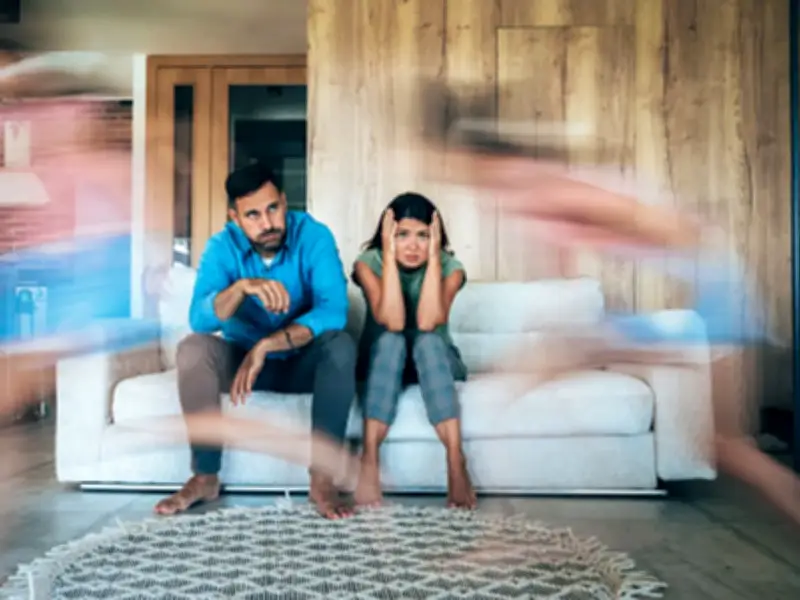
Almost two thirds of parents feel anxious about their child going back to school after the summer holidays, researchers found. Some 59 per cent of surveyed mums and dads reported fears, and almost half – 49 per cent – say the summer holidays make them think about whether their child is suited for the current school system.
Concerns over pressure and unhappiness
According to the research, one in three are concerned about the amount of academic pressure, while a further one in four say school makes their child unhappy. And 31 per cent say their child’s education is like forcing a square peg into a round hole.
As many as a quarter (26 per cent) say they have thought about, or let, their child take a sick day on the first day of term because they were anxious about going in. The study of 2,000 parents of school-aged children found that 71 per cent now see the traditional 9–3, five-day school model, which was formed over 200 years ago during the Victorian era, as outdated.
Homeschooling considered by many
Over half have considered homeschooling, rising to 73 per cent among families with children with SEN, driven by a desire for their children to receive more personalised learning and support better suited to their individual needs.
The research was commissioned by online homeschooling provider, Wolsey Hall Oxford, which is urging the Department of Education to reform the current education system, calling for more flexible learning options tailored to each child rather than forcing children to adapt to unsuitable models.
SEN parents more critical
Concerns are even greater among parents of children with Special Educational Needs (SEN). The school found 81 per cent of parents of children with dyslexia, dyspraxia, autism or ADHD say the current model is outdated, while almost three quarters of all parents surveyed believe a “one size fits all” approach is no longer effective.
The school says this view has strengthened since the pandemic. When schools couldn’t meet families’ needs, parents sought alternatives and discovered a range of options beyond the traditional system, many of which remain underpromoted in favour of a rigid, top-down model of education.
Flexibility and practical learning priorities
Flexibility is seen as a key priority in 2026. Nearly half of parents believe a more flexible education system would better support their child’s wellbeing and academic success. Similarly, 44 per cent say greater flexibility in how and when children learn would be beneficial.
Parents are also calling for different approaches to learning, with 62 per cent favouring small group teaching amid concerns of growing class sizes, 40 per cent backing project-based learning and 26 per cent supporting a blended model of classroom and online education, reflecting the hybrid working patterns many parents now follow post-pandemic.
Parents report that children are easily distracted (40 per cent), become bored quickly (27 per cent), dislike speaking in front of their peers (22 per cent) and feel their learning is not tailored to their individual needs (17 per cent). Reflecting this, 78 per cent of parents, rising to 80 per cent among SEN parents, believe their child would benefit more from hands-on, experiential learning rather than spending the day at a desk. Over half (54 per cent) say they would prefer a more practical approach to education.
Almost all (99 per cent) of parents would like their child to have more opportunities to explore the world beyond the classroom, while 48 per cent feel their child’s skills are not being applied in real-life situations. Meanwhile, one in three (32 per cent) believe the curriculum is outdated or irrelevant, and 30 per cent say it is too repetitive.
Gavin McLean, Principal at Wolsey Hall Oxford, said: “Today’s education system still reflects a model first set up over 200 years ago, designed to fit the needs of parents who were factory workers, but children are not products on an assembly line.
“An education system should adapt to the child, nurturing their individuality, curiosity, and pace of learning, not force the child to conform to a rigid system that was never built for them. The fact many are forced through this outdated system throughout their younger years is a national crisis and one we are urging the Department of Education to address for all students and teaching practitioners.
“Homeschooling is increasingly seen as a popular alternative, giving parents the freedom to create a more personalised, flexible environment where children can truly engage through hands-on learning, real-world experiences, and the time and space to build confidence without pressure.
“As our research shows, many parents are already questioning whether the mainstream education system is the right fit. Exploring alternatives like homeschooling or a hybrid model of studying at home and in a physical school environment can open up new opportunities for children to thrive, develop independence and foster a genuine love of learning that stays with them for life.”
Parents are calling for a broader, more practical curriculum. Top priorities include first aid and CPR (64 per cent), financial literacy (63 per cent) and mental health and stress management (62 per cent). Other areas highlighted include cooking and meal planning (57 per cent), basic household maintenance (52 per cent), interview skills (46 per cent), identifying misinformation (33 per cent), understanding tax (32 per cent) and gardening (31 per cent).