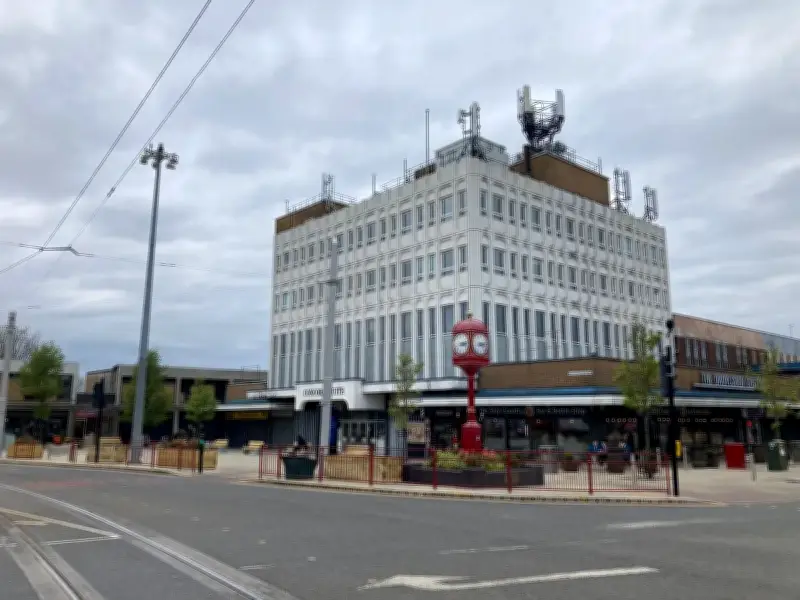
The Concord Suite in Droylsden, a 1960s building that once housed the now-defunct Droylsden Council, is set to be partly demolished after years of vacancy. The brutalist structure has been empty since the Greater Manchester Pension Fund relocated in 2015.
Partial demolition to protect shops
The ground and first floor will be retained to keep surrounding shop units intact, but the rest of the four-storey building will be bulldozed. The dance hall, function rooms, and former council offices will all go. A temporary flat, weatherproof roof will be installed following demolition.
Tameside council has not included any further redevelopment plans in their proposals. A more comprehensive redevelopment plan is anticipated to come further down the line.
Masterplan progress
This is the first major stepping stone towards regeneration since the Droylsden masterplan was approved almost 18 months ago. The masterplan offered three options for the Concord Suite: refurbish; part-demolish and refurbish; or complete demolition and rebuild. The council opted for part-demolition as the retrofit idea proved too costly, while full demolition was seen as too impactful on businesses that skirt around the bottom of the building.
The local authority says this project will create new opportunities for residents, businesses, and visitors while strengthening the town centre for future generations.
Ownership complications
Droylsden Shopping Centre, which surrounds the building, is owned by a company called New Era. The council only part-owns the landmark building itself, meaning any scheme involving the site has to involve the property company. New Era has previously spoken about its keenness to rejuvenate the shopping centre and the Concord Suite itself.
Coun Andrew McLaren, executive member for growth, housing and homelessness, said: “Residents and businesses told us they wanted to see progress on the Concord Suite and a clear plan for its future. This application signals real progress and demonstrates our commitment to turning long-held ambitions into action.
“We want to see this site once again playing an important role at the heart of Droylsden, creating a better, greener, and more vibrant town centre for everyone and helping attract further investment into the town centre.
“This application is an important milestone, but it is also only one part of a much bigger programme of regeneration across Tameside. We will continue working with partners, investors and funding bodies to help unlock the future potential of this site and deliver the wider vision for Droylsden town centre.”
Other developments in Droylsden
Plans for a 192-home scheme for the marina have also been tabled. Developers True North Partnerships and CERT want to build three apartment blocks on land adjacent to the Lock Keepers site, behind the old library. All the homes would be affordable (up to 80 per cent of market rate), according to developers. This would eventually link to the shopping centre via the canal park proposed in the masterplan.
The Droylsden masterplan also includes the makeover of the town squares and the creation of exhibition and event spaces. Tameside council leader Eleanor Wills previously likened their plan for Droylsden Square to Hebden Bridge, an idyllic town in the Pennines.
Droylsden is the only Tameside town on the inside of the M60, meaning it is the closest geographically to Manchester. With key infrastructure such as Metrolink already operational, planners believe it can undergo ‘transformational change’ and become a go-to spot for locals and punters from further afield.
Masterplan breakdown
Droylsden Square would still mainly be used as a car park - like it is now - under the masterplan. But it would undergo a makeover with more greenery and see a new event space installed for concerts, market days, or the Christmas lights switch-on. Villemomble Square would see a huge aesthetic makeover, as it holds a key position on the crossroads of Manchester Road and Market Street.
The vision for Greenside Mill is not really in the control of the council, due to it being privately owned, but the masterplan seeks to support it as an important employment centre. The council believes some private sector investment is required to restore the building and protect it against further decay. A new branding strategy to market the mill and raise the profile of the businesses has also been suggested.
An ambition of the masterplan is to create an environmentally sustainable neighbourhood well connected to the town centre. The two 1960s estates to the east of Market Street lack connections, have unsafe alleyways, and back onto the main streets. The plan includes creating energy efficient housing and better designed streets that encourage people to walk to and from the town centre.