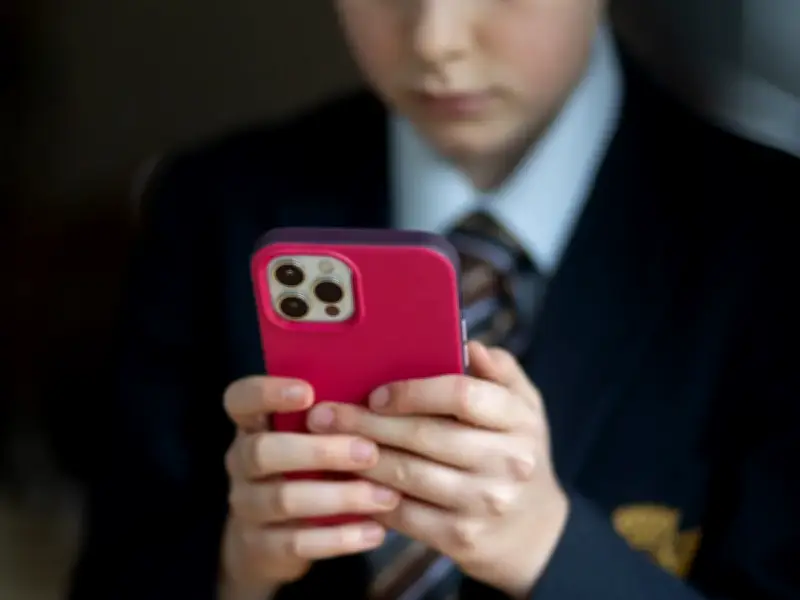
Teachers and experts have warned that parents must be given guidance and support to prepare children for the incoming social media ban for under 16s. Leading children’s charity the NSPCC said its hotline Childline is already receiving calls from children worried “they will struggle to stay connected with friends after the ban”.
The charity said this is particularly a concern for children who face greater risk of isolation, such as those that live in rural areas or are homeschooled.
Children share fears with Childline
One young person told Childline: “I was bullied throughout most of school, and I don’t have any friends I can turn to in real life. The only place I can find people who understand me is on social media – but now I find out there’s going to be a ban next year. I’m worried I’ll lose everyone I’ve met and depend on online, and I’ll be back where I started, all alone.”
Another young person told Childline: "I'm home schooled and social media is how I stay connected with my friends. I have bad anxiety so can't always make myself go out and meet people, but online I've got safe spaces to hang out with my friends. If there's a social media ban, I'm worried I'll be totally cut off."
Experts call for guidance
Ella Bradshaw, NSPCC’s policy and public affairs officer, told The Mirror: "Children need reassurance these fears are normal, and they have safe adults who they can turn to for support. It’s also important to remind them of the range of ways to safely connect with peers that will continue beyond social media, via both on and offline spaces.”
She continued: "Families, teachers and wider professionals need to be given the tools and guidance to help children navigate the social media ban. This must include practical information on what the new rules will mean in reality, as well as advice on how to help children weather these changes.”
It comes after Meta agreed to a £13.3billion settlement in the US this week to resolve a legal battle over claims Facebook and Instagram harmed children. The tech giant unveiled a host of new protections that will automatically apply to under-18s on its platforms, demanded by the participating states. These include time limits and night-time blocks, along with a commitment to strengthening age verification tools. Cabinet minister Pat McFadden said the Government expected Meta to roll out the new safety features for children in the UK.
Ban details and school leaders' concerns
Keir Starmer announced a social media ban for under 16s shortly before he resigned as Prime Minister. Legislation is expected to be passed by the end of the year to enforce the ban, with restrictions to be in place by next spring.
Pepe Di’Iasio, General Secretary of the Association of School and College Leaders, urged ministers to write up guidance for parents ahead of the ban coming into force. He said: “We would like to see the government provide resources for families – which could be distributed via schools – providing guidance on how to inform and prepare their children for this abrupt change. This guidance needs to explain the rationale for the social media ban, how it will operate in practice, and how to reassure children who are concerned and upset about the ban.”
A spokesman from the National Education Union added: "It is crucial that the Government get the implementation right to ensure that schools have the support they need to help to prepare children to go online safely."
Paul Whiteman, general secretary at school leaders’ union NAHT, said: “The government must ensure its new measures to protect young people are reinforced not just in the classroom, but also at home, across society and the wider public sector, and crucially, by the technology companies.”
Kate Edwards, Head of Education and Support at Molly Rose Foundation, which has long been against a ban, which it says could create a false sense of safety, said: “Guidance for parents and children on how to prepare for the ban is crucial; evidence shows a majority of children are already talking about getting around the ban, meaning they are still at risk of coming into contact with harm.”
“Our biggest concern is not that young people use technology, but that they feel pressured to do so in secret, making it harder for parents and trusted adults to support them when they need it most.”
Elsewhere, a cross-party group of MPs has raised concerns about a social media ban inadvertently blocking children from accessing study content on platforms like YouTube. Labour MP Feryal Clark, who is chair of the All Party Parliamentary Group for Digital Creators, told The Mirror: "This is a crucial issue, and we have to get it right. High-quality, creator-led video content is a valuable resource; it isn't social media, and if a ban on social media for under-16s is poorly targeted, we risk cutting children off from exactly the kind of educational content they rely on. Any legislation has to be capable of recognising that distinction, otherwise it's young people who will lose out.”
A Government spokesman said: “We will continue to engage with young people, parents and educators to help them navigate the upcoming changes. This autumn we will also publish the first-ever government guidance for parents on healthy screen use for children that will cover topics including scrolling and social media to sleep and learning.”