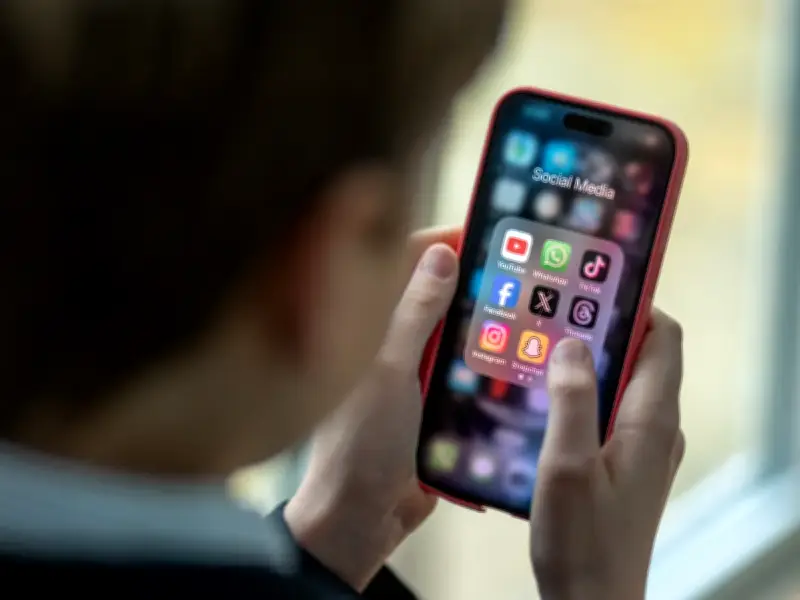
Roughly one in three school pupils in Newcastle are chatting over the internet with people they do not know in real life, new figures show. The city’s latest Health Related Behaviour Questionnaire (HRBQ), completed by almost 7,500 young people, found that 29% of primary school children and 34% of those in secondary school do so – a slight decrease since 2024.
Survey reveals online safety concerns
The bi-annual survey also showed that three in every 10 children had received a message that scared or upset them, compared to just 16% in 2011. Concerns about youngsters’ online safety were shared with city leaders at a meeting of the Safe Newcastle partnership earlier this week.
Only 47% of Newcastle secondary school pupils keep access to their social media profiles for ‘friends only’, a drop from 68% in 2017, and nearly one in four primary pupils have seen adult images online.
Positive trends in health behaviours
However, the questionnaire also showed that fewer children are smoking, vaping, drinking alcohol or taking drugs. The proportion of primary school pupils being offered drugs and of drug use among secondary school children both fell to their lowest levels since records began in 2011.
Only 4.4% of secondary pupils consume alcohol regularly, compared to 13.6% 15 years ago, and only 0.9% smoke. Wendy Taylor, the council’s cabinet member for integrated health and adult social care, said the results showed “things heading in the right direction”.
The Lib Dem councillor added: “Ahead of next year’s ban on the sale of tobacco to those born from 2009 onwards and the creation of a ‘smokefree generation’ it is great to see that 97% of children in Newcastle say they have never smoked. It is also encouraging to see that use of alcohol, vapes and drugs are all decreasing and the proportion of children doing the recommended amount of exercise has increased.”
Safety and relationship findings
The HRBQ results showed that fewer children feel unsafe going out after dark or using public transport. 4% of secondary school pupils said they had experienced violence or aggression in the areas where they live, compared to 10% in 2011, and 5% had been involved in a violent incident where a weapon was used or threatened.
The number of Year 10 students who had had a sexual relationship has fallen considerably, from 23% in 2011 to 4% today. And more pupils were able to recognise unhealthy relationship behaviours as wrong than had been the case two years ago. However, there is still concern that only 40% said that a partner checking their phone is always wrong and that only 49% agreed that someone checking where you are all the time was unacceptable.
Coun Taylor added: “From a safety perspective more children say they feel safe going out after dark; and fewer secondary school pupils are talking to strangers online. Of course, there is still scope for improvement, particularly in addressing inequalities and tackling issues such as oral health and bullying.
“We are also troubled by the numbers who don’t see some controlling actions, such as checking your phone or monitoring where you are all the time, as always wrong; and that there continue to be significant differences between the relationship related responses given by boys and girls. However, with three in four of those surveyed feeling happy with their lives there is a solid base to continue to build from as we look to ensure every child enjoys the best start in life.”
The HRBQ is carried out every two years and asks pupils in years four, six, eight and 10 for their views on a range of topics. This time, 7,469 children from 62 schools took part.