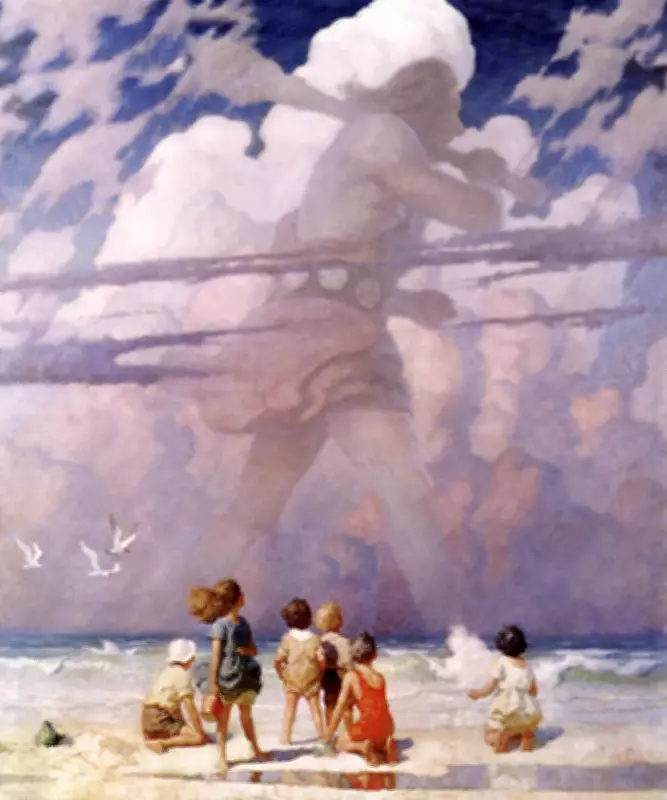
In a world where giants made of cloud seem possible only in early childhood, teacher Brendan James Murray laments the loss of imagination as one of the greatest invisible tragedies. He argues that while very young children possess rich imaginative worlds, most lose this faculty by their mid-teens, a loss that is largely unquestioned in Western culture.
The Radical Act of Imagination
Murray contends that true imagination—untethered dreaming for the nourishment of the self—has become a radical act. He points out that the word 'imagination' disappears from Victorian education curriculum documents well before high school, and in adult contexts, it carries negative connotations. Being called a 'dreamer' is rarely a compliment, and society mocks hopes that exist only 'in one's dreams'.
The Role of Education
As an English teacher, Murray observes that modern education prioritises measurable skills and products over imaginative freedom. Criteria sheets, while useful, often stifle creativity by imposing walls and barriers. He writes, 'Every criteria has a shadow criteria, that which implies all the infinite things the students cannot do.' This focus on assessment leads to an anxious self-consciousness in children, who second-guess what the assessor wants.

Murray laments that even the word 'play' trivialises the deep profundity of imaginative dreaming. He recalls how his grandfather invited him to dream about smooth stones without any expectations, a freedom that allowed true imagination to flourish.
Hope and Possibility
Despite the challenges, Murray believes the loss of imagination is not inevitable. He argues that sustaining and developing imagination can empower and protect children in transformative ways. He cites driven students who have imagined themselves into their goals, feeling the hot sand on their faces as future archaeologists or envisioning pyramids against a cloudless sky.
Without imagination, speculative possibilities wilt, and in a real sense, loss of imagination is a loss of hope. Murray calls on parents and teachers to recognise the value of untethered dreaming and to create spaces free from demands, where children can explore wonder, possibility, and impossibility.
This edited extract is from Childhood by Brendan James Murray (Picador Australia).