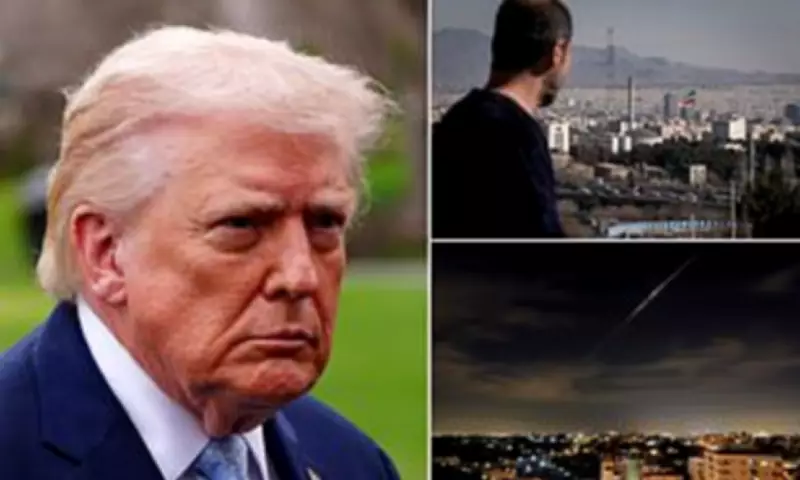
Global Economy Faces Major Threat as US-Iran Strait of Hormuz Standoff Escalates
The confrontation between United States President Donald Trump and Iranian authorities over access to the strategically vital Strait of Hormuz has reached a critical juncture, with international officials warning that the entire world economy is now under major threat. Iranian officials assert they maintain control of the narrow waterway, through which approximately 20 percent of global oil supplies transit, and have restricted passage exclusively to nations allied with Tehran.
International Energy Agency Issues Dire Warning
Fatih Birol, the chief of the International Energy Agency, has issued a stark alert that the ongoing closure of the strait poses a significant danger to the global economy, emphasizing that no country will be immune to its repercussions. Speaking at the National Press Club in Canberra, Australia, Birol compared the current energy crisis to the oil shocks of the 1970s and the aftermath of Russia's 2022 invasion of Ukraine, describing it as two oil crises and one gas crash combined.
The global economy is facing a major, major threat today, and I very much hope that this issue will be resolved as soon as possible, Birol stated. He highlighted that at least 40 energy assets across nine countries in the region have sustained severe or very severe damage, underscoring the need for coordinated global efforts to mitigate the crisis.

Trump's Ultimatum and Military Posturing
President Trump has escalated tensions by threatening to obliterate Iran's nuclear power plants if the Strait of Hormuz is not reopened within a 48-hour deadline, specifically targeting the largest facility first. In a post on his Truth Social platform, Trump reiterated his stance with the phrase PEACE THROUGH STRENGTH, doubling down on his warning as the Monday night deadline approaches.
In response, Iranian officials have remained defiant, cautioning that any attack on their nuclear sites would result in the irreversible destruction of energy infrastructure across the entire region. They further warned that the Strait of Hormuz would be completely closed and threatened retaliatory strikes on Israeli nuclear facilities. Iranian President Masoud Pezeshkian vowed to firmly confront delirious threats on the battlefield, asserting that threats only strengthen national unity.
As Washington deliberates its next steps, thousands of US Marines are already en route to the region, potentially for a mission to seize Kharg Island, through which Iran exports 90 percent of its crude oil. The Iranian regime has warned that such an invasion would trigger an unprecedented response, including setting fire to regional facilities, which could crash the global economy.
Regional Conflict and International Appeals
Amid the standoff, Iranian forces launched a fresh barrage of missiles at Israel late Sunday night, causing damage in central Israel from debris and drone fragments, though no injuries were reported. Footage showed an Israeli Arrow 3 exoatmospheric anti-ballistic missile intercepting an Iranian missile in space, creating a vivid light display. Israel has intercepted approximately 92 percent of over 400 ballistic missiles fired by Iran since the conflict began, with Israeli officials pledging to continue strikes for at least another three weeks.
Prime Minister Benjamin Netanyahu vowed to target the Iranian Revolutionary Guard Corps, stating, We're going after them personally, their leaders, their installations, their economic assets. This follows an attack in Dimona, southern Israel, where two Iranian missiles injured more than 160 people, including 70 children.
International calls for de-escalation have grown louder. World Health Organization Director-General Tedros Adhanom Ghebreyesus urged all parties to exercise maximum military restraint and avoid actions that could trigger nuclear incidents. At the Vatican, Pope Leo XIV appealed for an end to hostilities, describing the death and suffering as a scandal to the whole human family and calling for persistent prayer to pave the way for peace.

Heightened Security Concerns Worldwide
Iranian General Abolfazl Shekarchi warned that civilian targets worldwide, including luxury resorts, could be attacked, coinciding with millions of Americans embarking on spring break travel. In response, the US State Department issued alerts advising Americans, particularly those in the Middle East, to follow embassy guidance due to periodic airspace closures and potential threats to US interests globally.
The FBI and Department of Homeland Security have placed counterterrorism operations on high alert for possible Iranian retaliation on US soil, as groups supportive of Iran may target locations associated with the United States. This multifaceted crisis underscores the profound risks to global stability, energy security, and economic well-being as diplomatic and military tensions continue to mount.