Nigeria Preserves History in Arctic Vault as First African Nation in Svalbard Archive
Nigeria First African Nation to Store History in Arctic Vault

Nigeria Secures Its Legacy in Arctic Data Vault as Pioneering African Contributor

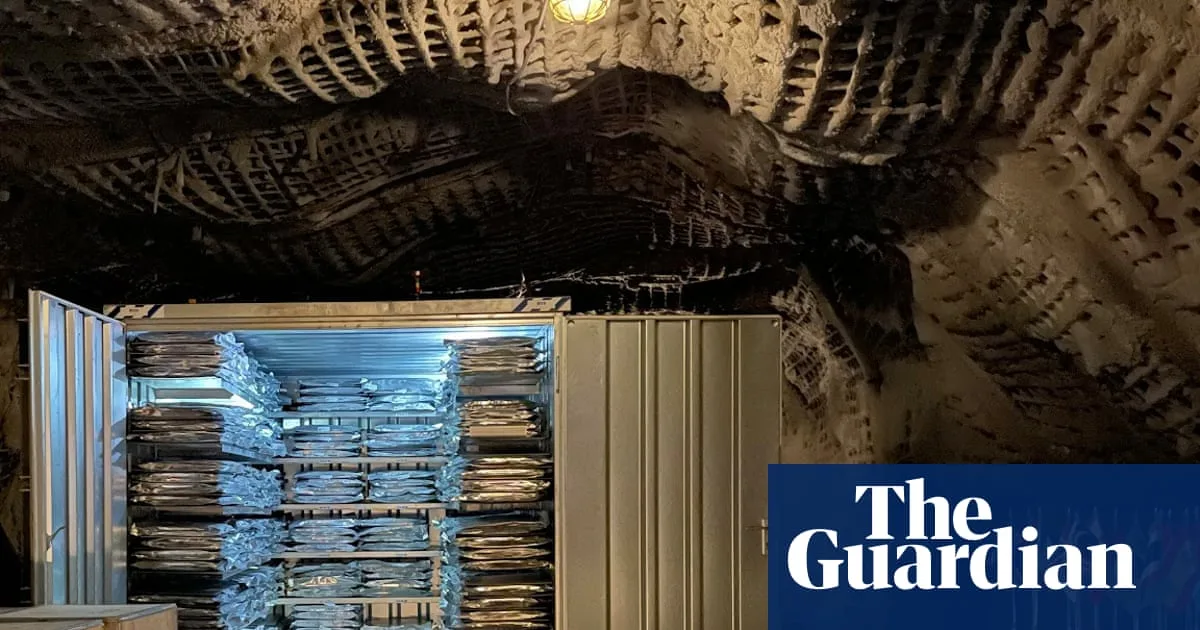
In a groundbreaking move for cultural preservation, Nigeria has become the first African nation to deposit its historical and creative archives in the Arctic World Archive (AWA), a state-of-the-art storage facility located deep within a decommissioned coalmine near the North Pole in Svalbard, Norway. This initiative aims to safeguard the country's rich heritage for future generations, leveraging the cold, dark, and dry conditions ideal for long-term data preservation.

The Arctic World Archive: A Global Repository for Humanity's Memory

The Arctic World Archive, established in 2017 by the Norwegian technology company behind Piql film, serves as a secure data storage unit where organizations and individuals worldwide can deposit records on specialized digitized film that lasts up to 2,000 years. Inspired by the nearby Svalbard Global Seed Vault, which houses over a million seed samples as a safeguard against disasters, AWA is designed to hold the "world's memory." It currently contains an eclectic range of historical and creative records from 37 countries, including contributions from the Vatican Library, the European Space Agency, and works such as Chopin's manuscripts and photographs documenting the Pacific's disappearing Marshall Islands.

On February 27, Nigeria placed its archives 300 meters beneath a mountain in Svalbard, marking a significant milestone in global data preservation efforts. The Nigerian collection includes a mix of social and cultural history, alongside archives from its creative industries, sourced from 12 organizations such as private art foundations, museums, and libraries.

Wide Pickt banner — collaborative shopping lists app for Telegram, phone mockup with grocery list

Nigeria's Journey to Preserve Its Narrative

The project was initiated by historian Nze Ed Emeka Keazor, who was appointed chair of Piql's first Africa office in Lagos in 2022. Over a year and a half, Keazor engaged with cultural organizations across Nigeria, including the Olusegun Obasanjo Presidential Library in Abeokuta, Ogun State, to encourage participation. He traveled to Svalbard last month with colleague Esona Onuoha to formally hand over the archives.

Institutions involved in the deposit include Lagos art gallery Bloom Art, the Asaba Monument Trust commemorating the 1967 Asaba massacre, the Nsibidi Institute for social research, and the Umuchieze Community Legacy Deposit, which focuses on preserving Indigenous knowledge and history. Ugoma Ebilah, founder of Bloom Art, emphasized the importance of this effort, noting Nigeria's global creative contributions, highlighted by Fela Anikulapo Kuti receiving a Lifetime Achievement Award at this year's Grammy Awards.

This archival push coincides with a significant moment for Nigeria's creative community, as British-Nigerian director Akinola Davies Jr won an outstanding debut Bafta for his film My Father's Shadow, which explores themes of family and Nigeria's 1993 election. In his acceptance speech, Davies urged people to "archive your loved ones" and preserve stories for the future.

Addressing Fragility in Nigerian Records

In Nigeria, where libraries and museums often face underfunding and rely on paper-based systems, historical documents are at risk of being lost or damaged. Dr. Chima Korieh, an expert in West African social and economic history at Marquette University in Wisconsin, led a project to help the Umuchieze community in Imo State preserve their stories, cultural practices, and precolonial records. Their AWA deposits include manuscripts on Umuchieze history and reports on judicial and political systems.

Korieh highlighted the challenges, stating that many public records from 1960 onwards are missing from Nigerian archives, with existing materials in danger due to poor preservation. Beyond storage, the project aims to involve the community, with plans to open a centre in Umuchieze for public access to these materials.

Other contributors include the National Commission for Monuments and Museums and the National Council for Arts and Culture, which deposited reports on Nigeria's creative economy, such as its music and film industries. Obi Asika, director-general of the National Council for Arts and Culture, described this as a step toward "narrative restitution" for Africa, addressing historical gaps in memory protection.

Pickt after-article banner — collaborative shopping lists app with family illustration

Global Data Preservation Challenges and Solutions

The need for secure data storage is increasingly urgent, as highlighted by a 2024 Pew Research Center study showing that 38% of webpages from 2013 to 2023 no longer exist, leading to significant information loss. AWA emerged from a research project focused on long-term data security, with co-founder Katrine Loen noting the fragility of data storage and the risks during migration processes.

However, preservation comes at a cost, with Piql film priced at €9,000 (£7,773) per reel. In response, AWA transitioned to a non-profit organization in 2025 to subsidize financially strained institutions. This year, it partnered with UNESCO to archive the Memory of the World Register and records of world heritage sites as digital 3D scans.

Alongside the archives, AWA provides instructions for decoding the data and plans to give depositors tokens to guide future generations to the facility. Svalbard's unique geology, containing rock formations from nearly every geological era, adds to its reputation as a custodian of global history. As Loen puts it, "We are putting in the knowledge of humanity."

For Nigeria, this deposit marks the beginning of a long journey to ensure its stories are preserved and presented on the world stage, safeguarding its cultural legacy for millennia to come.