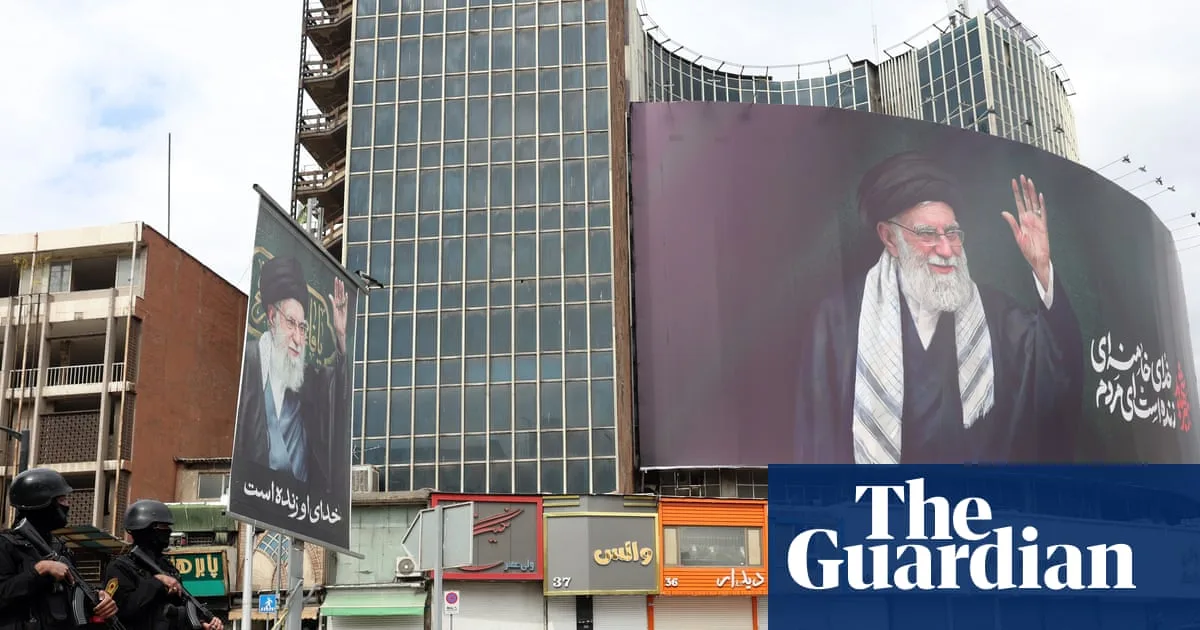
The sudden death of Iran's supreme leader, Ayatollah Ali Khamenei, killed alongside his wife in an Israeli missile strike on his Tehran compound, has been described by experts as a potential turning point for the Islamic republic, akin to the fall of the Berlin Wall. The 86-year-old had ruled Iran for 37 years, holding ultimate authority over all state matters including nuclear negotiations, recognition of Israel, and social reforms.
Analysts suggest the power vacuum left by Khamenei's death will be difficult to fill, despite a succession plan already underway. His son Mojtaba is emerging as a frontrunner, but the violent circumstances of the transition pose significant challenges. 'Everyone has a plan until they get punched in the face,' said Naysan Rafati of the International Crisis Group, highlighting the risks of targeting any successor or transition council members.
The regime is showing signs of strain. Khamenei's funeral has been postponed to avoid further Israeli or US strikes on senior officials. The Assembly of Experts, responsible for electing a new leader, met remotely after its Qom headquarters was bombed. In prisons, political inmates have been dispersed amid fears of bombardment, while security forces have fired live rounds at homes where anti-regime slogans were heard following celebrations of Khamenei's death.
Stanford University's Abbas Milani called the death 'close to a Berlin Wall moment,' noting the profound psychological effect. He argued that Iran's system was a personalised dictatorship, with Khamenei as the ultimate decision-maker, making his removal a seismic event. The regime's ability to survive this crisis remains uncertain as it faces internal unrest and external military pressure.