This Week in History: Iranian Plots, Bethlehem Siege and Papal Transition
Iranian Plots, Bethlehem Siege and Papal Transition

This Week in History: Iranian Plots, Bethlehem Siege and Papal Transition

This retrospective analysis examines how major global events between 30 March and 5 April were captured on the front pages of The Independent newspaper. The news during this period reveals enduring geopolitical fault lines that continue to shape international relations decades later.

Iran's Covert Operations and Regional Crises

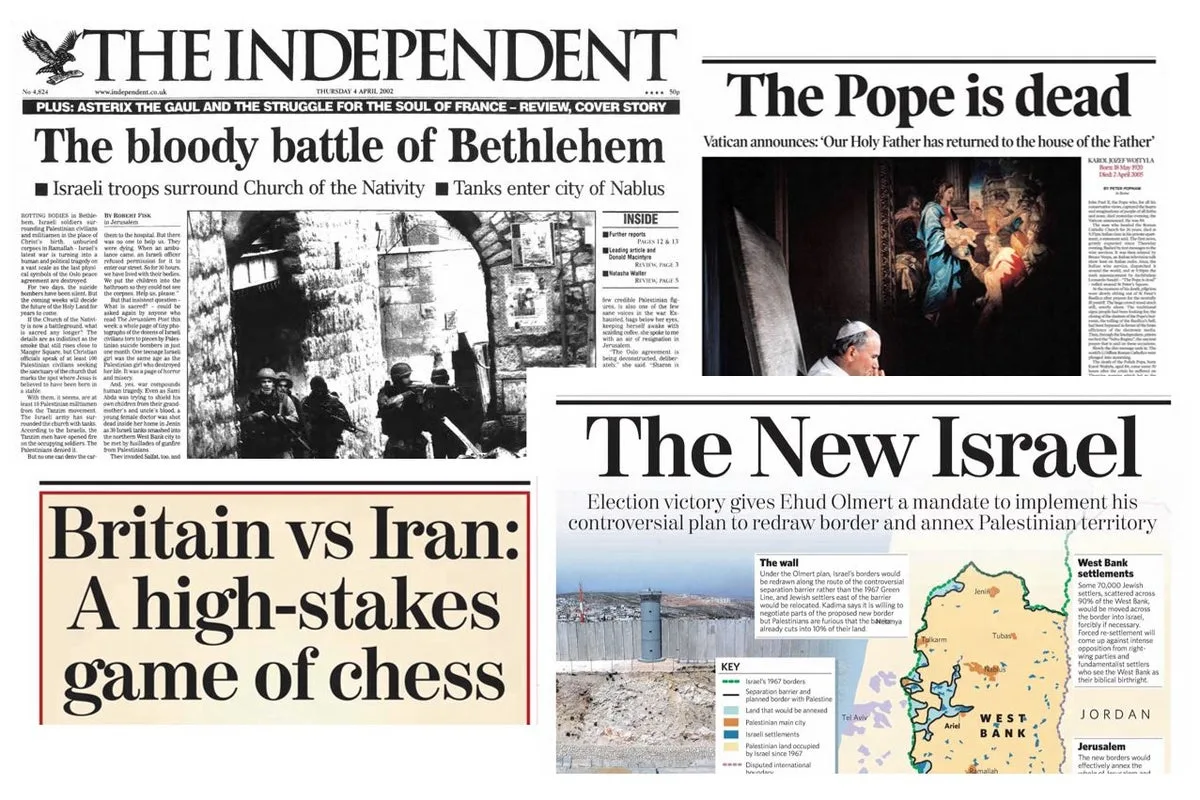
On 4 April 1988, highly placed intelligence sources revealed that Iranian hit squads were preparing to infiltrate Western Europe in a new assassination campaign ordered directly by Tehran. The specially trained operatives planned to bypass customs by posing as national airline flight attendants, relying on a covert network of fake students and agency workers for ground support. This detailed intelligence exposed a highly coordinated effort by Ayatollah Khomeini's regime to target dissidents abroad through sophisticated covert operations.

Three years later on 5 April 1991, more than a million Iraqi Kurds massed at the Iranian border, fleeing helicopter attacks and the advancing Iraqi army. The refugees endured torrential rain, starvation and untreated wounds as they desperately sought safety from Saddam Hussein's regime. This mass displacement soon prompted an international response, with Western allies establishing safe havens and enforcing a no-fly zone across northern Iraq to protect vulnerable populations.

Wide Pickt banner — collaborative shopping lists app for Telegram, phone mockup with grocery list

Middle East Conflicts and Political Developments

On 4 April 2002, Israeli troops surrounded the Church of the Nativity in Bethlehem as reports indicated at least 100 Palestinian civilians were seeking sanctuary inside the sacred site. The tense military standoff unfolded alongside heavy tank incursions into nearby Nablus, raising profound international alarm over escalating violence in the Holy Land. The gruelling 39-day siege ultimately concluded with an internationally brokered agreement that freed the civilians and sent armed militants into exile.

Four years later on 30 March 2006, Ehud Olmert secured an election victory, claiming a mandate to implement a controversial "realignment" plan to unilaterally redraw Israel's borders and annex Palestinian territory. The proposed strategy aimed to consolidate major settlement blocs while withdrawing from other areas of the West Bank. However, these plans were ultimately abandoned just months later following the outbreak of the 2006 Lebanon war.

Global Leadership Transitions and Political Arrests

On 31 March 2001, Serbian state television announced the arrest of former Yugoslav president Slobodan Milosevic in Belgrade. The detention occurred just one hour before the expiry of a US deadline threatening heavy economic sanctions if the country failed to cooperate with the UN war crimes tribunal. He was later extradited to The Hague to face trial for crimes against humanity, but ultimately died in his cell in 2006 before a verdict could be reached.

The following day on 31 March 2002, Buckingham Palace announced the death of Queen Elizabeth the Queen Mother, who died peacefully in her sleep at the age of 101. The loss marked a second severe blow to the royal family, coming exactly seven weeks after the passing of Princess Margaret. An estimated 200,000 mourners later filed past her coffin during her public lying-in-state at Westminster Hall.

Papal Transition and International Diplomacy

On 3 April 2005, the Vatican announced the death of Pope John Paul II at the age of 84, bringing a close to his historic 26-year papacy. Following a highly publicised decline in the pontiff's health, The Independent reported he was mourned globally by millions across all faiths despite his staunchly conservative views. His passing soon drew one of the largest gatherings of world leaders in history for his funeral, paving the way for the election of his successor, Pope Benedict XVI.

Pickt after-article banner — collaborative shopping lists app with family illustration

Two years later on 4 April 2007, the British government entered direct talks with a senior Iranian negotiator as the hostage crisis over 15 captured Royal Navy personnel reached a crucial stage. Hopes for a resolution mounted following the release of an Iranian diplomat in Iraq, sparking media speculation of a coordinated prisoner exchange. In a dramatic twist later that very day, Iranian president Mahmoud Ahmadinejad suddenly announced the unconditional release of all 15 sailors as an Easter gift to the British people.

Technological Preparedness and Global Economic Response

On 30 March 1998, Tony Blair revealed plans to train a 20,000-strong army of "bug busters" to tackle the impending millennium computer date-change crisis. Writing in The Independent, the prime minister outlined government grants to train young, unemployed and retired citizens to prevent the "technical timebomb" from causing major disruption. Less than two years later, the turn of the millennium ultimately arrived without catastrophe thanks to these extensive preparations.

On 3 April 2009, world leaders at the London G20 summit agreed to inject $1 trillion into the global economy to combat the escalating recession. Economists widely credited this unprecedented, highly coordinated intervention with restoring market confidence and preventing a second Great Depression through decisive international cooperation.

These front-page stories from The Independent collectively illustrate how geopolitical tensions, leadership transitions, and international crises have consistently shaped global affairs during this historically significant week across multiple decades.