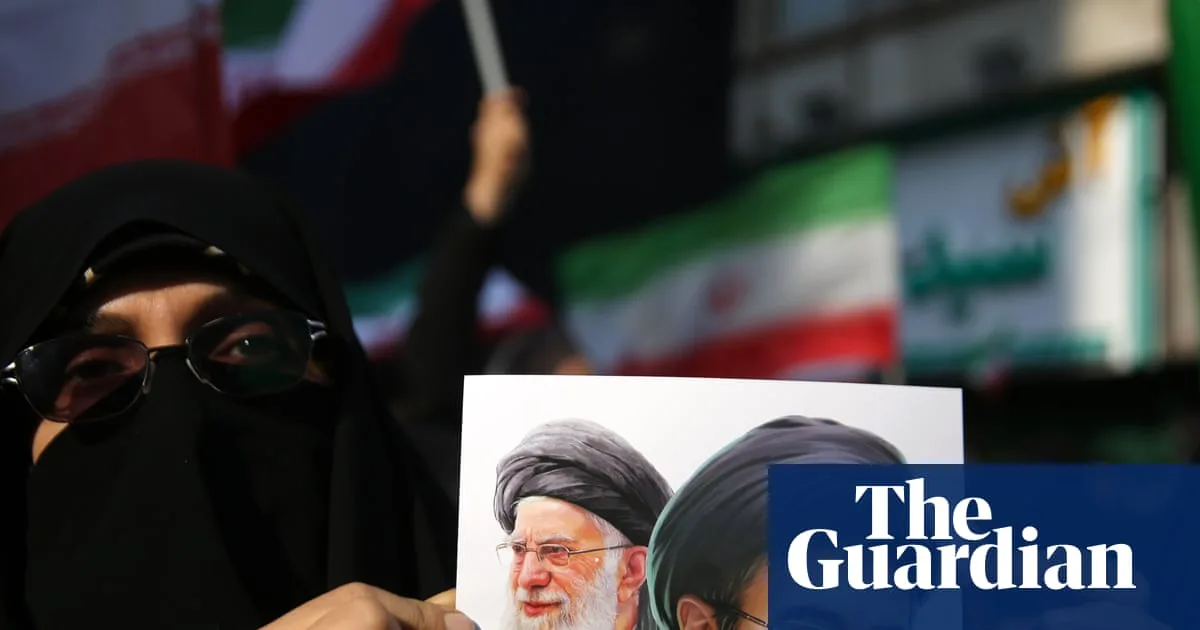
Iran has appointed Mojtaba Khamenei as its new supreme leader following the assassination of his father, Ali Khamenei. The announcement was met with chants of “God’s hand is still upon us, Khamenei is still our leader” from crowds in Tehran. The regime presents the succession as a sign of continuity, but Mojtaba remains an obscure figure to both Washington and ordinary Iranians.
Unlike his predecessors—Ruhollah Khomeini, who led the 1979 revolution, and Ali Khamenei, who served as president for eight years before becoming supreme leader—Mojtaba has lived a backroom existence. A 2007 US diplomatic cable described him as “the path to access to his father.” He has only one public video, speaking to a jurisprudence class, and has given no substantive interviews outlining his views.
Mojtaba has been the candidate of the Islamic Revolutionary Guard Corps (IRGC), having served as deputy chief of staff in the supreme leader’s office for two decades. One Western diplomat said his selection “shows Iran is doubling down on the security state. The new leader will be even more beholden to the IRGC.” The IRGC overcame significant obstacles to ensure his elevation, including opposition from figures like Ali Larijani and Ali Asghar Hejazi, the latter killed in Israeli airstrikes.
Concerns over Mojtaba’s health arose after the bombing of the supreme leader’s compound on 28 February killed his mother, wife, son, and other relatives. He is said to have professed reluctance to take on the role, though this may have been performative. Clerics also had to address his religious qualifications: until 2022, he held the lower rank of Hojjat al-Islam, but the Assembly of Experts fast-tracked his credentials to allow the use of the title “Ayatollah.”
The hereditary succession posed a particular challenge, as the Islamic Republic was founded in opposition to dynastic rule. Khomeini deemed monarchy “abhorrent to Islam,” and Ali Khamenei himself described the hereditary principle as un-Islamic. Complex theological arguments were produced to overrule these objections. The Assembly of Experts also faced practical difficulties in meeting, given the risk of Israeli airstrikes; its secretariat offices in Qom were bombed last week, killing several staff members.