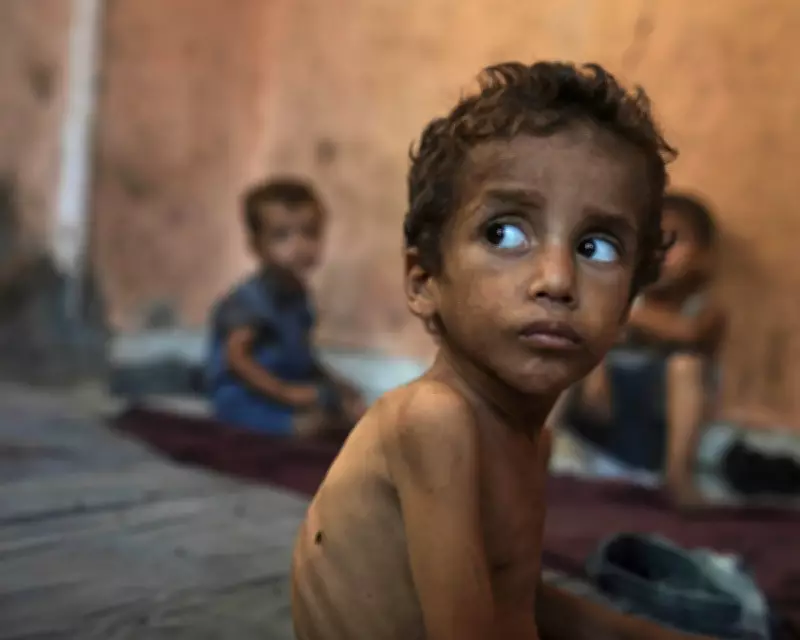
Gaza on the Brink of Famine as Crossings Shut Indefinitely
In a devastating escalation of the ongoing humanitarian crisis, Israel has closed all crossings into Gaza indefinitely following its attacks on Iran, imposing a siege that threatens to plunge approximately 2 million Palestinians into a new hunger crisis. With Israeli forces controlling about 60% of the territory, almost all of Gaza's food must be imported, making the border closures a critical blow to survival efforts.
Immediate Food Shortages and Soaring Prices
Humanitarian organizations, which have been feeding much of Gaza's population, report that supplies available when the war began will only last a few more days. José Andrés, founder and chief of World Central Kitchen, warned in a social media post, "If the borders stay closed, World Central Kitchen will run out of food this week. We are cooking 1 million hot meals every day. We need food deliveries every single day." An international food security expert estimates there is only a week's supply of fresh food left in Gaza, with community bakeries having flour for about 10 days of bread and aid parcels lasting around two weeks.
As news of the conflict spread, Palestinians, haunted by memories of past famines, rushed to buy supplies, causing prices to skyrocket. The price of a 25kg sack of flour has tripled to between 80 and 100 shekels, up from about 30 shekels last week, while essentials like sugar, nappies, and cooking oil have doubled. Sobhi Al-Zaaneen, a 50-year-old father of seven, expressed his fears, stating, "The return of famine to Gaza is what we fear most, even more than the shelling." He is stockpiling food despite the cost, but many others lack the funds after losing homes and jobs in the war.

Humanitarian Warnings and Legal Obligations
Jan Egeland, head of the Norwegian Refugee Council, emphasized that Israel, as the occupying power in Gaza, has a legal responsibility under international humanitarian law to ensure sufficient food for civilians, regardless of the war with Iran. He noted, "Community kitchens are already closing, and prices for basic goods have started to rise. Even amid a widening regional war, international humanitarian law still requires Israel to facilitate relief for civilians under its control."
In response, the Israeli authority controlling aid into Gaza, Cogat, cited security reasons for halting shipments, stating, "Opening the crossings under fire puts lives at risk, both personnel on the Israeli side and on the Gazan side." They claimed there is adequate food in Gaza, with existing stockpiles expected to suffice, but declined to provide statistics. However, Palestinians and international groups dispute this, warning of severe shortages exacerbated by erratic controls and destroyed warehouses.
Long-Term Impacts and Desperate Measures
The closure has triggered a psychological and commercial crisis, as Bahaa Al-Amawi, secretary of the Chamber of Industry and Commerce of North Gaza, explained, "Since the beginning of the ceasefire, there has been no strategic stockpile, and we are unable to establish one under the current conditions. This means that as soon as a closure is announced, it triggers a psychological crisis for many citizens due to their previous experience with famine, alongside a real commercial crisis caused by the absence of stock reserves."
Residents like Um Mohammed Hijazi, a 49-year-old mother of five displaced multiple times, rely on limited aid supplies, while others, such as Alaa Abu Rakba, a 43-year-old father of four, have resorted to buying up basics to avoid reliving past famines. He stated, "I would rather the war and shelling return than see the crossings closed, because I do not want to live through a famine again or find myself unable to provide food for my children for days."
With Gaza's border with Egypt closed since May 2024 and no immediate relief in sight, the situation remains dire, underscoring the urgent need for international intervention to prevent a catastrophic hunger crisis.