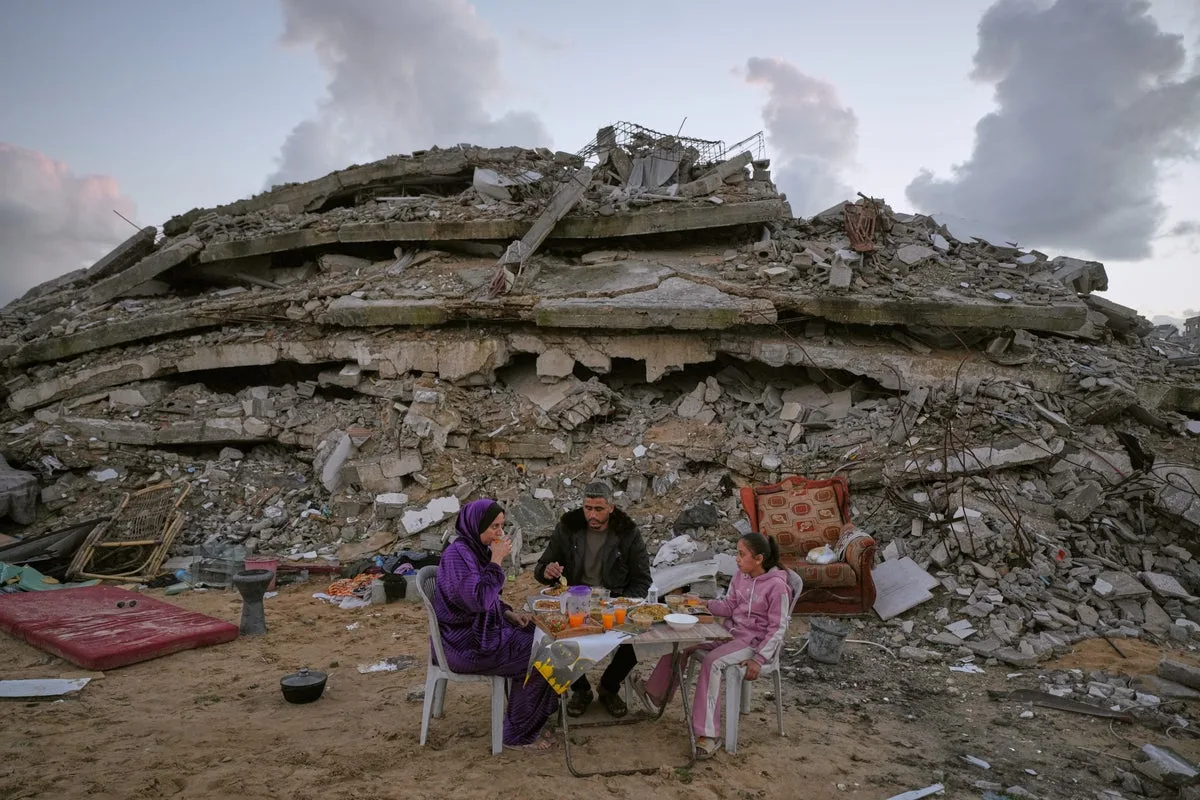
As the sun sets, Saddam al-Yazji, his wife Heba and their 11-year-old daughter Maryam sip noodle soup around a folding table in the dirt, surrounded by the rubble of their former home in Gaza City. The three are virtually the only survivors of a family that lost 40 members in a single Israeli airstrike in December 2023.
Buried under the debris are the bodies of al-Yazji’s parents, three brothers, sister, and most of their children, as well as his wife’s parents and siblings. The strike killed 22 children in total. Some bodies were retrieved, but around 20 relatives remain under the rubble, including one brother buried in a grave marked with sticks at the foot of the destroyed house.
Ramadan, traditionally a time for family gatherings and festive iftar meals, has become a season of grief for many in Gaza. “I look at photos of our gatherings in Ramadan and cry,” said al-Yazji, 35. “Where is my family? All are wiped out.” Before the war, his father, a former judge and chairman of the Palestinian Athletics Federation, would host large iftar meals with meat and rice for all his children and grandchildren.
The airstrike came months into Israel’s bombardment of Gaza, launched after the Hamas-led attack on southern Israel in October 2023. The family home in the Rimal neighbourhood was levelled. Al-Yazji, his wife and daughter survived because they were in a different part of the house. “We survived miraculously,” he said.
After the strike, the family lived in a tent elsewhere in Gaza City for much of the war. They now live in a tent next to the rubble of their home, where they hold iftar. “Life is empty,” said Heba al-Yazji. “The war took everything from me. We wish we had died with them rather than remain alone.”
Israel’s campaign has killed more than 72,000 people, nearly half of them women and children, according to the Gaza Health Ministry. Around 8,000 more remain buried under rubble. Almost everyone in Gaza has lost family members, and more than 80% of buildings have been damaged or destroyed.