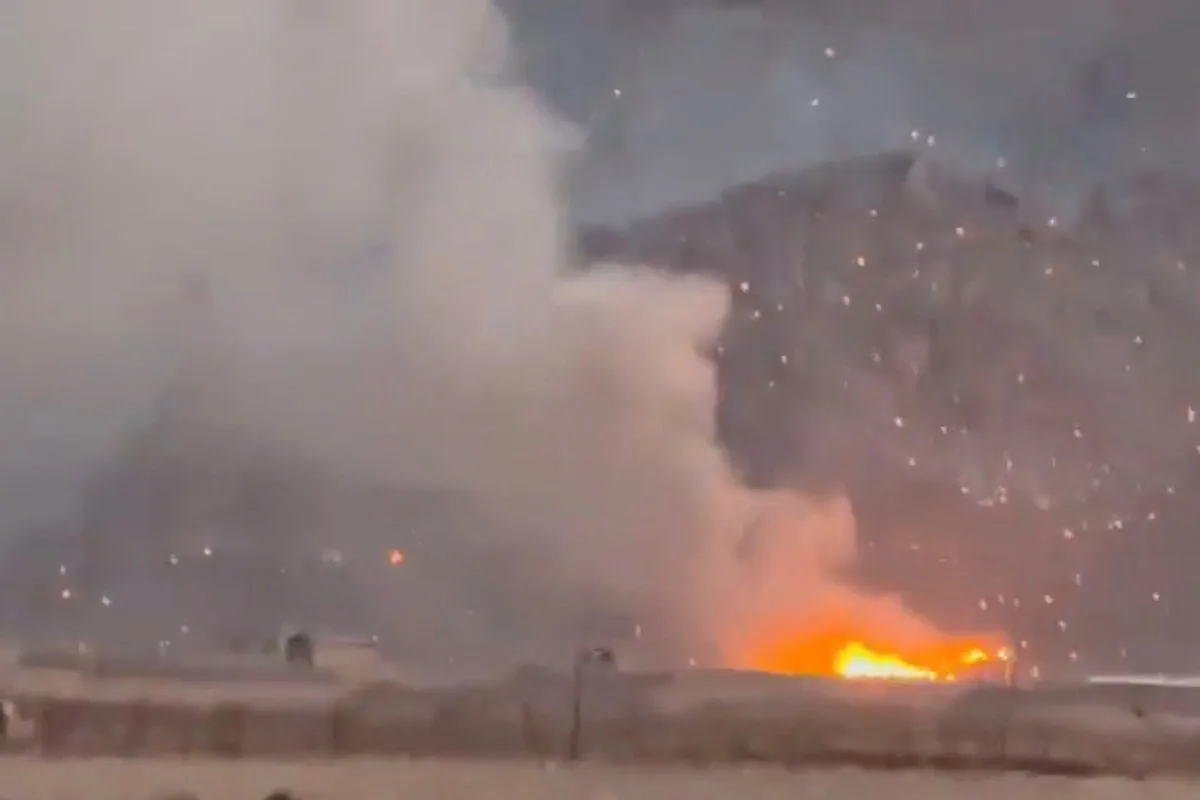
Ancient Oracle's Prophecy Haunts Modern Geopolitical Landscape
While the current US-Israel military engagement with Iran differs significantly from ancient conflicts targeting Persia, historical patterns reveal sobering continuities. The 3rd-century Sasanian rock reliefs serve as enduring monuments to the catastrophic outcomes that can befall those who underestimate the challenges of invading Persian territories.
The Fateful Warning That Foretold Empire's Downfall
In the 6th century BCE, as the Achaemenid Persian Empire expanded its dominion across vast territories encompassing modern Iran, Iraq, Turkey, and the Persian Gulf, King Croesus of Lydia decided to challenge this growing power. Reputedly the wealthiest man in the ancient world, Croesus consulted the legendary Oracle of Apollo at Delphi before launching his campaign.
The oracle delivered a famously ambiguous prophecy: if Croesus sent an army against the Persians, he would destroy a great empire. Interpreting this as favorable, Croesus proceeded with his invasion, only to be decisively defeated by Persian King Cyrus. The empire destroyed was his own, not Persia's, establishing a pattern that would repeat for centuries.
Alexander's Pyrrhic Victory and Lasting Consequences
When Alexander the Great invaded Persia in 334 BCE, he achieved remarkable military successes against the Achaemenid Empire over several years. However, his premature death in 323 BCE revealed the fragility of these conquests. The vast territory he had seized remained poorly organized through temporary arrangements, and his successors proved unable to maintain control over Persian lands.
Historical records indicate that Alexander's memory in Iranian territories evolved into one of contempt over time, demonstrating how military victory alone cannot secure lasting political control or cultural acceptance.
Roman Catastrophes and Humiliating Defeats
The pattern of disastrous Persian invasions continued with Rome's eastern expansion. The first Roman invasion of the Parthian Empire (successors to Achaemenid Persia) ended in catastrophe at the Battle of Carrhae in 53 BCE, where approximately 20,000 Roman soldiers perished and 10,000 were captured, including General Crassus and his son.
Even when Roman invasions achieved temporary success, as with Emperor Trajan's campaign reaching the Persian Gulf in 116/117 CE, territorial gains proved unsustainable. Contemporary Roman historian Cassius Dio observed that these conquests created "a source of constant wars and great expense" rather than strengthening the empire.
The ultimate humiliations came in the 3rd century CE when the Sasanian dynasty assumed control. Emperor Gordian III died during his invasion attempt in 244 CE, while Emperor Valerian suffered the indignity of capture in 260 CE. Legendary accounts describe Valerian serving as a footstool for Persian King Shapur I, with surviving rock reliefs commemorating these subjugations.
Enduring Strategic Challenges and Modern Parallels
Several consistent factors contributed to the failure of ancient invasions of Persia:
- The vast and varied geography presented immense logistical challenges
- Persian empires maintained substantial resources and manpower reserves
- National resolve and military preparedness proved formidable obstacles
- Even successful campaigns struggled with long-term occupation and governance
While contemporary conflicts differ in technology, scale, and political context, the fundamental challenges of projecting power into the Iranian heartland remain remarkably consistent. The historical record demonstrates that wars in this region have consistently proven easier to initiate than to conclude successfully, with aggressors frequently underestimating the resilience and strategic advantages of defenders.
As modern geopolitical tensions unfold, the lessons from Croesus's misinterpreted oracle to Rome's catastrophic defeats offer cautionary insights about the risks of military engagement with powers controlling the Persian plateau and its surrounding territories.