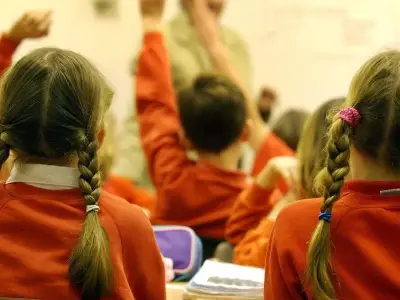
The Government has announced a 'once-in-a-generation' overhaul of the national curriculum, aimed at a generation whose early years were spent in lockdown. The new curriculum will focus on communication skills in reading and confident speaking, a spokesperson said.
New oracy assessment and citizenship curriculum
Ahead of publication to parliament on Monday, November 30, the Education Secretary is setting out a first raft of changes – including a new teacher assessment of oracy at the end of primary to help secure the strong foundations children need for a successful transition to secondary.
A new statutory citizenship curriculum will also be introduced from primary school and through secondary, giving young people an understanding of their community, British values and how to discuss issues respectfully and understand different points of view.
Pupils will also learn how to understand the opportunities and risks associated with new technologies, from spotting misinformation and understanding bias to recognising how algorithms and AI-generated content shape the information they encounter.
Digital literacy and computing GCSE
The new content will run from Key Stages 1 to 4, developing from recognising misleading content in primary to understanding bias in secondary. Digital and media literacy will be embedded across the curriculum from English to computing and citizenship, it has been said.
Subjects including computer science will be updated, with a new, broader Computing GCSE combining rigorous foundations in programming and computer science with practical skills in data, AI and creating digital products, so young people can apply their knowledge to the technologies shaping the future. Technical, vocational and creative subjects will also be part of the overhaul, with new GCSEs expected.
Education Secretary's vision
Education Secretary Lucy Powell said: “The world has changed significantly since the last major curriculum reforms, but what we teach our children has not. We are modernising the curriculum, to equip young people for their fast-changing future, not some bygone past.”
She added: “Every child will build strong foundations in maths, reading, writing and speaking enabling them to access the full breadth of the curriculum, develop their talents, expand their horizons and become resilient, confident and adaptable life-long learners. Crucially, they will be better equipped to navigate the technical world of their future with key skills in digital, media and financial literacy.”
“This is an exciting and engaging new national curriculum, developed with experts, that creates more time for mastery and strong foundations, as well as more breadth to allow every young person to develop their passions and a path to success. This government will make sure every child, regardless of their starting point, gets the support they need to learn and to love learning, with no limit on what they can achieve and that no child is left behind.”
Support for teachers and expert reactions
The new statutory teacher assessment of oracy in Year 6 will support the Government's ambition to 'leave no child behind'. A spokesperson said that 'recognising that being able to express ideas, listen to others and communicate confidently' is a 'fundamental part' of a child's education, alongside learning to read and write.
To help teachers, a new Primary Oracy Framework will set out practical ways to build children’s speaking, listening and communication skills through everyday lessons across different subjects. Amy Gaunt, Director of Education at Voice21, will act as lead drafter of the Primary Oracy Framework, working alongside the Department as well as an expert panel from across education to ensure the guidance is evidence-led and practical for teachers.
Geoff Barton, former ASCL General Secretary and Chair of the Oracy Education Commission, said: “Our Oracy Education Commission concluded that - in an age of AI - oracy is the fourth R, taking its place as a foundational part of every child’s development alongside reading, writing and arithmetic.” He added: “As chair of the Oracy Education Commission, and as a grizzled old English teacher and headteacher, I am delighted to see that - across all subjects in this updated national curriculum - the ability to talk, listen and communicate are recognised as fundamental to deeper learning for more young people.”
Martin Lewis, MoneySavingExpert.com founder and financial education campaigner, said: “Finally, after 16 years of campaigning, financial education is to be compulsory in every English state primary and secondary school! A chance to stop young people being sent out into a world of scams, dodgy deals and debt without the tools to cope.”
Kate Shoesmith, Director of Policy & Insight, British Chambers of Commerce said: “With nearly a million young people not in education, employment or training, it's vital that schools equip young people with the skills they need to succeed in the workplace. Businesses will welcome a greater focus on oracy and practical skills. Our research has found that 73% of employers want young people to focus on oral communication, more than any other skill.”
The reforms go alongside plans to restore Key Stage 3 as a distinct three-year phase, giving pupils the time and space for 'richer experiences and deeper understanding' across the full breadth of the curriculum rather than narrowing their options too early for GCSEs. The refreshed curriculum will also place greater emphasis on fluency in reading, helping children go from decoding words to understanding, interpreting and enjoying increasingly complex texts. Dedicated time for reading for enjoyment – every day in primary and regularly throughout the week in secondary – will help pupils discover books they love, broaden their vocabulary and become confident, independent readers.
A spokesperson for the Government said that collectively the reforms will represent the 'biggest overhaul of the curriculum in a decade', combining 'stronger foundations in reading, writing and oracy with core knowledge', and a deeper understanding of how to apply knowledge and skills in real-world contexts.