Winsome Pinnock Reflects on Theatre Risks and Historical Exploration
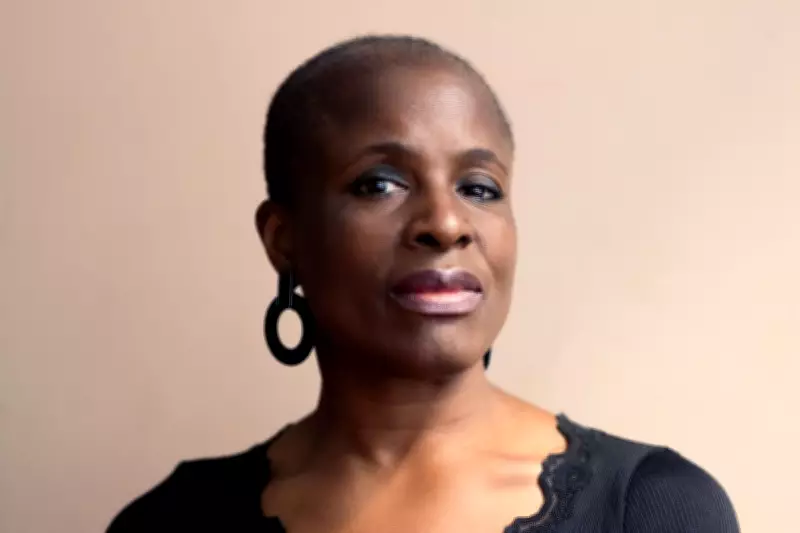
The celebrated British playwright Winsome Pinnock has opened up about her latest theatrical venture, the precarious state of original writing in the industry, and her enduring fascination with this country's concealed past. In an exclusive interview, the dramatist, often hailed as the godmother of Black British playwrights, shared insights into her new play 'The Authenticator' and the broader landscape of contemporary theatre.
A Legacy of Influence and Accolades
It has been 23 years since The Guardian first described Winsome Pinnock as the godmother of Black British playwrights, a label that has persisted in nearly every profile since. Now 64, Pinnock reflects on this epithet with a sense of detachment. "I don't really think about it," she admits. "You wouldn't, would you?" However, she acknowledges its significance for younger writers, noting that it helps them recognise a rich history in British theatre.
Pinnock's career took off with her 1988 drama 'Leave Taking', which made history as the first play by a Black British woman to be produced by the National Theatre. Over the years, she has accumulated numerous awards, including the prestigious George Devine Award, and her work has become a staple in educational curricula, with 'Leave Taking' now taught as a GCSE text. Influential playwrights such as Chinonyerem Odimba and Natasha Gordon have cited her as a key inspiration, cementing her status as a pioneering figure.

Uncovering Hidden Histories in 'The Authenticator'
Pinnock's latest play, 'The Authenticator', delves into the complex relationship between individuals and history through a gothic psychological thriller lens. The narrative centres on an eccentric artist, portrayed by Sylvestra Le Touzel, who inherits a stately home and discovers hidden diaries. She enlists an academic, played by Cherrelle Skeete, and her mentor, portrayed by Rakie Ayola, to authenticate these documents, leading to the revelation of long-buried and painful secrets.
The concept for 'The Authenticator' emerged during the development of her previous play, 'Rockets and Blue Lights', which explored Britain's history of slavery in a time-hopping narrative first staged in 2020. Pinnock explains, "I wanted to write about the legacy of enslavement, which permeates our material lives through statues, antiques, and even racism, as well as more joyful aspects like music. I was interested in this country's untold history."
Her personal ancestry, as a descendant of enslaved people on both sides of her Jamaican emigrant family, fuels this interest. "It's always fascinated me to be the product of people who survived that history," she says. "One of my goals as a writer is to explore the experience of having that heritage."
Challenges and Misconceptions in Theatre
Pinnock highlights misconceptions surrounding the portrayal of slavery on the British stage. "When you mention writing about enslavement, people often say, 'oh, not that again,' assuming there have been many plays on the subject," she notes. However, her research revealed that in the two decades before 'Rockets and Blue Lights', very few plays by Black British authors on this topic had been produced, with most works coming from American writers focusing on U.S. history rather than British involvement.
Beyond playwriting, Pinnock is deeply involved in academia, teaching playwriting at the University of London's Royal Central School of Speech and Drama. She finds this role enriching, stating, "I really love it. Teaching allows you to learn so much yourself and provides a break from constantly working on your own projects."
The Precarious State of New Writing
Pinnock expresses concern about the current challenges facing new writing in theatre. "One of the things I worry about is how difficult it is for new writing at the moment," she says. "People may not realise just what a risk a new play is." This fear echoes warnings from National Theatre director Indhu Rubasingham, who earlier this year described a crisis in new stage writing that risks betraying the ethos of William Shakespeare.

She points out that new writing is still recovering from the impacts of Covid-19, with theatres often favouring musicals and classic plays as safer financial bets. "New writing is the riskiest kind of play to put on right now," Pinnock explains. Despite this, she remains cautiously optimistic, praising the National Theatre's new works programme as commendable and noting that the UK still prioritises new writing more than some other countries.
Recent successes, such as Luke Norris's 'Guess How Much I Love You?', Suzie Miller's 'Inter Alia', and Ava Pickett's '1536'—which is transferring to the West End after a sold-out run at the Almeida—demonstrate that original plays continue to thrive. Pinnock emphasises that the proud tradition of new plays remains an essential fibre of British theatre, with her own work standing as a testament to this enduring legacy.
'The Authenticator' is currently running at the National Theatre's Dorfman Theatre until 9 May, offering audiences a thought-provoking exploration of history and identity.