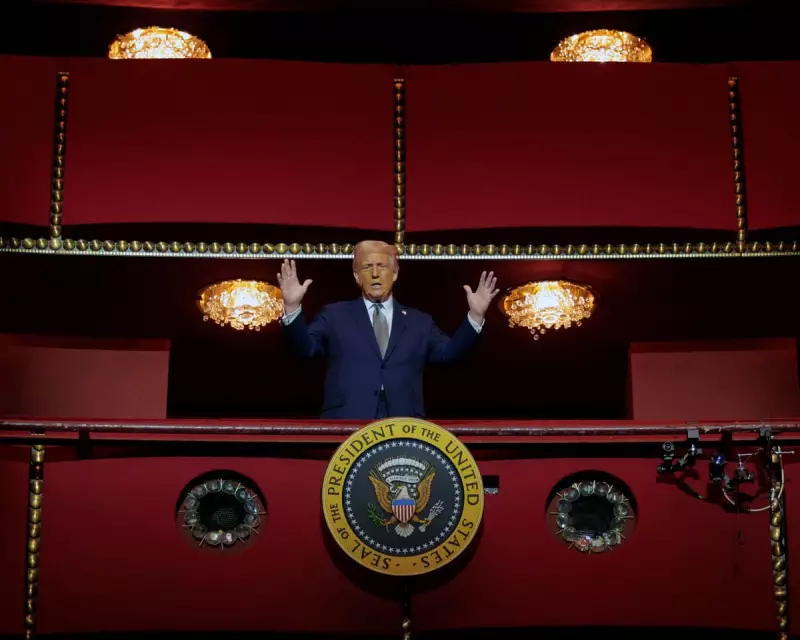
A year into Donald Trump's second term, one of America's most prestigious performing arts venues is facing a profound crisis. The Washington National Opera (WNO) has officially announced its departure from the newly renamed Trump-Kennedy Center, marking a devastating blow to the institution's artistic credibility and raising urgent questions about the politicisation of US cultural life.
A Centre Unravelling
Just twelve months ago, the Kennedy Center was a world-class hub for the performing arts, boasting a respected opera company, a bipartisan board, and a celebrated schedule. Its rapid decline began soon after Trump's inauguration on 20 January 2025, when he inserted himself as chair. The experienced executive director was dismissed and replaced by Richard Grenell, a Trump loyalist and former ambassador to Germany with no background in arts management.
The consequences were swift and severe. Artists began to leave in large numbers, the acclaimed production of Hamilton was pulled, and audiences stayed away. Francesca Zambello, the artistic director of the WNO, revealed that ticket sales collapsed, with patrons sending back shredded season brochures and vowing not to return while the "orange menace" remained. The financial impact was so dire the company considered leaving entirely.

The Final Straw and a Costly Divorce
Grenell's insistence that all productions be "net neutral"—fully funded in advance—proved an insurmountable obstacle for the opera, which relies on a mix of ticket sales, grants, and philanthropy. This week, the WNO made its move official, launching a new website and securing an influx of donations and solidarity.
The separation, however, will be complex. The Kennedy Center holds the WNO's endowment, and lawyers are now preparing for a difficult negotiation. The Center's management has claimed it was they who decided to "part ways," a statement many see as an attempt to save face. From the spring, opera performances are expected to move to venues like the Lisner Auditorium, with hopes for longer-term homes at Constitution Hall and the Shakespeare Theatre Company's Harman Hall by autumn.
A Tomb-Like Atmosphere and Wider Cultural Shifts
The opera's exit leaves the National Symphony Orchestra (NSO) as the last major resident company. Its music director, Gianandrea Noseda, issued a vague statement titled "Music Belongs to Everyone," which many interpreted as a veiled response to the turmoil, while carefully avoiding direct political commentary.
Insiders describe the atmosphere at the Center as funereal. Cancellations continue, including the annual Martin Luther King Day concert on 19 January, ending a 23-year tradition. Seat maps show poor sales for most events, with a notable exception being star pianist Daniil Trifonov. The venue risks becoming a convention centre, punctuated by Trump-approved film premieres like Melania on 29 January.
This is not an isolated incident. The Smithsonian Institution's National Portrait Gallery recently replaced its portrait of Trump, removing any mention of his two impeachments from the label after it reportedly irked him. The Smithsonian also faces demands from the White House for extensive documentation on its programmes, particularly concerning plans for the US's 250th anniversary, accompanied by warnings against being "diffident about America's founding."
The battle for America's soul, as the article posits, is being fought not just in city streets but within its venerable cultural institutions. The exodus from the Trump-Kennedy Center stands as a stark symbol of the profound changes underway, testing the resilience and principles of the nation's artistic heart.