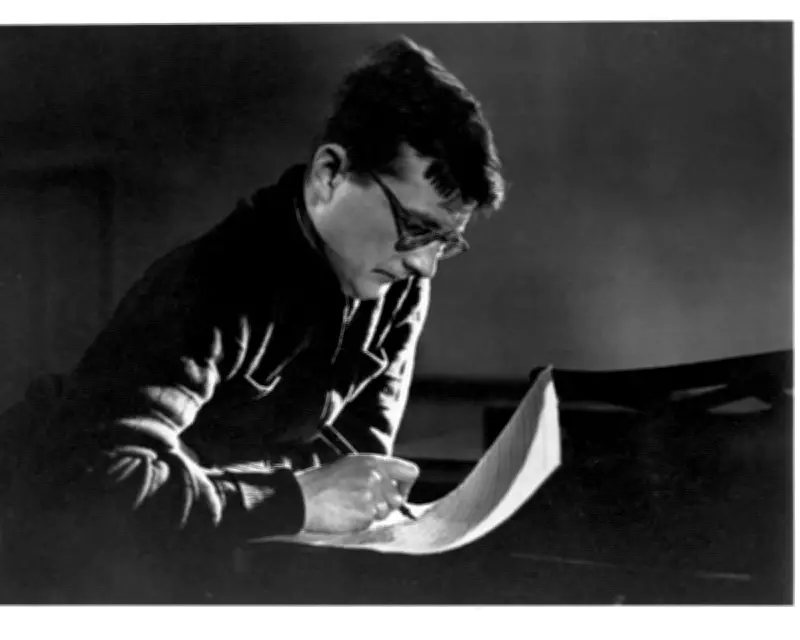
This week marks two extraordinary centenaries: Sir David Attenborough's birth and, just four days later, the premiere of Dmitri Shostakovich's First Symphony on 12 May 1926. The 19-year-old composer's work was first performed by the Leningrad Philharmonic under conductor Nicolai Malko.
A Symphony of Subversion
The symphony's four-movement structure is nearly its only conventional feature. The teenage Shostakovich absorbed all he could about orchestral music, then boldly subverted every idea. There is no deference to earlier Russian symphonists; instead, the First resounds with self-confidence that is both optimistic and sardonic.
From the distorted trumpet call that opens the work—a fanfare that defies expectations, not an affirmative flourish but a dissonant question mark—Shostakovich creates a first movement like a circus: a cavalcade of characters entering and exiting, often pursued by a cartoon bear, clown, or bassoon. The momentum from juxtaposed ideas, cutting like a film reel, continues deliriously in the second movement.

The Piano's Cinematic Role
A piano part adds to the orchestral texture, revealing a secret of the music's energy. As a teenager, Shostakovich played piano for Soviet silent cinema screenings; in the symphony's piano solos, he turns his work into a knockabout farce worthy of Buster Keaton. The movement builds to a climax that is both terrifying—a sudden fanfare consuming the whole orchestra—and bathetic, with the solo piano's chords suggesting the pianist couldn't keep pace.
There is no hint of the bombast or propaganda of Shostakovich's later symphonies. Yet real feeling emerges in the scherzo's climax, where the cartoon shudders into real life. The slow movement that follows is one of his most unironically passionate, with a solo oboe and cello inspiring a melodic outpouring more Shakespearean than circus-like.
A Torrent of Energy
The final movement brings all these worlds together, ending in a torrent of irresistible energy—a culmination of pure sentiment and excitement. This is surely the most creatively confident First Symphony by any teenager in musical history, outshining competitors from Mendelssohn to Schubert. It announces a world of possibility, turning musical conventions upside down in a frenzy of modernist creativity that is both funny and profound. It heralds a unique symphonic avant-garde that might have meant unfettered creative freedom for Shostakovich and future composers.
Instead, these are sounds of what might have been—for Shostakovich and for Russia. In his later symphonies, especially from the mid-1930s, you hear the chilling of that freedom and the daily terror of Stalin's Soviet Union. The confidence and joy in his own brilliance, evident on every page of the First Symphony, is a miracle Shostakovich never quite repeated, and it remains strikingly new a century on.
This week, Tom has been listening to: Elgar's Viola Concerto, in Timothy Ridout's expressive recording of Lionel Tertis's version of Elgar's Cello Concerto—an arrangement Elgar approved and conducted with Tertis as soloist. The viola's soul resonates even more powerfully than the original, with exquisite vulnerability.