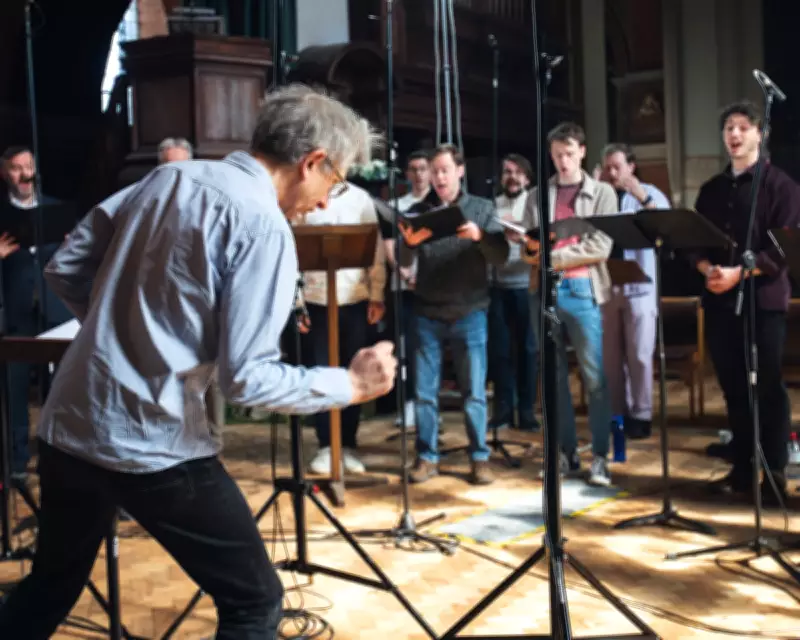
The Spanish composer Cristóbal de Morales, who preceded Palestrina at the papal chapel, achieved international renown in the mid-16th century, with his music traveling as far as Mexico and Peru. Today, his choral works are experiencing a resurgence, particularly through the efforts of the chamber choir De Profundis. This ensemble, composed entirely of adult male voices, aims to replicate the standard choral sound prevalent in mainland Europe during Morales' time. Their latest release is the third in a planned series of 12 recordings that will encompass all of Morales's masses and magnificats.
Album Details
The album features the Magnificat Secundi Toni, a finely crafted piece written for Rome that expands into six vocal lines near its conclusion. Framing this work are Morales's two mass settings based on the popular song "L'Homme Armé," which dates from the era of the fall of Constantinople and inspired a tradition of mass compositions—over 40 survive from this period. The two masses employ the song in different modes, giving the five-part mass a more mellifluous and less somber character compared to the four-part version. In the five-part mass, the addition of an organ and bajón—a medieval forerunner of the bassoon—enriches the texture.
Performance and Direction
Robert Hollingworth, also known as the director of I Fagiolini, leads De Profundis in precise and sonorous performances. The ensemble's dedication to historical authenticity and their nuanced interpretation bring out the depth and intricacy of Morales's compositions.

Listen to the album on Apple Music or Spotify.