Burns Night: The Enduring Legacy of Scotland's National Bard
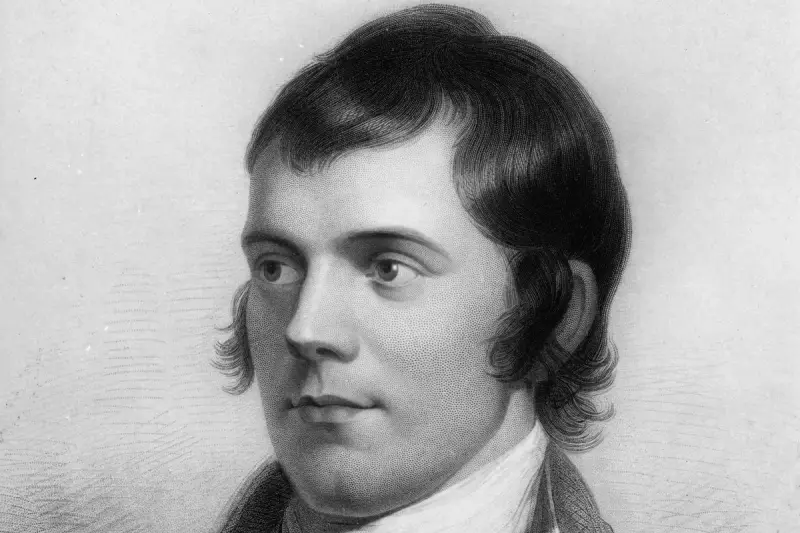
Each year on the 25th of January, Scots across the globe gather to celebrate the life and work of Robert Burns, Scotland's revered national poet. The traditional festivities feature hearty feasts including haggis – which Burns famously dubbed the "Chieftain o' the Puddin-race" – alongside spirited recitations of his most beloved verses. While many revel in his better-known works like Auld Lang Syne and Address to a Haggis, this Burns Night presents an opportunity to explore one of his lesser-celebrated compositions: the 1790 poem Lament of Mary, Queen of Scots, on the Approach of Spring.
The Poet and the Queen: An Unlikely Connection
Robert Burns, who passed away in 1796, remains an international symbol of Scottish identity nearly two centuries after his death. His prolific output includes some of the nation's most iconic poems, from the stirring Scots Wha Hae to the globally recognised New Year's anthem Auld Lang Syne. Yet his influence extends beyond his own literary creations, significantly shaping how historical figures are remembered within Scottish culture.
Mary, Queen of Scots represents one such figure whose legacy Burns profoundly affected. Executed in 1587 for allegedly plotting against her cousin Elizabeth I of England, Mary remains a contested historical personality. During her lifetime, she was variously portrayed as a papist jezebel, a monstrous female ruler, or a Catholic martyr. Following her death and that of Elizabeth, her son James ascended to both thrones in 1603, cementing Mary's status as what many consider the last distinctly Scottish monarch.

Reimagining a Queen: Burns' Sympathetic Portrait
Throughout the 18th century, Mary Stuart became the subject of intense debate among Scottish intellectuals. Prominent philosopher David Hume notoriously labelled her "a whore" who had "murdered her husband," echoing accusations originally levelled by her political enemies centuries earlier. These claims stemmed from her implication in the murder of her second husband, Lord Darnley, and her subsequent marriage to the primary suspect just months later – events that forced her abdication in 1567.
Burns offered a dramatically different perspective in his 1790 lament. Describing Mary as "amiable but unfortunate" in his correspondence, the poet expressed clear sympathy for the executed queen. In a letter to Lady Winifred Maxwell Constable in 1791, he characterised the work as "a tribute to the memory of our greatly injured, lovely Scottish Queen." This compassionate portrayal likely drew inspiration from his friend William Tytler's defence of Mary, which critically re-examined the evidence used to condemn her.
The poem itself, written in Mary's voice as she awaits execution, contrasts her youthful happiness as "the Queen o' bonie France" – referencing her first marriage to French dauphin Francis II in 1558 – with her imprisonment in "foreign bands" in England. She laments "mony [many] a traitor" in Scotland while wishing "kinder stars" for her son James.
Literary Influences and Jacobite Sympathies
Burns' representation of Mary was shaped by multiple factors beyond Tytler's historical revisionism. His Jacobite sympathies – supporting the restoration of the exiled Stuart dynasty represented by Mary – certainly coloured his perspective. Additionally, the burgeoning Romantic literary tradition, with its emphasis on natural imagery and emotional expression, informed his poetic approach.
Scholars have noted the probable influence of Anne Hunter's earlier poem The Lamentation of Mary Stuart, Queen of Scots, published around 1780. Both works share striking similarities: first-person narration from Mary's perspective, descriptions of Elizabeth I as a "false woman," nature-based imagery, and concluding with Mary's defiant belief in her posthumous legacy. Unfortunately, Hunter's contribution has been largely forgotten as her poem was frequently published anonymously.

Creating Enduring Cultural Tropes
With his lament, Burns effectively cemented Mary's status as a tragic figure ripe for romantic literary representation. His work directly inspired William Wordsworth to compose three poems about the queen in the early 1800s, including one remarkably similar lament. Perhaps more significantly, Burns helped establish an enduring cultural trope contrasting "womanly, incompetent" Mary with "cold and shrewd (unwomanly)" Elizabeth.
This binary portrayal has persisted through centuries of cultural production, from Walter Scott's 1820 novel The Abbot to Philippa Gregory's 2008 work The Other Queen. Scottish poet Liz Lochhead directly challenged this simplistic opposition in her 1987 play Mary Queen of Scots Got Her Head Chopped Off, which critiques the reduction of these complex historical figures to "two mean girls locked in a catfight to the death."
Parallel Legacies: From Exhumation to Tourism
Fascinating parallels exist between Burns and his subject beyond their shared Scottish heritage. Both were poets, both had their corpses exhumed in attempts to redefine their cultural reputations, and both have become profitable attractions for Scotland's tourism and heritage industries. As Burns Night approaches and Mary's last letter goes on display in Perth, their interconnected legacies remind us how cultural memory is continually shaped and reshaped.
This Burns Night, as Scots worldwide celebrate their national bard with traditional suppers and poetry readings, consider exploring Lament of Mary, Queen of Scots, on the Approach of Spring. In doing so, you'll engage with two figures whose lives, deaths, and afterlives have profoundly shaped Scotland's cultural imagination – and discover how a poet's pen can alter historical perception for centuries to come.