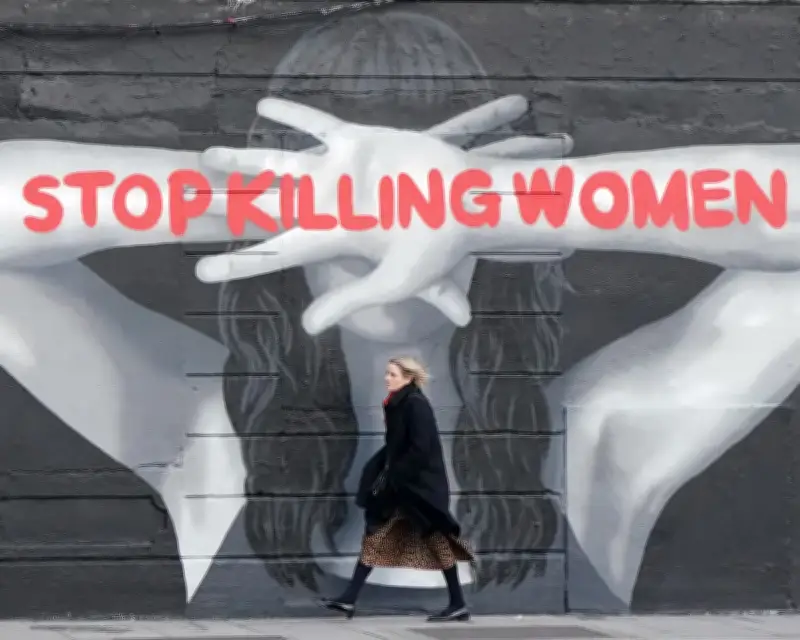
The number of women in Ireland killed by men has surged in the past five years and risen especially sharply in the past 12 months, according to a study by the Irish charity Women's Aid.
After falling for two decades, the number of violent deaths began going up in 2021 and has risen sharply this year, with 13 deaths so far, the report said on Wednesday.
Alarming Rise in Femicides
Sarah Benson, the organisation's chief executive, said the figures should alarm everyone. "After years of decline, the number of women killed is rising again."
The vast majority of victims over the past three decades were killed by a man they knew, and over half were killed by a current or former partner. The findings match UN and EU data showing the most dangerous place for a woman is her own home, and the most likely killer is a man she knows, said Benson.
"Ireland is one of the wealthiest countries in the world, and we have good laws. Yet women are still being killed by the men closest to them. Most men choose never to behave this way, and that is exactly why we need everyone to recognise this violence and call it out."
Statistics Over Three Decades
Since 1996, when the Dublin-based charity began collating femicide statistics, 291 women have been killed by men.
Measured in five-year blocks, the levels of violent deaths peaked at 67 between 1996 and 2000 and fell to a low of 31 between 2016 and 2020. During the 2021–2025 period, 40 deaths were recorded, a 29% increase on the previous period.
The 13 women who died in violent circumstances this year is almost double the figure of seven for all of last year. However, Ireland's overall murder rate of 0.66 per 100,000 people remains well below global and European averages. The country has a population of 5.5 million.
Victim Profiles and Warning Signs
Of the 235 cases of violent deaths resolved since 1996, 89% of the women were killed by a man known to them, 57% were killed by a current or former partner, 32% by a male relative or acquaintance and 11% by a male stranger. More than two-thirds – 68% – died in their own homes. Just over a quarter were women aged 26 to 35.
Benson noted that intimate partner femicide rarely comes out of nowhere. "Separation, coercive control, non-fatal strangulation, threats to kill and stalking are all known warning signs. When a woman tells Women's Aid that she is afraid for her life, we believe her."
Leaving an abusive partner did not always end abuse, said Benson. "Risk rises sharply around separation and stays high for about a year. For every woman whose life is taken, thousands more are living on a knife's edge of fear."
The Femicide Watch report, which coincided with International Day for the Elimination of Violence Against Women, recorded that 25 children were killed alongside a woman, usually their mother.