An investigation into 231 femicide cases in Afghanistan has revealed a dire situation under Taliban rule, where men are empowered to murder women and face no punishment while their crimes are covered up by the state.
Liza Shams's Case
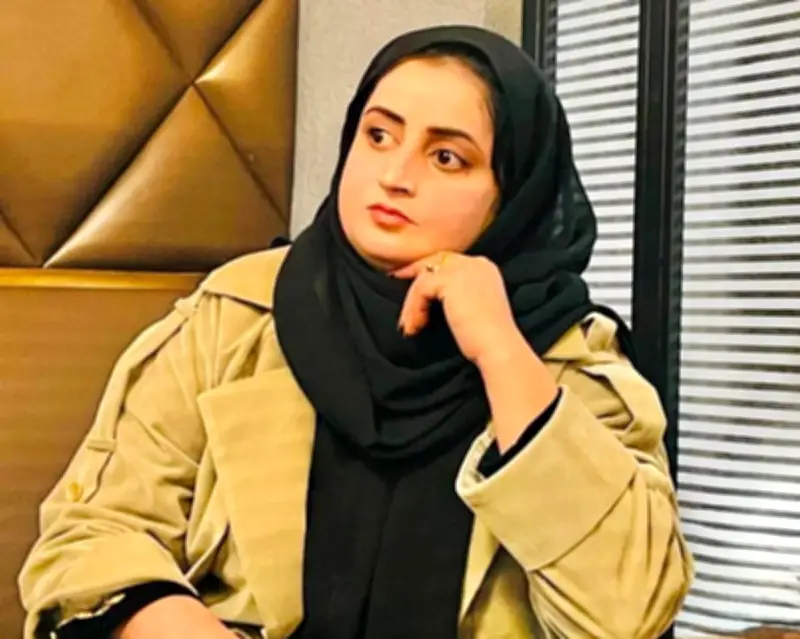
In a voice message recorded weeks before she died, Liza Shams, 33, asks a relative to pray for her. “There’s no end to my days of misfortune,” she says. “Pray that God shames Hasib [her husband, Hasibullah Sarwari] in front of the whole world for what he has done to me.” In a second recording, she describes being beaten by Sarwari while pregnant, then kept isolated for days, injured to the point she couldn’t eat or speak.
On the afternoon of 1 February, Liza’s neighbours heard screaming and alerted the police. A short while earlier, Liza’s father, Shamsuddin Shams, had received a video call from his daughter. Her injuries were shocking: “Her jaw was broken and she could hardly talk,” he says, but she had managed to pass the message that her husband had beaten her again. Shamsuddin immediately called his two other daughters who lived close by, who arrived at the house and took her to Rahmat hospital in Kabul. About an hour after arrival, Liza died.
The report on her death shows that Liza’s face has been beaten in. The CT scan findings describe multiple fractures to her cheekbones and sinus walls, an injury pattern consistent with enormous blunt-force trauma to the face. Photographs of her body and the report’s physical examination, conducted the evening she died, document extensive bruising, injuries and swelling across her face and body.
Despite the extensive nature of her injuries, the forensic report lists the likely cause of death as ingesting rat-poison, noting that an autopsy was not performed at the family’s request (Liza’s father says this request came from her in-laws). Her husband’s family did not respond to questions, but have argued that Liza took her own life, and that the bruising covering her body is a side-effect of poison. Suicide is frequently listed as the cause of death in Afghanistan in cases where women die in violent circumstances – a designation that typically means no one will be held accountable for the death. Liza’s father believes her death was murder.
Investigation Findings
The Taliban does not collect any data on how many Afghan women are killed each year. The attorney general’s office, which used to collate this information, was abolished in 2023. To measure what the state will not, reporters for Zan Times, a collective of journalists who work under cover in Afghanistan, collected cases of women killed in 10 of Afghanistan’s 34 provinces since the Taliban came to power in August 2021, drawing on 174 instances reported by local media, as well as 57 cases documented directly by the journalists but previously unreported.
The team documented 231 cases, of which 53 were declared suicide. The provinces with the highest recorded tolls were Jawzjan (36), Herat (32), Badakhshan (28) and Ghazni (26). The age of victims ranged from girls as young as five to women of 65. Seven out of 10 victims – 165 of 231 – were housewives with no independent income or institutional standing to pursue a domestic violence case. Most of the cases occurred in the victim’s home. Across the dataset, only 58 arrests were recorded. More than one in five were officially declared suicide, even when there was significant evidence of foul play. Only one in four of the 231 killings resulted in any arrest, but even in these cases, the suspect was often released – sometimes just one day after being detained.
Patterns of Abuse
A healthcare worker in Jawzjan said that many of the dead women that came to hospital and were labelled suicides had clearly been beaten, their bodies covered in wounds and bruises. Freshta Emady, 33, a UN agency employee in Kabul, was found dead in her home on 31 May. Her husband reportedly told Taliban police she had killed herself, citing a psychiatric condition. Her family and friends, however, believe she was killed by her husband. Five people who knew her said Freshta, who had been married off at 17, had spent 15 years being beaten, choked and controlled. A colleague said Freshta had described her husband repeatedly strangling her and telling her, “I’ll cut your throat.”
Often, the families of girls who try to intervene on behalf of their daughters can face deadly consequences. In Kandahar, a 14-year-old girl was killed after being given into marriage to a much older man. Her husband was violent, and she fled back to her father’s family. When he came to force her home in October 2024, she refused to go. He drew a pistol and killed her. Her younger brother, who ran to help, was also shot and died a week later. The Taliban opened a file but her husband, a serving member of the group, was never arrested.
In May in Sar-e-Pol province, Sara, 16, and her mother, Chaman, an Iranian-trained doctor, were shot dead by a local Taliban official who had forced an engagement on Sara. When Chaman refused to hand her daughter over without the agreed dowry, he beat her with his rifle and, as Sara ran to her mother, he shot them both. He was captured after a manhunt and remains in jail.
Legal Framework and Impunity
The Taliban’s new criminal code means a husband’s punishment for beating his wife to the point of visible injury such as fracture or wounds is capped at 15 days’ imprisonment. If a wife goes to her family’s house without her husband’s permission, however, and her family does not return her on request, the wife and her family are subject to three months in prison. The code creates a legal structure in which seeking refuge from domestic violence brings a worse punishment than the violence itself.
Even before the Taliban, Afghan women were experiencing gender-based violence nearly three times higher than the global average. UN Women’s 2024 Afghanistan Gender Index, published in June 2025, found that in 2018, nearly 35% of Afghan women reported violence from a partner in the past year – compared with a global average of 13%. Since the Taliban took power, the existing scant protections for women facing violence have been stripped away. After August 2021, the Taliban dissolved the Ministry of Women’s Affairs, the special prosecutor’s office for violence against women, and the country’s shelter network. About 250 female judges were removed from the bench; female prosecutors were sent home.
Afghan law no longer permits a woman to be a direct party to her own legal case, so mothers cannot pursue justice for their daughters. In Takhar province, Shamsia (not her real name), the mother of a 23-year-old woman who was stabbed and set on fire by her husband in May 2025, said she was ordered by the local court to transfer power of attorney to her husband to pursue the case “because a woman cannot be a direct party to a petition or case file”. Months on, the case has gone nowhere.
Families at Risk
Our reporters could not interview most of the families of the women killed. Fear closed many doors; in several provinces, the journalists received threats after even attempting to make contact. The 231 cases in this dataset are not Afghanistan’s femicide total – they provide only a snapshot of the potential killings, the dynamics that enable them and the impunity that many killers enjoy.
Liza Shams’s case will probably be decided by a Taliban court. Her father, who has little hope of anyone being held responsible, has turned to social media, publishing recordings, hospital footage, and documents in a campaign for justice for his daughter. Shams says speaking up has already come with a cost. His daughters who took Liza to hospital were subsequently summoned by the Taliban and have now gone into hiding. “It is because we spoke to the media, the Taliban don’t want issues like this to become public.”
Among the recordings her father released is a voice message Liza sent to her brother-in-law, in which she speaks about her marriage and her life. “I feel like I’m suffocating,” she says. “I suffer from these things. I’ll try every day, I’ll try every day, but this isn’t working. Our life can’t go on like this. I don’t want our life to be bitter. My children are growing up, they’ll look at us and see that we are fighting. But it can’t go on like this.”