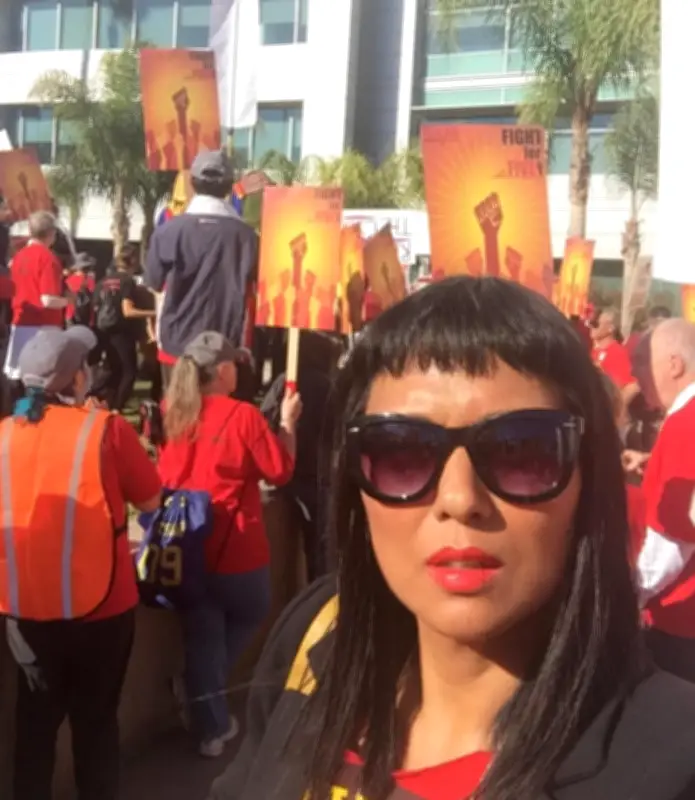
Tenured California professor Sang Hea Kil, who was fired last year over her pro-Palestinian activism, has won her job back and is pursuing a lawsuit against her university. An arbitrator ruled that the California State University (CSU) system violated the law when it dismissed her.
Background of the Case
In November 2024, Sang Hea Kil, a justice studies professor at San José State University, became the first tenured faculty member to be dismissed from a US public university following nationwide campus protests over Israel’s war in Gaza. After multiple appeals, an arbitrator last week ordered CSU to reinstate her, finding that the termination breached legal standards. Kil had previously filed a lawsuit against CSU, accusing it of discriminatory and retaliatory actions to silence her.
A university spokesperson declined to comment on personnel matters.
Professor’s Reaction and Determination
Kil expressed relief at getting her job back but emphasized her resolve to continue advocating for Palestinian rights and free speech. “The arbitration hearing outcome in my favor shows that the first amendment of the constitution is not dead at San José State University,” she told the Guardian. “Which was in question when they targeted me for merely showing up to anti-genocide events on my campus to support students protesting the Israeli destruction of Gaza and its people.”
Context of Campus Protests
Kil was among several university professors and staff who faced suspension, investigation, dismissal, or forced resignation due to pro-Palestinian protests during the first year of Israel’s war in Gaza. She is the first tenured professor dismissed from a public university since Steven Salaita, who was fired in 2014 from the University of Illinois over social media posts critical of Israel’s bombing of Gaza.
Lawsuit and Legal Arguments
In a lawsuit filed in May 2024 with the Superior Court of California, Santa Clara County, Kil argued that CSU violated employment law and the First Amendment. Attorney Rebecca Brown stated at a press conference, “This is one of the most egregious and extreme examples of repression of pro-Palestine speech that we’ve seen. This is a tenured professor who was fired over a free speech activity – a punishment that’s usually reserved for professors who engage in conduct like sexual assault or physical violence.”
Details of the Incidents Leading to Dismissal
Kil’s firing stemmed from a February 2024 confrontation at a campus protest involving students and a faculty member. The university also accused her of making remarks at another event that allegedly encouraged students to set up an encampment in violation of policy, and of later participating in such an encampment. Kil, a faculty adviser for Students for Justice in Palestine, stated she attended the protest in a personal capacity and witnessed another faculty member “assault” a student. That faculty member received a brief suspension but was reinstated, which Kil argued showed a “deep disparity of due process and equal protection.” She also joined a student-led encampment for three nights after similar encampments elsewhere were raided by police, resulting in dozens of arrests. “A lot of my work is critical of policing, and I felt, because of what happened in New York and Los Angeles, obliged to camp with [students],” she said.
Arbitrator’s Ruling and Faculty Committee Findings
The university terminated Kil against the recommendation of a faculty committee that reviewed the incidents and found that while she violated some policies, dismissal was disproportionate and unjustified, according to internal documents reviewed by the Guardian. The independent arbitrator agreed, ruling that the charge did not “rise to the level of dismissal of a tenured faculty member,” reducing the termination to a one-month suspension and ordering reinstatement with backpay. The arbitrator noted, “The propriety of imposing the ultimate sanction of employment termination for free-speech activity, even if its exercise clashed with institutional restrictions, is questionable.”