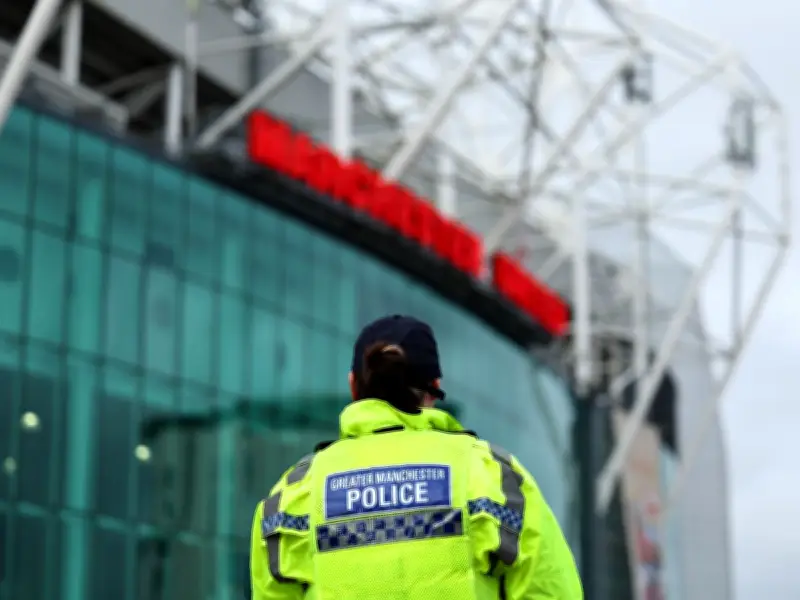
Manchester United fans were in the top five for arrests and banning orders among Premier League clubs last season, according to new police figures released by the UK Government for the 2025/26 campaign.
The data confirmed there were 1,963 football-related arrests and other police action across the country last season, a decrease of four per cent from the previous campaign. The decrease is even more significant given unauthorised entry to a football stadium was added to Schedule 1 of the Football Spectators Act 1989 in March.
Club-specific arrest figures
When it comes to specific clubs, Manchester City had the most arrests with 102, significantly higher than Chelsea’s 76 and United’s 67. However, United's numbers are drastically down from 121 fan arrests during the 2024/25 season. Arsenal are fourth with 66 arrests, with 70 per cent of those police actions coming at the Emirates Stadium, while Millwall round off the top five with 63 arrests.
Meanwhile, Chelsea, United and City all feature in the top five for the highest amount of football banning orders, with West Ham top on 121, compared to 112 last season, while Liverpool also rank in the top five.
Banning orders on the rise
In total, 2,460 football banning orders were issued in England and Wales that were in force by the end of the 2025/26 season, an increase of one per cent on last year and the highest number in force since the end of the 2011/12 season. Most football banning orders typically last between three and 10 years and are most commonly issued to males aged between 18 and 34, preventing them from attending all regulated matches in the UK. Some may be required to hand over their passport to police before regulated overseas matches.
Call for legal review
Specialist football solicitor Laura Baumanis, of criminal defence solicitors Olliers, is calling for the government to review laws she believes are increasingly criminalising ordinary fans, rather than tackling genuine hooliganism. Ms Baumanis said: "Why should supporters of the national sport be treated differently from everyone else? Someone attending a rugby match, cricket ground or music festival is not subject to the same unique criminal restrictions as someone attending a football match. It's fair to ask whether that distinction is still justified."
She added: "There is no question that violence, racism and genuine disorder should be dealt with robustly. But laws introduced to combat organised football hooliganism are now too often being applied to supporters whose behaviour poses little or no real threat to public safety."
Consequences for fans
Ms Baumanis argued that for many people, a football-related conviction isn't just a fine. "It can lead to a criminal record, a Football Banning Order, surrendering a passport, restrictions on overseas travel and consequences for employment. Those are significant penalties, particularly where the original offence is relatively minor and many of those affected are young people."
She noted that behaviour that might attract little more than a warning in another setting can quickly become a criminal matter once football supporters are involved. The solicitor argued football fans are "often policed to a different threshold" and said questions should be asked about whether the legal framework casts the net wider than Parliament originally intended.
Outdated legislation
Ms Baumanis added: "Much of the legislation governing football supporters dates back more than 30 years, when English football faced a very different problem. Today's game has sophisticated CCTV, intelligence-led policing, stewarding and vastly improved stadium safety. The law should evolve to reflect that reality."
She concluded: "Football Banning Orders were introduced to deal with violent hooligans, yet they are increasingly imposed following relatively low-level offending. We should question whether what was intended to be an exceptional measure has become an almost routine consequence. Not every breach of football regulations should automatically become a criminal offence. Clubs already have powers to eject supporters, suspend season tickets and impose their own sanctions where appropriate. The objective should be to protect supporters, players and the public from genuine disorder - not to criminalise passionate football fans for behaviour that would rarely result in prosecution in any other setting. The law should distinguish between genuine hooliganism and ordinary fan behaviour. At the moment, that distinction has become increasingly blurred."