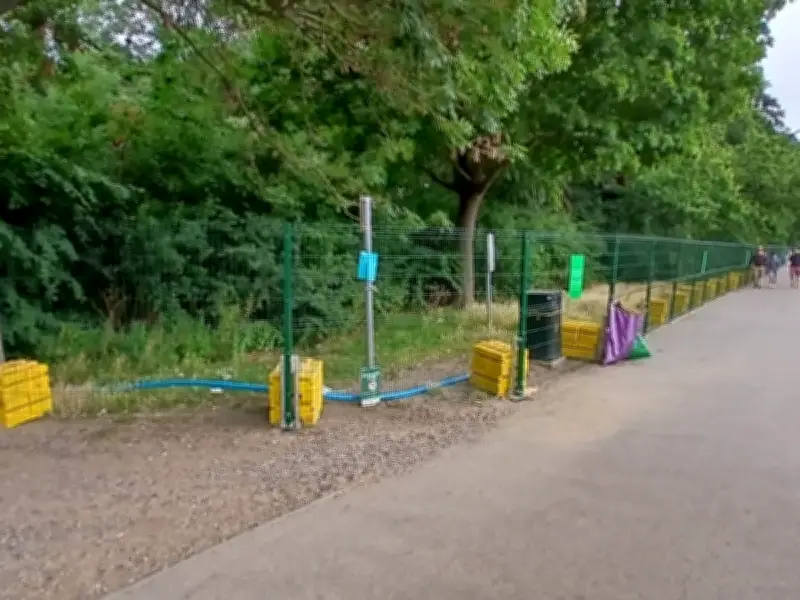
Horse Close Wood, a historic woodland in Wimbledon Park dating back to the 17th century, has been fenced off after tennis fans used it as a makeshift toilet during last year's championships, the Daily Star can reveal. The wood, located on the Southfields side of the park, is a remnant of Capability Brown's 1765 landscaping for the first Earl Spencer and is valued as the longest surviving English Oak, Ash and Elm Wood for miles around.
Locals Furious Over Human Waste Found in Woods
Every year, tennis fans camp next to the long section of trees to get early access to the championship's famous queue. Last year, local residents were furious when human faeces was discovered in the woods, where children often play. Simon Wright, a Southfields resident of 30 years, told the Daily Star: “We have a very old part of Wimbledon Park called Horse Close Wood. People were crapping in it because there weren’t enough loos. Locals were very unhappy about that because it is where toddlers play.”
All England Club Responds with Fence and New Toilets
Under pressure from local residents, the All England Lawn Tennis Club fenced off Horse Close Wood and installed much better toilet facilities. Wright noted: “I counted 108 of them. It has been very successful but there have been isolated incidents of blokes pissing wherever they want to rather than going to use the loos. On the whole, that has been better.”
Sign Cites Habitat Protection
A sign on the fence stated the barrier was erected to “protect the local habitat and wildlife.” It read: “The All England Lawn Tennis Club has installed a temporary fence around the perimeter of Horse Close Woods during The Championships, 29 June to 12 July 2026. This has been done to protect the habitat and wildlife that live in the woods and there will be no access to until Monday 13 July. Thank you for understanding.” Despite the sign, a spokesman for the All England Lawn Tennis Club suggested the matter was “under the jurisdiction of Merton” Council. The Daily Star contacted Merton Council for comment.
Historical Significance of Horse Close Wood
A note stapled to trees outside the fence highlighted the wood's historical value: “It was incorporated into Capability Brown’s 1765 landscaping of an enormous private park for the first Earl Spencer. Remarkably, it is very much the same size and shape as when first mapped, around 1740. It is valued as the longest surviving English Oak, Ash and Elm Wood for miles around and is normally fully accessible to the public.”