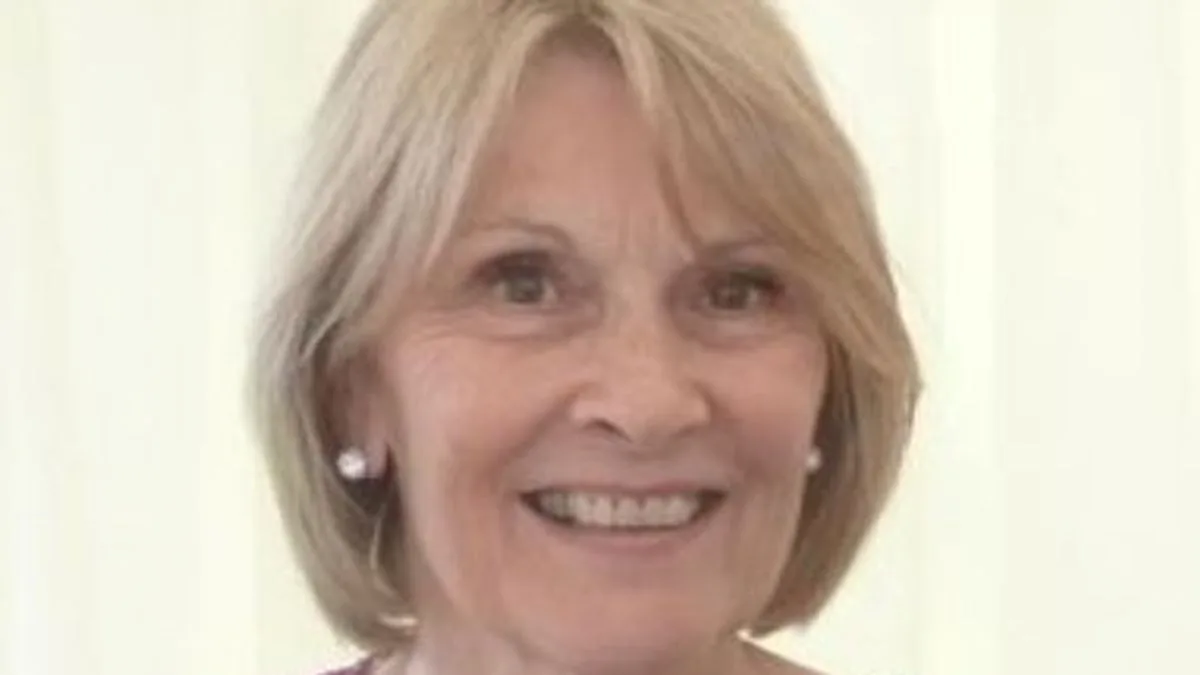
A 31-year-old man has been sentenced to life in prison for the murder of a 74-year-old grandmother who was stabbed to death as she walked home from a Lidl supermarket in Exeter. Cameron Davis was found guilty of murder at Exeter Crown Court on Tuesday, after previously admitting the lesser charge of manslaughter by diminished responsibility.
The court heard that Davis attacked Lorna England in Ludwell Valley Park in February last year, stabbing her in the neck and heart. She had just bought flour from Lidl and was minutes from her home. Hours earlier, Davis had told mental health workers at A&E that he would 'kill a random' if he was released. He was seen buying vodka and a kitchen knife from the same supermarket before lying in wait in the park.
A witness made a harrowing 999 call, reporting that Davis claimed 'she's had a fit or something'. Ms England was pronounced dead at the scene. Davis fled but was arrested five hours later while smoking in the street. CCTV showed he had been drinking in a pub after the killing.
Sentencing Davis, Mrs Justice Mary Stacey described him as 'attention seeking, manipulative and controlling' and filled with self-pity. She said the attack was 'one of the most shocking and brutal killings' that tapped 'right into very deep-seated, human fears'. The judge imposed a minimum term of 28 years, noting that Davis was 'wholly responsible' for Ms England's death and had acted aggressively when he could not get his own way.
A jury concluded that Davis was angry and drunk, not suffering from a mental health psychosis. The judge said that Davis had made 'empty threats many times before' and that it would have been hard to imagine what police could have done had a 101 call from the hospital been answered. She added that this was not a case where society had been failed by the police or public services.
Ms England's family said they were 'relieved' that Davis would be in prison, stating he had 'ripped our family apart and broken our hearts'. The judge praised jurors for their dedication, noting the case involved complex medical evidence from 17 health experts.