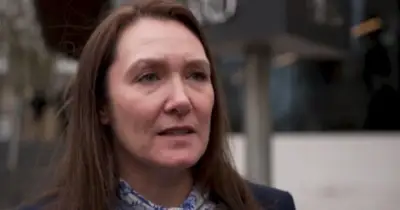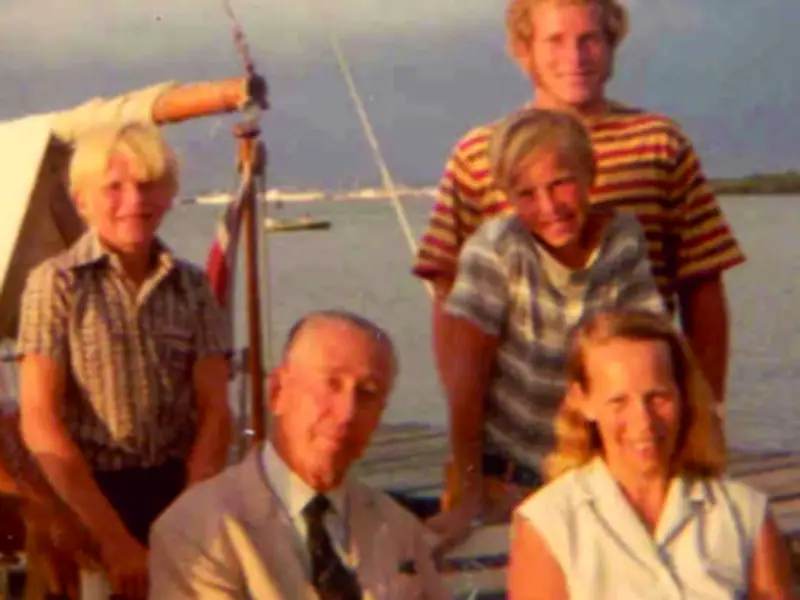
Douglas Robertson was 16 when his family became stranded in the Pacific Ocean for 38 days after killer whales attacked their boat. In a fresh interview, he has outlined the three oaths they made, including a promise not to eat one another.
Retired merchant navy officer Dougal Robertson and his wife Linda were sailing around the world with their children when the ordeal began in 1972. Three killer whales attacked their vessel, leaving the family from Staffordshire to survive on a small dinghy for over a month before a Japanese fishing boat rescued them.
The three oaths made after the sinking
Speaking about the promises the family made shortly after their boat sank, Douglas said: “The first oath that we made was that we would look for a rescue ship. We would stand watch 24/7 and look for the rescue ship. The second oath that we made was that we would not eat each other under any circumstances. We would die quietly together as a family and not eat each other. The third and final oath that we made to each other was that we would try and stay alive.”
The voyage began on January 27, 1971, when the family set off from Falmouth in Cornwall. They travelled on a 43ft wooden schooner called The Lucette, which they bought after selling the farm they lived on. They spent over a year sailing across the Atlantic and visited various Caribbean ports.
Attack near the Galapagos Islands
Seventeen months into the trip, killer whales struck while the boat was close to the Galapagos Islands. By that point, Douglas’s sister had stayed in Miami after finding love, so he was with his parents and two brothers, along with a Welsh statistician who had joined the adventure.
Recalling the moment of the attack, Douglas said: “Something caught my eye over on the starboard bow. It was a shape. You can tell the differences in shapes between seabirds and more solid things quite easily once you get used to it. I knew it wasn’t a bird. It disappeared and I thought nothing more of it until a few seconds later, bang, bang, bang, we were struck.”
He added: “The boat was lifted bodily out of the water. If you can imagine breaking a tree trunk in half across your knee, that sound that might make, it sort of invaded your body, the sound did. And I knew that was serious. Something serious must have happened.”
Douglas went down the hatch to find his father and noticed water coming up through the bottom of the boat. He heard a surging noise towards his left and saw three killer whales. His father, whose knees were now in water, shouted at the family to abandon the sinking ship.
Survival at sea and rescue
The family scrambled onto an inflatable raft and a dinghy, with hardly any food and only 18 cans of water between the six of them. On day two, Douglas spotted a turtle and remembered a fiction book about survivors who caught turtles and drank their blood during the war. His father was initially against the idea, but on day six, when everyone was desperate for food, they killed their first turtle.
The raft became unusable after 16 days, and the six people had to cram into a dinghy only 10ft long. On the 38th day, a ship came into view, and they used their remaining two flares to get its attention. The date was July 23, 1972, and the Japanese fishing trawler Toka Maru II picked them up.
Douglas said: “I’ll always remember the Japanese coming alongside throwing this dirty rope, oil stained rope across the dinghy and I grabbed hold of it and I held this rope. I held it tight and they pulled us alongside. Our ordeal was over. We’d been 38 days adrift on this dinghy and raft. We’d sailed 750 miles across the Pacific Ocean. We were all alive, believe it or not.”
He added: “We checked our position with the Japanese ship. We were 260 miles off the Costa Rica coast. Another six days we would have made it to land.”
In 2024, Douglas travelled to Japan and tracked down the captain of the Japanese ship, who was 88 years old, and personally thanked him for the rescue. His father went on to write a best-selling book called Survive the Savage Sea, and Douglas became an accountant in Barnet. He said: “I’m very happy to not be so adventurous anymore.”
Reflecting on his family, Douglas said: “We’ve had our moments, but we all know deep down we survived a great adventure together. My dad, my mum, could never forgive themselves for what they’d put us through. I kept saying to them, ‘Look, we lived. Mum, you cared for us.’ And they said, ‘Well, we should never have done it.’”
His parents later divorced. Douglas now has 17 grandchildren, and he revealed that 43 people are alive today thanks to the Japanese ship coming to their aid. As for his strongest memory of being stranded at sea, he concluded: “The one thing that sits with me, remains with me, is the blueness of the ocean. We were so close to it. We were part of it.”