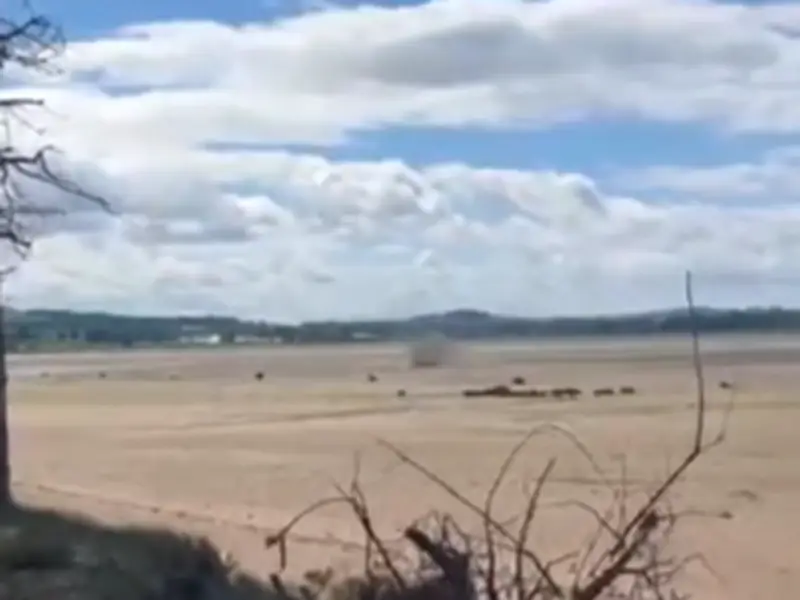
Beachgoers have been warned not to touch suspicious objects after an unexploded Second World War bomb containing live explosives was discovered on Belhaven Beach in East Lothian. Dunbar Coastguard issued the warning after an Army Explosive Ordnance Disposal (EOD) team carried out controlled explosions on Thursday to safely destroy the device.
Device still contained high explosive material
The coastguard stated that the corroded ordnance, believed to date from the Second World War, still contained high explosive material despite its age and appearance. In a social media post, the team warned that unexploded ordnance is occasionally washed ashore or uncovered on beaches around Dunbar, often after storms or high tides.
“Whilst it may look harmless, please be advised there is a significant likelihood that it could still present a danger,” the Coastguard said.
Public advised to call 999
The Coastguard advised anyone spotting an object of unusual size or shape on the beach to assume it could be unexploded ordnance and keep well away. “If you see any unusual objects uncovered on the beach, especially after storms or high tides, call 999 and ask for Coastguard. We will then task the appropriate agencies to respond. Do not attempt to touch or move any items,” the post added.
Regular reports of wartime ordnance
Photographs shared by Dunbar Coastguard show the heavily corroded munition recovered from Belhaven Beach before it was destroyed by Army specialists. The team said it regularly receives reports of wartime ordnance being uncovered along the East Lothian coastline, with many items believed to date back to the Second World War.
Coastguard officers reminded the public that even badly rusted munitions can remain highly dangerous decades after they were first buried or discarded. Anyone who discovers a suspicious object on a beach is advised not to touch or move it, to keep others away from the area, and to call 999, asking for the Coastguard, so appropriate emergency services can assess the risk and arrange safe disposal.