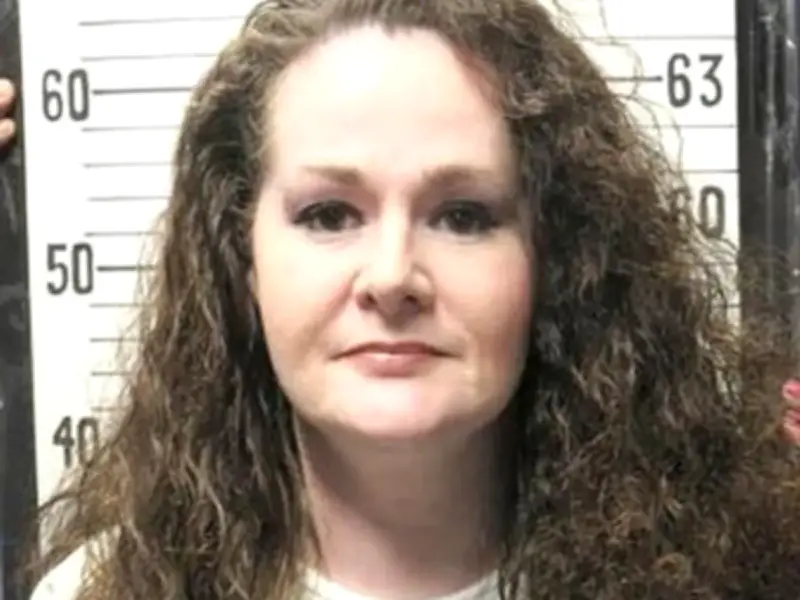
Murderer Christa Pike survived her execution despite being given two doses of the lethal injection drug pentobarbital, sparking an urgent investigation. Pike, 50, reportedly had a pulse and was snoring after the lethal injection was administered on Wednesday. She was rushed from the prison in Tennessee to hospital, although her condition was unknown at the time, according to her legal team.
Background and Conviction
Pike had been on death row over the murder of Colleen Slemmer in January 1995. She was convicted the following year and was due to be the first woman to be executed in the US state in 200 years. Her execution was approved following a last-minute reprieve, though it soon became evident the procedure had been botched. Prison officials gave Pike two doses of pentobarbital, her attorneys said in court filings late on Wednesday.
Execution Goes Ahead
Pike's execution went ahead despite a last-minute appeal on Wednesday. The Tennessee attorney general's office made an appeal to the Supreme Court, arguing that halting the execution would traumatise Colleen's family and reward what it viewed as "abusive delay tactics" carried out by Pike's legal team. Colleen's mother, May Martinez, travelled to Nashville in the hopes she would see her daughter's killer be executed. Colleen's body was found with a pentagram carved in her chest and with her head caved in by a chunk of asphalt - Pike showed off a piece of Colleen's skull around school before her arrest.
"Every time I think about it, I think about Colleen feeling that pain and trying to get up and run," May told the Associated Press. Executions of women are rare in the US and only 18 women have been lawfully killed after the Supreme Court reinstated the death penalty in 1976. They represent about one per cent of all executions in the US, the Death Penalty Information Center said. Since the death penalty was reinstated, more than 1,600 inmates have been executed in the US.
Botched Execution Details
Witnesses observed the proceedings from a separate room described seeing raised curtains in the execution chamber at 7.27pm with Pike being seen strapped to a gurney. Her last words were reportedly: "I'm going to leave this world the way I spent most of my life and that is in love." She later described herself as being at peace, according to NPR. She remained awake immediately afterward and asked officials if her arm was meant to feel that way - though it was not clear what she had been referencing.
At 8.26pm, execution witnesses said the second dose of pentobarbital had been administered. Despite the doses, Pike was found alive and loudly snoring at about 8.53pm. Media witnesses were then escorted out of the execution chamber and Pike was rushed to a nearby hospital. Her condition is not known at this time.
Investigation Ordered
Tennessee Governor Bill Lee said he would order a review into the botched execution "to determine exactly what occurred" and announced none of the scheduled executions will go ahead this year. He said: "Carrying out a lawfully imposed sentence is among the State's most serious responsibilities, and the people of Tennessee expect it to be done in a manner that is not only legal and constitutional, but is effective."
Robin M. Maher, the executive director of the Death Penalty Information Center, said what happened to Pike was "unparalleled." Maher said there had been seven other people who survived medical issues following an execution team's failure to get a vein to administer lethal injection drugs. She did add that no one had stayed alive after they received the lethal injections used in similar executions.
What is Pentobarbital?
Pike received two doses of pentobarbital, a controversial drug that slows down brain and nerve activity. Pentobarbital is used alongside other drugs or by itself in executions. This year alone, 14 prisoners have been executed in the US via single doses of pentobarbital - seven of those were in Texas, six reported in Missouri and one in Georgia. In the US, pentobarbital is known by the name Nembutal.
While it is not readily available, pentobarbital has been used in euthanasia and assisted dying cases across the globe. It was invented in the late 1800s and was found to halt a number of brain functions. Pentobarbital belongs to the barbiturates cluster of drugs that typically treat sleep disorders as well as traumatic brain injuries. The administration led by Democrat Joe Biden previously removed pentobarbital from federal execution protocol amid concerns about the potential that it could cause unnecessary pain and suffering. But the Department of Justice this year reauthorised the use of the drug that had been used to carry out 13 executions during Donald Trump's first administration, which was more than under any president in modern American history.