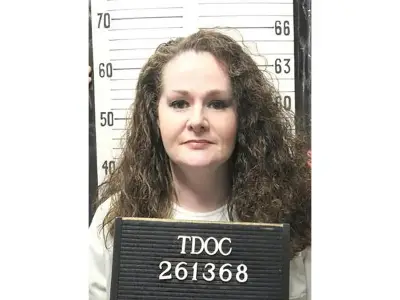
Christa Pike, the death row inmate who survived two lethal injections in Tennessee, appeared to predict the horror she endured during her botched execution weeks before. The 50-year-old was given two doses of pentobarbital in the death chamber but survived and was rushed to hospital in Nashville.
Pike has now woken up and started eating again, but suffered severe burns and blisters to her arms. She was initially unconscious and on a ventilator in the days after the execution attempt, but her lawyers have said she is slowly regaining mobility.
Fears voiced before execution
Before the botched execution, Pike's lawyers told courts and prison officials she had medical conditions that could complicate a lethal injection and make it agonising. In a taped interview weeks before she was to be put to death, she spoke about her fears that attempts to inject her with the drug would not work. She was specifically worried about pentobarbital causing burns.
“The drug supposedly burns very bad,” Pike said. “And so that sounds scary to me because they used the word Draino in speaking about this drug, and the thought of suffocating and drowning on my own bodily fluid and blood isn’t very appealing to me.” Due to this concern, Pike had requested to be hanged - but this request was turned down.
Court hearing and medical concerns
In a court hearing on Wednesday, where Pike's lawyers sought an order for the state to preserve evidence from the execution, lawyer Luke Ihnen repeated how the lethal injection drug can "cause extreme pain upon injection". He explained she had a "history of difficulty with blood draws and needle insertion" and said that, as her "veins are so difficult to access", it was likely that those "physical characteristics would interfere with the proper delivery of the poison".
It remains unclear exactly how Pike survived, with one theory that the drug did not enter her blood stream due to the placement of the IV lines, while another involves the quality of the poison used.
Expert analysis and aftermath
The five-gram dose of pentobarbital used in executions is many more times the amount that should put someone in a medical coma, said Dr Jonathan I Groner, a retired paediatric general surgeon at Ohio State University College of Medicine. “The fact that she woke, on one hand, says she got really little of it into her system. So that’s kind of shocking,” Dr Groner said. “It says how badly they botched the execution.”
At high doses, the potent barbiturate should make a person lose consciousness and stop breathing. Groner said the IV might have been placed improperly, or Pike’s veins could have been fragile and ruptured, causing the drug to seep into the surrounding tissue instead of flowing through the bloodstream.
The failed execution has renewed scrutiny on how states carry out the death penalty. On Wednesday, Texas carried out the first execution in the US since the Pike attempt, with Jamaal Howard given a lethal injection. “While her physical recovery has been remarkable, significant questions remain about the long-term effects of what she endured,” Pike's lawyers said. “Christa is dealing with the profound psychological trauma of having survived a failed execution, including the terror, pain and uncertainty of believing she was about to die.”
Pike would have been the first woman executed in Tennessee in 200 years. She and her boyfriend were convicted in the 1995 killing of 19-year-old Colleen Slemmer, their classmate at Knoxville Job Corps. Prosecutors said Pike feared Slemmer was a romantic rival and lured her to a secluded area where she and her boyfriend tortured and killed her. The case got widespread attention because of the brutality of the killing, the ages of the people involved and because a satanic symbol was carved into the victim’s body.