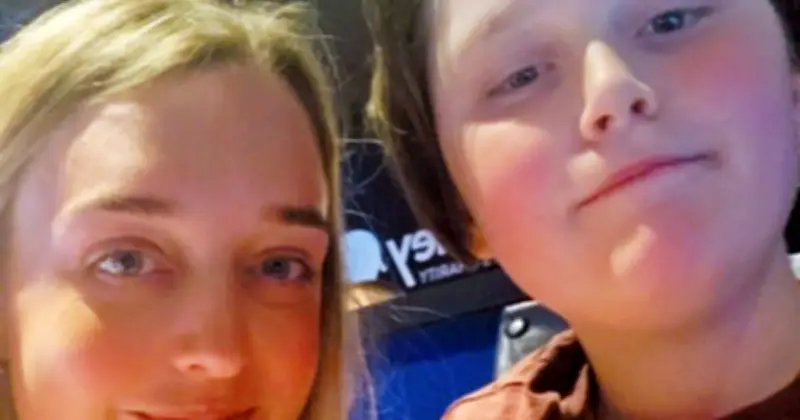
Jacob Butler, a 14-year-old schoolboy, nearly lost his leg after contracting a flesh-eating disease while swimming in a lake in Cheshire during a heatwave. The incident occurred at the Blue Lagoon in Colliers Moss Park near Burtonwood, where Jacob was jumping into the water with friends. His right leg was snagged on a piece of wire, cutting it down to the bone just below his knee. The wound became infected with necrotising fasciitis, a rare and potentially life-threatening infection.
Emergency Response and Initial Treatment
On April 30, Jacob called his father, Ashley Butler, 37, to report an accident. Paramedics arrived at the lake, and a nearby fisherman helped by wrapping Jacob's leg in a T-shirt to reduce blood flow. Jacob was airlifted to Alder Hey Children's Hospital. His mother, Rebecca Butler, 33, credited the fisherman with saving her son's life and leg from amputation.
Jacob underwent emergency surgery the next morning to remove signs of infection and stitch his leg back up. He was discharged a couple of days later. However, on May 13, Rebecca noticed a foul smell resembling 'rotting flesh' and took him back to A&E. Doctors diagnosed necrotising fasciitis caused by Aeromonas Hydrophila, a bacterium found in brackish water like lakes and rivers, which enters the body through cuts.
Ongoing Medical Procedures and Recovery
Jacob underwent five hours of surgery to remove the infection, which had eaten away about 15 cm of flesh. He later had calf muscle transfer surgery to move muscle from the top of his calf to the front of his leg to aid walking, and a skin graft from his right thigh. Rebecca said, 'The whole ordeal has been devastating for me as a mum. I honestly thought he was going to die, and to be told he could have if I hadn't brought him to the hospital keeps me up at night.'
She added that Jacob's leg is deformed and will remain so for the rest of his life. 'We never want anyone to have to go through what Jacob has been through,' she said. Jacob himself warned others: 'Please don't jump into open water as it can be very dangerous. I could have lost my leg or worse.'
Raising Awareness About Open Water Dangers
Rebecca shared her son's story to raise awareness about the dangers of open water. She noted that at one point, around 30 doctors and surgeons were discussing Jacob's leg, and all the worst-case scenarios were going through her head. Necrotising fasciitis, according to the NHS, is a rare and life-threatening infection of the deeper layers of the skin. Aeromonas Hydrophila is commonly found in brackish water and enters the body through cuts.
Rebecca said, 'Luckily, we still have our son, but unfortunately, there are others who will never see their children again. Water safety is real and no joke.' Jacob's case highlights the risks of swimming in open water, especially during hot weather when many seek relief in lakes and rivers.