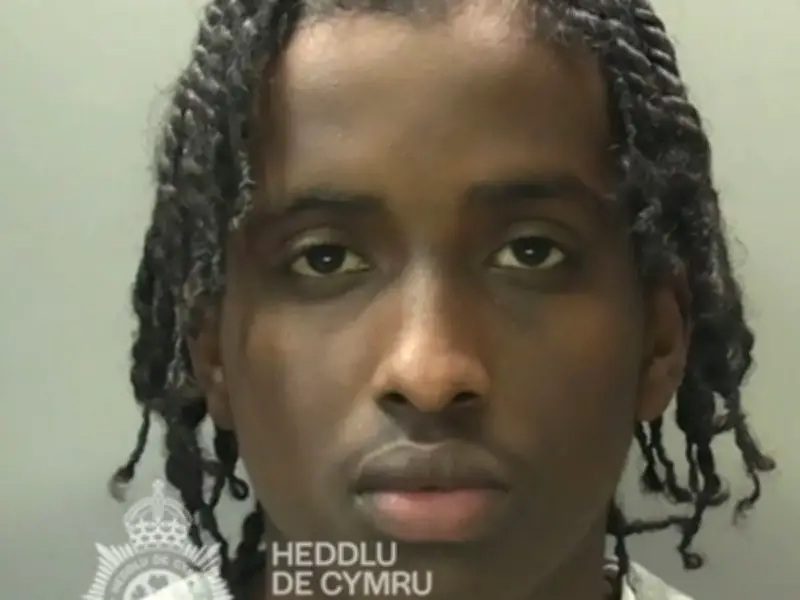
Idris Ahmed, 19, from Riverside, Cardiff, was sentenced at Newport Crown Court on Friday after stabbing a 17-year-old boy at Barry Island beach during the bank holiday weekend on May 25. The attack left the teenager with injuries so severe that doctors were forced to amputate his lower leg.
Attack on a packed beach
The victim had travelled to Barry Island with his friends to enjoy what should have been a normal day at the seaside. Ahmed was also there with a group of friends. The court heard there had been tensions between the two groups, described as involving "postcode wars", stemming from a grievance Ahmed held against one of the victim's friends. However, the 17-year-old himself was not involved in the original disagreement.
Before the stabbing, the victim reportedly tried to diffuse the situation by shaking hands with two males from Ahmed's group. A third male refused to shake his hand and walked away to make a telephone call. The victim's friends became concerned that something was about to happen. Ahmed then approached the teenager armed with a knife and plunged it into his thigh while his back was turned.
Witnesses described Ahmed appearing "out of nowhere" before carrying out the attack. The victim suffered a 4cm stab wound and later described the terrifying moment, saying there was blood "everywhere" and that he thought he was going to die. The judge said the teenager knew he was seriously injured and had told others "he could feel himself going."
Doctors unable to save the leg
Doctors carried out multiple operations in desperate attempts to save the teenager's leg, even operating on his other leg, but ultimately they could not save it and his lower leg had to be amputated. The knife used in the attack was later recovered, with the victim's blood found on it. Ahmed handed himself in later that day, although the prosecution told the court he had attempted to dispose of the weapon and change his clothes following the stabbing.
The teenager, who cannot be named because of his age, had been an active 17-year-old who enjoyed playing sports and had ambitions of joining the Army as a paratrooper. He had also started driving lessons and was working towards becoming more independent. His family described him as an ordinary teenager with his whole future ahead of him, but the stabbing has left him having to adapt to a completely different life.
In his victim impact statement, the teenager described the ongoing physical and psychological effects of losing his leg. One of the hardest things has been dealing with phantom pains and spasms, which make him feel as though he is still being stabbed despite the leg no longer being there. He explained: "It's like I am getting stabbed in my toes. It feels like my leg is still there, but it's not." He also experiences panic attacks and sometimes wakes up thinking he can still see his missing leg.
Family describes lasting impact
The victim explained how dramatically his everyday life has changed since the attack. Previously active and interested in sports, he now spends much of his time sitting in bed playing video games. He has been unable to continue his driving lessons as planned and has had to rely on friends visiting to help take his mind off what happened. Despite the pain, trauma and uncertainty about his future, he told the court: "I am happy to be here, just happy to be alive really."
His mother, Stacey Attard, described the devastating impact the stabbing has had on the entire family, saying their lives had been changed forever. She explained that before the attack her son had been working towards his dream of joining the Army as a paratrooper, but now faced a future involving physical pain, recovery and adapting to life without his leg. She said she could barely sleep, regularly waking up in a panic and running into her son's room. She also explained that the family no longer enjoys days out together as they once did and that his siblings have been left traumatised.
The victim's sister, Kiara Attard, cried as she read out her victim personal statement to the court. She said she had taken her younger brother and his friends to Barry Island that day, never imagining anything could happen. She remembered them laughing, singing and joking in the car on the journey there, before their lives were shattered just hours later. She described the guilt, anxiety and worry she has carried since the attack, explaining that she genuinely thought her brother was going to die.
Sentence handed down
Ahmed initially denied charges of causing grievous bodily harm with intent and possessing an article with a bladed point, but changed his plea to guilty earlier in November at Newport Crown Court. His barrister, Paul Hewitt, read a letter to the court in which Ahmed accepted responsibility for the life-changing amputation and acknowledged the suffering he had caused the victim and his family. In his letter, Ahmed said he regretted the person he had been and explained that, at the time of the offence, he had been studying A-levels and hoped to go to university.
Judge Daniel Williams described the attack as an act of revenge, with an element of premeditation, and said Ahmed had been carrying a highly dangerous weapon. He highlighted that the stabbing took place on a packed beach during a bank holiday, putting members of the public at risk. He also pointed to Ahmed's attempts to dispose of the knife and conceal his identity following the attack. The judge said the victim had been deprived of the future he could have had, all because Ahmed was trying to impress his friends.
Ahmed was sentenced to 10 and a half years in a youth detention facility for causing grievous bodily harm with intent. He also received a two-year sentence for possessing an article with a bladed point, which will run concurrently. He will serve two-thirds of his 10-and-a-half-year custodial sentence before serving the remainder on licence. Judge Williams also imposed an indefinite restraining order preventing contact between Ahmed and the victim, describing the teenager as a "courageous young man".
Following sentencing, Detective Superintendent Emma Hampton of South Wales Police said the case highlighted the devastating and far-reaching consequences of knife crime. She said tackling knife crime remained a key policing priority, with the force committed to preventing young people from carrying weapons and taking robust action against those involved.