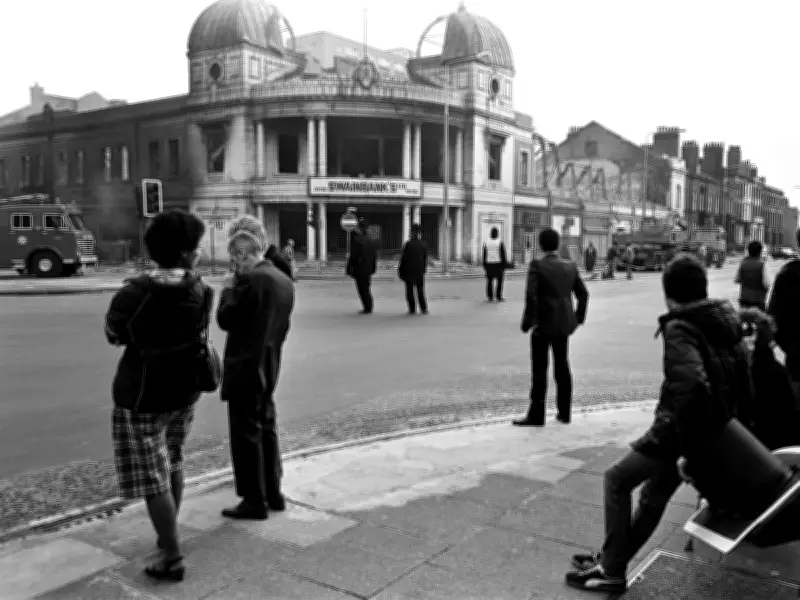
Forty-five years ago today, rising tensions between Merseyside Police and the Liverpool 8 community reached a boiling point, as 'a terrible beauty was born' on the streets of Toxteth, sparking an uprising that changed the course of modern British history.
Decades later, the 'Toxteth riots' are credited with shining a spotlight on aggressive police tactics, systemic poverty, and institutional racism, all during a tumultuous period characterised by Thatcherite politics and an economic system that left many behind. One of those who still remembers the time vividly is Wally Brown, 83, who had been working as a youth worker in Toxteth.
He told the Liverpool ECHO: 'There'd been ongoing issues with the way the police were dealing with young Black people. Stop and search was out of control. People were getting stopped all the time.'
Breakdown of Trust Between Community and Police
The relationship between the L8 community and Merseyside Police had completely broken down, with the latter being accused of racism and gaining a reputation for frequent stop and search, hard-line tactics, and heavy-handedness.
The catalyst for the 'Toxteth riots' involved a young man named Leroy Cooper. Mr Cooper went on to become one of Liverpool's most respected community champions, as well as a highly acclaimed photographer. He sadly died in 2023 at the age of 62.
However, on July 3, 1981, Mr Cooper was arrested, and his treatment by Merseyside police led to nine days of civil unrest, known then as the 'Toxteth riots', or known to many locals as the Toxteth Uprising.
Just a stone's throw away from the heart of the protesting was Vincent O'Neill, 80, who was living on Percy Street at the time and witnessed the scenes unfold from the bottom of his road. He said: 'I remember thinking of what W.B. Yeats said: "A terrible beauty is born." He said that of the 1916 uprising in Ireland, and I had the same feeling that this was a pivotal moment in the history of Liverpool. We knew things had to change, and we wanted it to change.'
Community Solidarity Across Racial Lines
He added: 'The white community got it in the neck, the black community got it ten times over. It was really awful what was happening to them. The riots themselves were black and white people together, people saying, "We've had enough, we're not taking any more of this." And there was a lot of widespread support in the community for the action, because we knew it was necessary.'
Wally Brown had been personally affected by policing in Liverpool 8 during the 1980s. He said: 'One time I was coming home with the wife, I got stopped by the police. They told me to get out of the car, they took me in the car to the police station and asked me all kinds of questions, "Is this your car?" and all that kind of crap, until a sergeant came in and said, "Look, let the man go, he's done nothing wrong," and they let me go. But that was the kind of issue we were facing. If me, a professional person, working in the area was being treated like that, then you can imagine how the police treated young Black people who were seen as easy targets.'
Deep-Rooted Socioeconomic Problems
However, problems for those living in L8 were more deep-rooted than the scenes that unfolded in July 1981. Wally said: 'The 1980s were difficult for people across the city, and there were very few jobs which came onto the market. There were so many young people with ambitions, young Black people who I worked with, but who didn't have any opportunity. Unemployment was rife, housing was awful, and because of the lack of opportunity, people were stuck in bad housing. Then on top of all that, the police made life very very difficult for Black people. Thankfully, that was made very clear thanks to the work of Margaret Simey.'
Originally from Glasgow, Margaret Simey was born in 1906 and moved to Liverpool aged 18, later becoming a councillor for Granby ward in Toxteth, a social reformer and campaigner for justice and people's rights. Ms Simey was chair of the Merseyside County Police Committee during the 1981 'Toxteth riots', and clashed with the chief constable over his failure to acknowledge the possibility that social issues were behind the violence. It was widely argued that police harassment had exacerbated the problems around chronic unemployment, racism, bad housing, and poor education in an area with a large population of Black people. Ms Simey famously said of the disturbances that local residents 'would be apathetic fools ... if they didn't protest.'
Lasting Impact and Historical Reflection
In the aftermath of the protests, Professor Richard Phillips, who now works at the University of Sheffield, has looked extensively at what led to the 1981 protest, the lasting impact on the local community, and how it shaped the lives of people who lived through it. Professor Phillips co-authored a book with Diane Frost, titled 'Liverpool '81: Remembering the Riots', the story of one of the most explosive summers in recent British history, including first-hand accounts of the protest from local residents, police officials, and community leaders.
He told us: 'The protest encompassed so many issues, including problems with joblessness, lack of opportunity, poverty, housing, and all in the context of a developing economic crisis. But the most important issue was the ways in which the police were treating the Liverpool-born Black community and other members of the local Liverpool 8 community. Our book was published in 2011, and what struck me the most was how much lasting impact the protest had on people's lives. The people we spoke to were in their 40s, 30 years after the protest, and who had been young teenagers at the time, and they told us the struggles they faced in rebuilding their lives. Conversely to that, it also showed the importance of what happened in Toxteth, the importance of place really, and people in particular, especially in places like Liverpool. People who didn't have much cultural capital, people who were being treated badly by society, and very badly by police, they stood up to confront those issues. They didn't let the issue drop and that's so powerful and accounts for why the 'Toxteth riots' is still remembered across the country, and in its social and cultural consciousness.'