In June 1898, gamekeeper Robert Scott was shot dead on Margam mountain, and the ensuing police investigation and trial captivated Wales for months. The murder, which took place on the Talbot family's Margam estate, drew huge crowds to the crime scene and ended with the execution of Joseph Lewis.
The Discovery of the Body
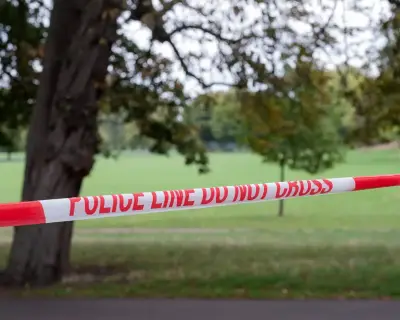
On the morning of Friday, June 10, 1898, Scott's body was found on Margam mountain. He had been blasted in the face with a shotgun. Scott, a 39-year-old Scotsman, had worked at Margam for five years and was part of a small team tasked with combating poaching across the estate.
The previous evening, Scott had gone on patrol with fellow gamekeeper Robert Kidd and PC Hawtin, a private constable employed by the estate. The trio spotted a man in a dark overcoat behaving suspiciously in an area known as Cwm Phillip. As they attempted to surround the individual, Scott vanished from view, and a gunshot rang out. Kidd and the constable searched frantically but could not find him.
The following morning, Scott's body was discovered in a gully near Blaenmallwg farm. Part of his jaw had been shot away, and there were further gunshot wounds to his body. A grey cloth cap was found close to the scene.
Arrests and the Trial
Later that day, Henry Jones of Union Street in Maesteg was arrested. Jones had been caught laying rabbit snares on the Margam estate around two years earlier and had been fined £8 9s 6d. Poaching was rife on the estate at the time, with a miners' strike across south Wales causing hardship for many families.
A second arrest followed: Joseph Lewis, also known as Joe Harries, a 32-year-old who was lodging with Jones. Lewis had a history of desertion from the Army and several burglary convictions. He had apparently confessed to his landlady that he had killed the gamekeeper.
Lewis faced a charge of murder, while Jones was charged as an accomplice, though this charge was subsequently dismissed. Lewis's trial was held at the Glamorgan Summer Assizes at Swansea's original Guildhall building. Mr W Denman Benson prosecuted, with Mr Lloyd Morgan MP appearing for the defence. Mr Justice Wills presided.
In total, 34 witnesses were summoned. William Maddocks stated he had conversed with Lewis as he walked past Brombil farm. Jones testified that Lewis had revealed where he had concealed the shotgun, which was found with both barrels empty. John Griffiths, a haulier from Maesteg, told the court that Lewis had remarked that his landlady needn't fret about her husband because "'twas I shot the keeper".
Traces of blood were discovered on the bottom of Lewis's trousers, though science at the time could not determine its origin. The prosecution concluded its case at 2.45pm on the second day, informing the jury "the case had been made out beyond the possibility of reasonable doubt". The defence presented no evidence.
The Verdict and Execution
The jury retired for more than two hours. The Post reported that "rumours of disagreement circulated" and that "a very active minority of the 12 jurymen were for some time strongly in favour of an acquittal". After approximately two hours and 15 minutes of deliberations, the jury returned a guilty verdict.
The judge placed the traditional black cap on his head and passed the sentence of death. Lewis was transferred to Swansea prison. The executioner, a Mr Billington from Bolton, arrived on Monday, August 29, accompanied by his son. The execution took place in the prison's tread-mill house.
At 8am a black flag was raised on the prison flagpole, and "a tremendous sigh emanated from the crowd" outside, estimated at more than 5,000 people. At 9am the flag was lowered as Lewis's body was taken down from the gallows.
Lewis had provided multiple versions of his whereabouts on the night in question. In correspondence from prison, he insisted he had shot the gamekeeper in self-defence, stating: "I never dreamt of injuring Scott but simply went out to get a rabbit or two; times were so bad. I told Scott three times to stand back, and had he done so nothing of this would have happened. But he rushed me with his stick, and what I did was self-defence." He stated he fired the second shot "to put him out of his misery". The precise circumstances of what took place on Margam mountain that evening died with Lewis.