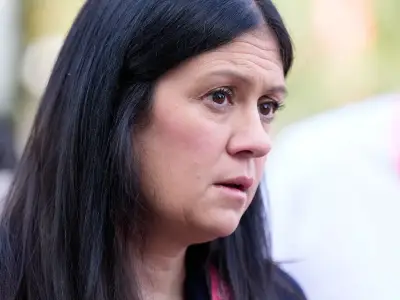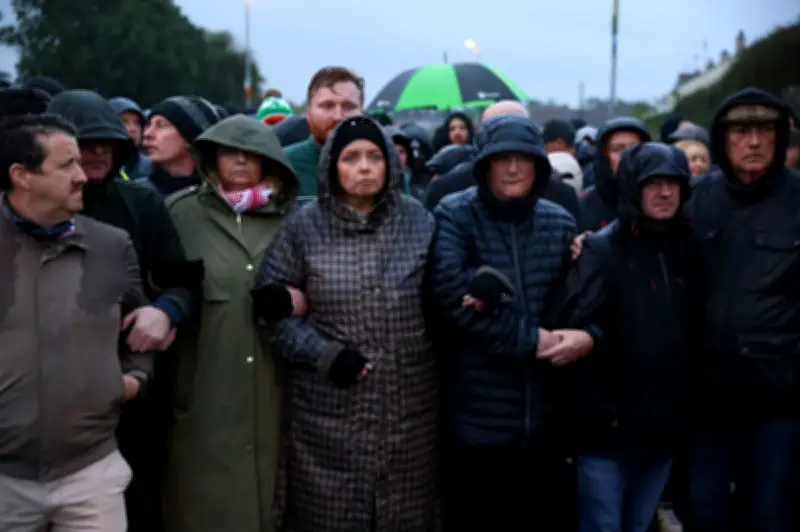
A Sinn Féin member of the Northern Ireland Policing Board is being investigated by the body after allegedly taking part in a protest on the Garvaghy Road.
Deirdre Hargey was photographed alongside others on the road in Portadown during a protest against an Orange Order parade taking place.
It came after a Parades Commission determination last week which allowed the parade to complete its traditional route along the Garvaghy Road for the first time in almost 30 years.
Investigation confirmed at board meeting
A legal challenge to the Parades Commission determination failed after a lengthy court sitting across Saturday.
During a meeting of the board on Thursday, chairman Brendan Mullan confirmed an investigation into whether Ms Hargey had breached its code of conduct following complaints.
“Specifically, I have asked the vice chair to investigate, and the outcome of that investigation will be reported in due course,” he said.
However, Mr Mullan permitted Ms Hargey to remain in the meeting.
Conflict of interest concerns raised
DUP board member Trevor Clarke requested at the start of the meeting that Ms Hargey be excluded because she had been at an “unlawful assembly” on the Garvaghy Road, and that there is a “clear conflict of interest” in her remaining while the Drumcree dispute is discussed.
Mr Mullan said it was his view that all political representatives have an interest in the matters unfolding on Garvaghy Road, but that their “interest is not in conflict with their role as a board member”.
“In fact such interest goes to the heart of the accountability framework established by Patten whereby the political representatives in representing the views of their community bring a democratic mandate to policing oversight,” he said.
He added: “There then is the matter that Deirdre has been photographed participating in the protest on Garvaghy Road, and would be conflicted if she was as a board member party to, and raised questions in relation to prosecutions arising from the protest. Given that this is an ongoing police operation, no member should raise questions regarding specific prosecutions, and therefore no conflict arises.”