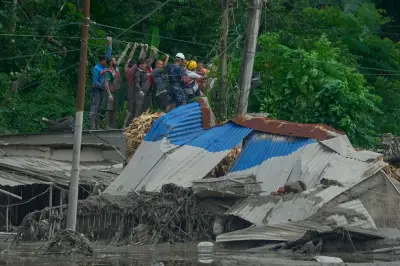
Search teams are working to rescue more than 900 people thought to be trapped inside hydro tunnels in Nepal following catastrophic flash floods last week. More than 900 people have been confirmed dead after a deluge of ice, rock and mud swept 62 miles (100km) through Rasuwa, north of Kathmandu, on Wednesday.
Entire communities were destroyed, with hundreds of bodies buried in shallow graves after being gushed down the mountains. Among the missing are more than 900 workers missing in hydropower projects in the region. As many as 279 workers have already been rescued or walked free from the huge underground areas, bored deep into the world’s highest mountain range.
Rescue efforts hampered by debris
Nepal’s Minister of Energy, Water Resources and Irrigation, Biraj Bhakta Shrestha, said rescuing the other workers was the country’s ‘highest priority’. A spokesperson for the country’s army said the ‘large amount of debris’ was posing a huge challenge to search teams trying to open the tunnels.

One worker, Madan Singh Budha, had come off a night shift at the Upper Trishuli tunnel number 2 when the disaster struck. He told CNN: ‘When I looked outside, I could see water and so I started running up the hill. The hill was rocky, with grass growing in between. We used that grass to hold on to as we climbed. Those who weren’t able to climb up were swept away.’
Rescuers describe deep mud inside tunnels
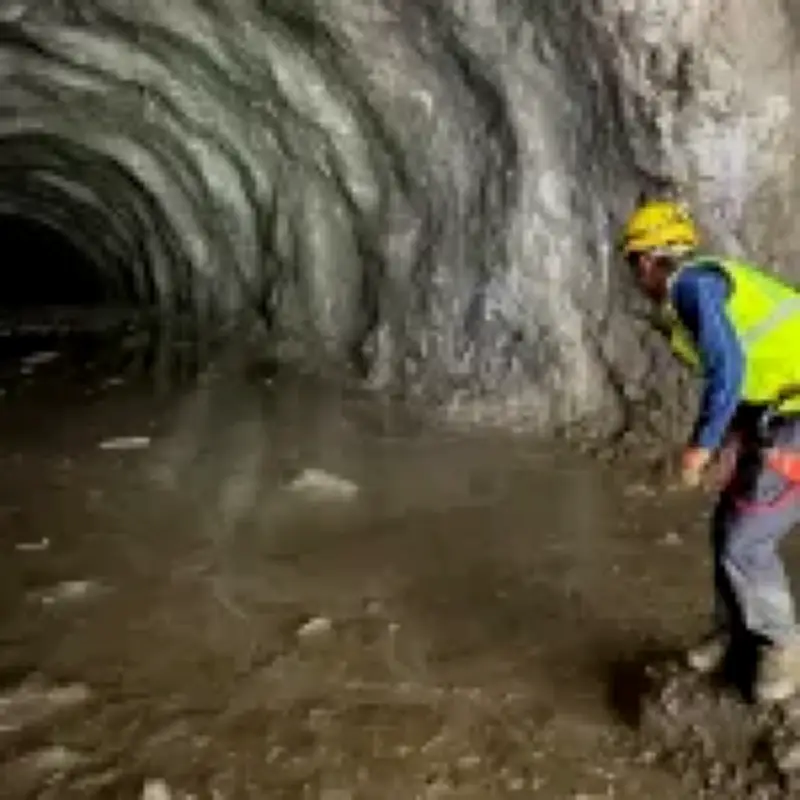
Among those searching for the trapped workers is Ashish Gurung, who told The Guardian there is ‘just mud everywhere’. The rescuer, who is working at Chilime Hydropower in Ruswana, added: ‘Inside the tunnel it was worse. It’s so difficult to move, the mud is so deep.’
Describing the scene inside the underground system, he continued: ‘Walking in it is very difficult; at one point it was up to our chests. We got close to the first station, about 130 metres in. Inside that far, you could [see further in]; it looked like it was just bodies.’ There are still hopes that some hydro workers will be alive and safe in safe areas in the tunnels.
Death toll and missing numbers
In its latest update, the Nepal disaster agency said 903 people had been killed in the disaster while a total of 4,247 people are missing, including 597 foreigners. The flood is thought to have been caused when a huge chunk of ice and rock collapsed from a glacier, an event that registered a magnitude of 5.2 on its own according to the US Geological Survey.
There are now 48 British nationals still missing after the extensive flash flooding. Chinese authorities reported 16 deaths and 546 missing. Nepal has said that it does not need foreign help in general search and rescue, but has leaned on the expertise of India and China in tunnel rescues.
Mass graves prepared as hospitals overflow
Hospital mortuaries in Kathmandu and surrounding areas are overflowing with dead bodies retrieved from the disaster sites. Authorities are preparing to bury bodies in mass graves as they struggle to cope with the influx of corpses, many of which are becoming decomposed.
The Nepal government has now decided that all unidentified and unclaimed bodies be buried in mass graves after DNA samples are taken from them in the hope that they can be identified at a later date. Scores of family members are gathering outside hospitals in hopes of finding their missing loved ones. Posters of missing people also line the walls of hospitals and contact details for their loved ones, still hoping they are still alive.