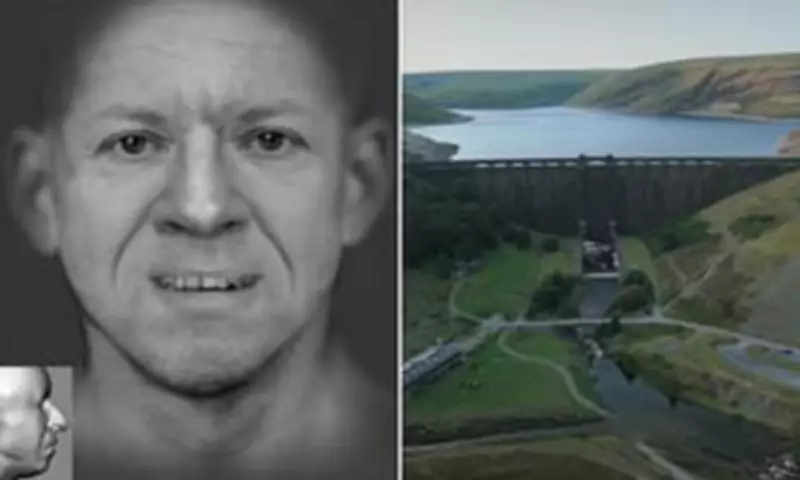
In a remarkable fusion of historical science and modern policing, detectives are using the same advanced facial reconstruction technology that brought King Richard III back to life to solve the mystery of a man found dead in a remote Welsh reservoir. The badly decomposed body was discovered floating in a wetsuit in the Claerwen reservoir in October 2024, sparking a complex investigation by Dyfed-Powys Police.
A Desperate Search for Identity
Police have been unable to identify the man through conventional means, with DNA, fingerprints, and dental records failing to produce matches in national and international databases. Inspector Anthea Ponting, leading the investigation, recalled reading about the facial reconstruction of King Richard III from remains found under a Leicester car park in 2013. This inspired her to seek similar expertise for the reservoir case.
'I thought if they could do that from remains found 500 years ago they might be able to help us,' Inspector Ponting stated. 'Our man has no tattoos, jewellery or identifying marks so our best hope is to see what he looked like.'

State-of-the-Art Forensic Reconstruction
Inspector Ponting contacted Face Lab at Liverpool John Moores University, a world-renowned centre that combines art and science to create facial imaging. The team, which had previously developed a digital speaking avatar of King Richard III, was provided with photographs, a post-mortem report, a forensic dental report, and a CT scan of the mystery man.
Using medical imaging software, experts constructed a 3D model, leveraging dental details to shape the lower face and mouth, noting protruding teeth and a left-sided crossbite. They estimated the man's facial structure, adding muscles to define features, concluding he had a rounded chin, square jawline, and downturned nose.
Inspector Ponting explained: 'Thanks to Face Lab, we have now been provided with a very clear and detailed estimation of what the man looked like. The image has already been processed through the Police National Computer and has been shared with Interpol.'
Baffling Circumstances and Ongoing Investigation
The body was found by a dog walker at the 650-acre Claerwen reservoir, which supplies water to Birmingham and the West Midlands. Police are perplexed by the absence of an abandoned car or clothing in the desolate area, raising suspicions that the man might be a victim of crime. It is theorised that his body was placed in the wetsuit and dumped to mislead investigators.
A post-mortem examination revealed the man, aged between 30 and 60, had been in the water for up to 12 weeks. His Zone 3 Agile wetsuit, an Extra Large size, suggests he was over 6 feet tall, weighing approximately 202–220 pounds, with a 44–48-inch chest.
'Until now, the only item available to progress our investigation was the wetsuit the man was wearing, which provided us with limited information around his height and weight,' Inspector Ponting noted. 'We are looking for a breakthrough to discover who he is, where he came from and how he lost his life.'
Appeal for Public Assistance
Police are keeping an open mind about the cause of death and why no one has reported the man missing in over 15 months. They have released the digitised facial image to the public, urging anyone who recognises him to come forward.
'This is someone's family member and I would like nothing more than to return him to his loved ones who might be missing him,' Inspector Ponting emphasised. 'We want people to have a close look at the man's face and if you think you know him, please come forward.'
Professor Caroline Wilkinson, Director of Face Lab, highlighted the potential of this technology: 'Facial depiction from human remains can act as a tool for recognition, providing new lines of investigation in relation to identity. Hopefully, someone who knew this man will now recognise his face and our facial depiction can support the police to finally identify him.'
This case underscores the innovative approaches in forensic science, bridging ancient history with contemporary crime-solving to bring closure to mysterious deaths.