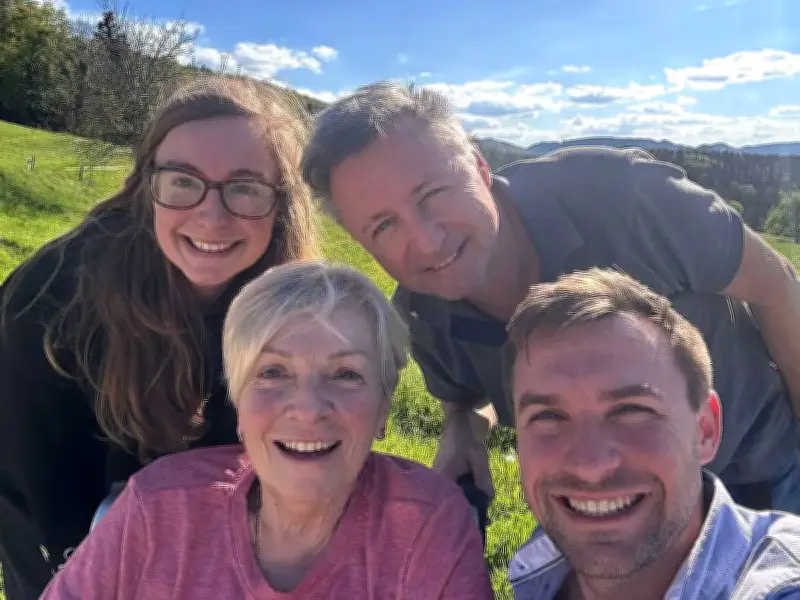
Gaynor Griffiths, 63, told her family "I want to die under my terms" in a heartbreaking letter that was only to be opened after her death, following her decision to end her life at a Swiss clinic in April. Her family are now speaking publicly for the first time since her death, hoping to carry out her wishes ahead of the second reading of the Terminally Ill (End of Life) bill in September.
Support for the Terminally Ill Bill
Gaynor supported the historic bill that would allow those living with a terminal illness, aged over 18, with less than six months to live and holding mental capacity, the choice to end their own lives. MPs voted in favour of a bill in 2025, but it was not passed by the House of Lords after more than 1,000 amendments delayed its progress until it ran out of time on April 24 this year.
Just days earlier, Gaynor had flown to the Pegasos clinic in Switzerland to end her life. With her loved ones by her side, including husband Gary, 64, and their two children Ami and Alex, she told them: "Please carry on this fight for me. Try and get them to change their minds. We can try and make a difference."

Her final letter
Leaving behind a letter telling her family not to open it until after her death, Gaynor explained "the decision to end my life was mine alone", protecting them from any problems with the law back in the UK. She wrote: "Dad and I have been married for 42 years, we love each other very much and know each other extremely well. We have had a happy and fortunate life together. We've been blessed to have you two wonderful kids… and now Rory."
She told of being "lucky to have had (up to now) good health, lovely homes and amazing holidays. All these things makes my decision so hard. I will miss you all so much, it breaks my heart". But she said MND was "torture", adding: "I'm so lucky to have had dad to look after me, he truly is a wonderful caring superstar."
Gaynor wrote she hated not being able to walk and "play with my grandson", adding: "I'm devastated that dad and I won't be able to fulfil our retirement together, all those wonderful trips, Spain and spending time with family and friends. I'm so incredibly sad but I can't live like this. I'm dying, I want to die under my terms before I become a mind living in a dead body…I believe just existing is not living. So when the shocking news of MND happened I knew I would make the decision 'to go to Switzerland'. Becoming a mind trapped in a useless body is totally abhorrent to me."
She ended the letter thanking her husband for going with her on "the last of our trips together". "I can't imagine doing it alone. I know it will be horrendous for him, and I detest the thought of that, but I really need him beside me."
Diagnosis and final goodbye
Gaynor, a retired project manager, was diagnosed with MND last October after she went to the doctors experiencing 'foot drop' and weakness in her leg. Foot drop is a common early symptom of the debilitating disease, caused by muscle and nerve weakness that makes it difficult to lift the front part of the foot.
Before leaving their home in Kent for Gatwick Airport, Gaynor said her final goodbye to her three-year-old grandson Rory, telling him: "I love you to the moon and back." Her daughter Ami said: "The final goodbye was awful. She could have had more days with him if she hadn't needed to go abroad. This country's laws stopped her from having a good death in an environment she loved. Everyone else at the airport was happy, looking forward to their holidays but we knew this was our last flight with our mum. The airline staff had to lift her in and out of her chair which was degrading for her and painful, she was in tears throughout the whole process."
Her husband Gary, a retired print boss, said: "We had spoken about assisted dying ever since her dad suffered towards the end of his life. She said she wouldn't want to go through that. I just kept hoping it wouldn't go as quickly as it did. Ami persuaded her to see out Easter. I knew I wasn't going to let her go alone."

Gary was shocked at how quickly his wife declined, as by December she was living in a wheelchair, her arms started to weaken, and she told him: "I'm not going to be able to feed myself soon." He said: "She was struggling to breathe as well. That's when she decided that she had no life any more. In the middle of March she said she could feel her arms and hands starting to go. She was struggling."
Before her death, Gaynor had been hospitalised with pneumonia. Her daughter Ami broke down in tears as she added: "She was terrified. She said she'd wished she hadn't made it through the night. Every day we were in tears. She'd say 'I wish today was going to be the day'. It was constant suffering. She was constantly in pain. We didn't want her to go, so we begged her to stay with us. It was only because we were going away for a last holiday to Center Parcs in February that she said: 'I'm now going to hold on until after Easter'."
Ami, 33, a dog groomer, added: "Me and mum share the same birthday on June 8th and I was begging her, 'Can you just hold out until our birthday at least', and mum was saying 'I can't'."
The final moments
Gary explained how they had arrived at their hotel next to the clinic a few days ahead of the assisted death to fill out paperwork. They were told it had been scheduled for 10am on April 18. His wife hadn't wanted to tell everyone when she was doing it, so she sent a message just before she went in to all her friends and family thanking them for having 'a blast over the years'. She then turned her phone off.
That morning, Gary said: "They took us up in a lift where there's a big open planned apartment with big picture windows looking out over the hills and the Swiss mountains, all very serene. The drugs were already set up by the bed, there were two nurses in there and a doctor. Then a lawyer came in and sat down with all of us and we had to sign a load of paperwork and double check with Gaynor if she definitely wanted to do it. We were told they could have more time together and Gaynor just turned round and said; 'No, let's just get this over with'. We went up at 10am and at 11.11am she was gone. We told her how much we loved each other."
Ami added: "She kept saying 'I'm sorry for being selfish' and we told her she wasn't and we understood why she was doing it, she was making a brave decision. It was the hardest two minutes when she pulled the cord. We were just whispering to her how much we loved her. She was crying and we were saying 'don't cry'."
Her son Alex, an emergency medical technician in the NHS, said: "Travelling to Switzerland with my mum was the hardest thing I have ever done." He described her last moments as 'peaceful', and added: "In the space of a remarkably short period of time, I watched a woman who had been walking with a stick lose the ability to walk altogether. She lost an enormous amount of weight. She became increasingly reluctant to leave the house because she was frightened of being somewhere without access to a toilet. Towards the end, she could barely lift a cup of tea."
But he said the "hardest thing to witness" was coughing. "Every cough was a reminder that something as fundamental as clearing your own airway was becoming impossible. Her three-year-old grandson would ask his nanny to play with him, completely unaware that she simply no longer had the physical strength to do it. She loved him desperately, but she didn't have the physical reserve to lift him, to play with him. That is the reality of MND. And that is why my mum made the decision she did."
Alex, who had spoken to his bosses before the trip, as his family were concerned his decision to travel would affect his job, said he understood his mum's decision because he knew "what the alternative could look like". He said: "Throughout my nine-year career as an EMT, I have seen countless people die. I have been there when end-of-life medications have been given to patients who are cachectic, exhausted and in agony, while their families gather around them and wait for their final breath. I have seen the reality of what dying can look like. I have seen people struggle for breath. I have seen families watch the person they love become a shell of who they once were. And I have seen the NHS do everything it can within the limits of what it is allowed to do."
He said these workers are "compassionate" and "skilled" but often "trying to make an unbearable situation as comfortable and dignified as possible". "But perhaps we need to ask ourselves whether making an inevitable death as comfortable as possible is always the same thing as allowing someone to have a good death."
He said his mum "died peacefully, surrounded by the people who loved her, in a beautiful place, on her own terms", adding: "I am incredibly proud of her." The family described the mum as "incredibly brave" to have made this decision.
In a shared statement, the family said: "As a family, we feel that MPs or anyone opposing the bill should actually spend time with families in our situation and the people that are suffering, before making a decision that affects them."
Ami added: "She was my best friend. My birthday twin. Life without her is impossibly hard. She is so loved. She gave the best cuddles, I'd give anything to hug her one more time and I still can't believe we will not see her again. I heard Rory say to Alexa the other day: 'Alexa, can you please bring Nanny back to make mummy happy again?' Rory and I speak to my mum every night, to Nanny star and we always end with; 'We love you to the moon and back, Nanny'."
Paul Blomfield, Chair of Dignity in Dying and former Labour MP, said: "Gaynor Griffiths' experience highlights the issues MPs face on 11th September. Diagnosed with a terminal illness, she knew exactly what she wanted - to die on her own terms at home, surrounded by the people she loved. But the current law denied her that choice. It doesn't stop people like Gaynor from seeking an assisted death, it simply exports it to a clinic in Switzerland, forcing families to manage the logistics of dying abroad instead of being able to focus on saying goodbye at home. Gaynor's dying wish was that her family carry on the fight to change the law and end the suffering created by the status quo. MPs have already voted for change twice, but their decision was blocked by a handful of unelected peers. On 11th September, they can send a clear message back to the Lords on behalf of families like Gaynor's."