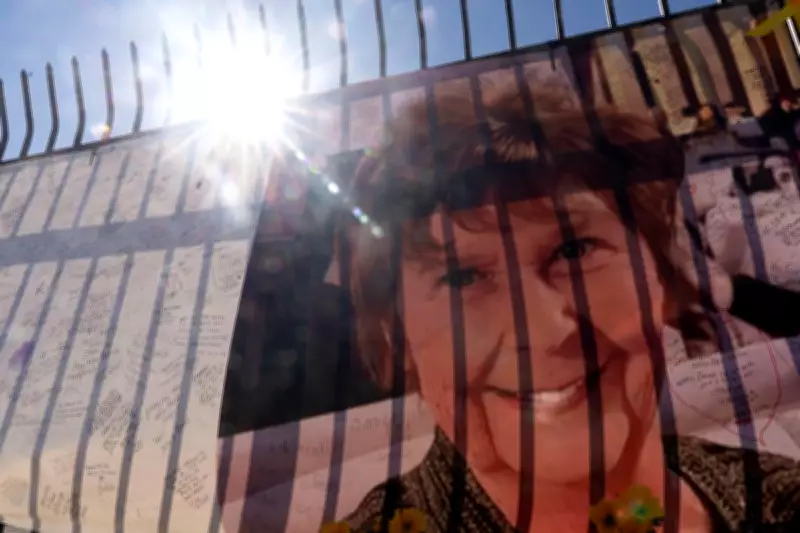
The Psychological Torment of Ambiguous Loss for Families
Families with missing loved ones, such as Nancy Guthrie, face a unique and devastating psychological phenomenon known as ambiguous loss. This condition freezes grief in a state of unresolved uncertainty, leaving relatives trapped in a limbo of hope and despair.
Nancy Guthrie's Disappearance and the Search for Answers
Nancy Guthrie, the 84-year-old mother of NBC "Today" co-host Savannah Guthrie, has been missing for nearly 40 days from her Tucson-area home in Arizona. Reported missing on February 1, the case took a sinister turn when Savannah Guthrie revealed her mother was "taken in the dark of night from her bed." The FBI released video footage showing a masked stranger outside Nancy Guthrie's front door, and her blood was found on the porch, yet the investigation remains unsolved.
The odd circumstances, combined with Savannah Guthrie's celebrity status, have propelled this case into a major news story. Guthrie and her siblings have made emotional appeals for her mother's release, recently offering a $1 million reward for information. "As my sister says, 'We are blowing on the embers of hope,'" Guthrie said on February 24, with red eyes reflecting her anguish.

Understanding Ambiguous Loss and Its Impact
Ambiguous loss occurs when a loved one disappears under mysterious or unresolved circumstances, such as abductions, runaways, natural disasters, or war. It can also apply to situations like dementia, where family members become strangers. This type of loss is particularly painful because it lacks closure, leaving families in a state of frozen grief.
Tai Mendenhall, a medical family therapist at the University of Minnesota and director of a mental health disaster team, explains, "They're frozen in their grief. They have a real sense of helplessness. There's no clear resolution from it. We know from research that ambiguous loss is the most psychologically painful kind of loss because of that."
The term was coined by Pauline Boss in the 1970s, based on interviews with women whose husbands were missing in action during the Vietnam War. Boss and Mendenhall have since worked with families affected by tragedies like the 9/11 terrorist attacks, highlighting the widespread nature of this issue.
Faith and Community as Coping Mechanisms
In the face of such uncertainty, many families turn to faith and community for solace. Savannah Guthrie has frequently referenced her Christian faith during this ordeal, asking on Instagram for people to "raise your prayers with us" and acknowledging that her mother might already be in heaven. This spiritual approach is a common coping strategy for those dealing with ambiguous loss.
Mendenhall notes, "When people turn toward their faith, that is where they find solace. Oftentimes the power of faith comes from the communities that inhabit it. Sometimes the best treatment for ambiguous loss is a community group, people who have had this shared experience."
Parallel Stories of Loss and Hope
Lynette Pino, 58, from Tesuque Pueblo in New Mexico, shares a similar plight. Her son, Darian Nevayaktewa, has been missing for nearly 18 years after leaving home to visit his father on the Hopi reservation in Arizona. "I could see in their faces that they want answers," Pino said of the Guthrie family. "What’s the next step? What can we do? It’s how I feel. There are no answers."
Pino's son was 19 when he vanished in June 2008, and his case is among many unsolved violent crimes in Native American communities. The FBI has recently increased efforts in such cases, sending extra agents and analysts to 10 states. Pino recalls, "He wanted to go see his dad. I just remember that day hugging him, telling him he only needed a half-semester to graduate from high school. He wasn’t there long, maybe a week, before he disappeared."
Moving Forward with Hope and Action
Despite the pain, families are finding ways to advocate and support others. Savannah Guthrie's family is donating $500,000 to the National Center for Missing & Exploited Children, citing "millions of families that have suffered" with similar uncertainty. Pino, who prays and lights candles for her son, offers advice to the Guthries: "Do not give up hope. Don't let law enforcement put it aside."

As these families navigate the frozen grief of ambiguous loss, their stories underscore the need for continued attention and resources in missing persons cases. The emotional toll is immense, but through faith, community, and perseverance, they cling to the embers of hope in a search for closure that may never come.