Van Driver Found Guilty in Fatal Smart Motorway Crash Where Safety Alerts Failed
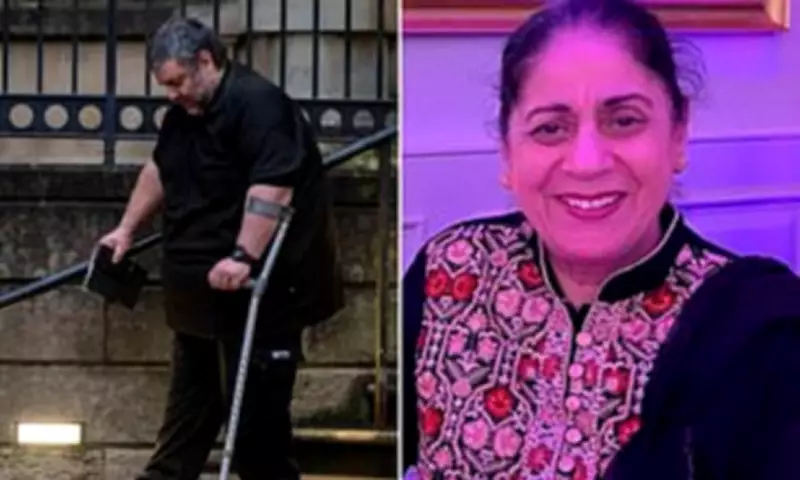
A van driver has been found guilty of causing death by careless driving after he collided with a broken-down car on a smart motorway where the safety alert system had been malfunctioning for five days. Barry O’Sullivan, 45, was convicted at Reading Crown Court over the death of Pulvinder Dhillon, a passenger in her daughter's Nissan Micra on the westbound M4 in Berkshire in March 2022.
Safety Technology 'Defective' and Unnoticed by Authorities
The trial revealed that critical safety technology on the smart motorway had been 'defective for five days' prior to the incident, with National Highways, the agency responsible for maintaining the roads, apparently 'unaware' of the failure. This meant drivers were not warned via 14 gantries and lollipop signs about the stationary Nissan ahead. Smart motorways, which lack a hard shoulder as it is converted into an extra traffic lane, rely on this technology to mitigate safety risks.
Jurors heard on Monday that alerts from stopped vehicle detection (SVD) radars on the M4 between junctions 8/9 and 12 had not been communicated since March 2, 2022, due to a technical failure. Ian Bridge, representing O'Sullivan, read extracts from a National Highways investigation report commissioned after the fatal collision.

'The SVD was available between the 2nd of March to the 7th of March 2022, but the communication failure meant alerts were not presented to the regional operations centre operators', the report stated. It also suggested a broken-down vehicle had been detected by radars on the day of the crash but 'did not meet the waiting criteria to raise an alert'. The report added, 'The accuracy or completeness of this entry has been unable to be checked by suitably qualified person with access to the records.'
Timeline of Events and System Response
Pulvinder Dhillon, 68, was a passenger in her daughter's Nissan Micra when it stopped in a live lane of traffic on a section of the M4 with no hard shoulder. The first call from a member of the public to Thames Valley Police reporting the stranded vehicle was made at 8.37am on the day of the crash, with the highways authority informed shortly after 8.41am—four minutes and 12 seconds later. The Nissan had been stationary in the fast lane for six minutes before the collision occurred.
Jurors were previously told it took two hours and 29 minutes to fix the problem with the smart motorway system after the collision. O'Sullivan, from Wixhams near Bedford, was driving his Ford van at between about 74mph and 80mph in the fast lane of the M4 westbound in the five seconds before the impact, which happened between junctions 11 and 12 in Berkshire.
Defence and Prosecution Arguments
Giving evidence, O'Sullivan told jurors the crash 'wouldn't have happened' if he had been 'forewarned'. He said that when he first saw the vehicle in the fast lane, he 'didn't perceive it to be a hazard' and 'perceived it to be moving'. He told the court: 'All of a sudden I realised I'm gaining on this vehicle really fast, then I went to slam the brakes on and then before I knew it the collision happened.' A roadside breath test and drug test later administered showed a zero reading for alcohol and no detection of cocaine or cannabis.
O'Sullivan pleaded not guilty to one count of causing death by careless driving. Defence lawyers argued he could not have caused Ms Dhillon's death because the crash was 'inevitable' given the car was stationary in the fast lane and the smart motorway displayed no warning signs. While acknowledging 'something went wrong' with the safety alert system, the prosecution contended O'Sullivan still caused the death by driving carelessly and 'at speed', failing to pick up on cues that the vehicle was stationary, such as other motorists avoiding it.
Verdict and Implications
The panel found O'Sullivan guilty on one count of causing death by careless driving after deliberating for more than six hours. This case highlights ongoing concerns about the reliability of smart motorway safety systems and their impact on road user safety, particularly in situations where technology failures can lead to tragic outcomes.