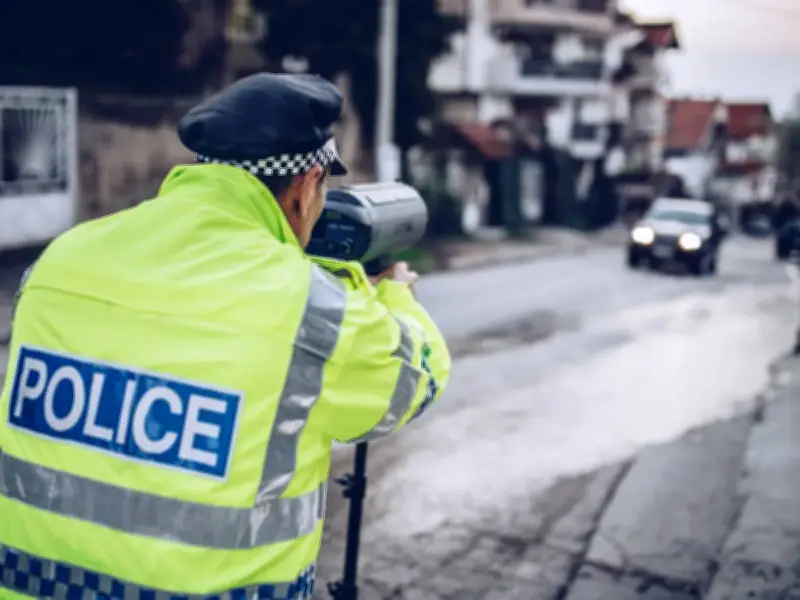
Motorists who flash their headlights to warn other drivers about a speed camera ahead risk prosecution and a fine of up to £1,000, as police treat the act as obstructing an officer in the execution of their duty. The warning comes amid confirmed cases of drivers being taken to court for the practice.
Highway Code rules on flashing lights
Highway Code Rule 110 states: "Only flash your headlights to let other road users know that you are there. Do not flash your headlights to convey any other message or intimidate other road users."
Rule 112 adds that the horn should be used "only while your vehicle is moving and you need to warn other road users of your presence" and says: "Never sound your horn aggressively."
Legal basis for prosecution
While there is no specific criminal offence of flashing headlights to warn others, police in England and Wales can bring charges under Section 89 of the Police Act 1996, which makes it an offence to "wilfully obstruct a constable in the execution of his duty."
Because officers are actively trying to catch speeding motorists, alerting drivers so they slow down is legally seen as interfering with police duties. The maximum penalty is one month's imprisonment or a £1,000 fine, with sentencing guidelines allowing for a fine, imprisonment, conditional discharge or community order.
Police and school warnings
The seriousness of the issue was highlighted in the weekly newsletter of a local primary school earlier in 2026. The school cautioned that "several people are warning other motorists" about a Cheshire Police speed van positioned to monitor traffic outside the school.
The school said police were warning that this behaviour breached both Highway Code Rule 110 and Section 89 of the Police Act 1996, and that they "could charge anyone who appears to be obstructing their ability to conduct speed checks on other motorists by warning them," noting: "The maximum fine for obstructing a police officer is a penalty of £1,000."
The Crown Prosecution Service (CPS), in its official guidance on Public Justice Offences, lists "giving a warning to other motorists of a police speed trap ahead" as an example of an action that would constitute resisting or wilfully obstructing a constable.
Court case sets precedent
In a 2005 case, DPP v Glendinning, a lorry driver was observed flashing his headlights at oncoming motorists after spotting a speed camera van on a dual carriageway. Officers witnessed this, concluded he was intentionally alerting drivers and charged him with obstructing police.
The driver was initially convicted, though the ruling was overturned at the High Court, where judges said there needed to be evidence of actual obstruction, not just the possibility that obstruction may have occurred. The High Court found there was no evidence that approaching vehicles were speeding, that drivers had altered their behaviour, or that police enforcement operations had been genuinely disrupted.
The prosecution nonetheless shows that police will take motorists to court for flashing their headlights to alert others to speed cameras ahead.